-
 Ask Matt Anything (AMA) 1: Trust, Paraphrasing, and Nonverbal Cues
From 🇺🇸 Think Fast Talk Smart: Communication Techniques, published at 2024-12-26 14:00
Enjoy this preview of our first Ask Matt Anything (AMA).We are excited to introduce this special edition of Think Fast, Talk Smart, featuring a preview of our first-ever Ask Matt Anything (AMA) episode. Typically, these sessions are exclusive to our Think Fast, Talk Smart Premium members, where Matt Abrahams answers the most pressing communication questions submitted by our premium community. Think Fast, Talk Smart Premium was created to deepen our connection with you and support your growth as effective communicators. Premium members enjoy exclusive benefits like regular full-length AMA episodes, eQuips, or Essential Quick Insight Playlist, early access to events, and more. Beyond this, your membership helps us continue to build a global community dedicated to improving communication skills and advancing careers.If you find this episode helpful, we invite you to join our Think Fast, Talk Smart Premium community to unlock the full library of AMAs, submit your own questions, and gain access to even more tools and resources. Thank you for being part of our journey! You can learn more at fastersmarter.io/premium.Episode Reference Links:Ep.133 From Good to Super: How Supercommunicators Unlock the Language of ConnectionEp.137 When Words Aren’t Enough: How to Excel at Nonverbal Communication Connect:Premium Signup >>>> Think Fast Talk Smart PremiumEmail Questions & Feedback >>> [email protected] Transcripts >>> Think Fast Talk Smart WebsiteNewsletter Signup + English Language Learning >>> FasterSmarter.ioThink Fast Talk Smart >>> LinkedIn, Instagram, YouTubeMatt Abrahams >>> LinkedInChapters:(00:00) - Introduction (00:55) - Building Trust with Senior Leadership (03:17) - Engaging Large Virtual Audiences (07:05) - Managing Nonverbal Communication (09:15) - Balancing Emotions in Conversations (11:05) - Navigating Status Differences in Meetings (14:10) - Conclusion
-
 175. Mastering Toasts and Tributes: Making Your Words Count
From 🇺🇸 Think Fast Talk Smart: Communication Techniques, published at 2024-12-24 14:00
Crafting impactful toasts for every occasion."Almost reflexively, most of us focus in the moment on how others are perceiving us, yet these situations aren't about us at all." Matt Abrahams, host of Think Fast, Talk Smart, shares an excerpt from his book, Think Faster, Talk Smarter: How to Speak Successfully When You're Put on the Spot, on the art of delivering effective toasts and tributes. With a focus on public speaking in celebratory contexts, he offers a structured approach to crafting meaningful remarks.Matt introduces the WHAT structure—a four-part formula designed to guide speakers through the process. This method helps ensure that the focus remains on the honorees, transforming speeches into gifts for the audience. He further shares tips for refining remarks, including the importance of brevity and the need to prepare for emotional moments. Matt advises, "Be brief and to the point. Long toasts, tributes, or introductions are usually bad ones." He also highlights the significance of setting others up for success, ensuring a smooth flow for subsequent speakers.With insights from his book and practical examples, Matt equips listeners with the tools to deliver impactful toasts and tributes, making these moments memorable for all involved.Audio excerpt courtesy of Simon & Schuster Audio from THINK FASTER, TALK SMARTER by Matt Abrahams, read by the author. Copyright 2023 by Matthew Abrahams LLC. Used with permission of Simon & Schuster, Inc.Episode Reference Links:Think Faster, Talk Smarter: How to Speak Successfully When You're Put on the SpotConnect:Premium Signup >>>> Think Fast Talk Smart PremiumEmail Questions & Feedback >>> [email protected] Transcripts >>> Think Fast Talk Smart WebsiteNewsletter Signup + English Language Learning >>> FasterSmarter.ioThink Fast Talk Smart >>> LinkedIn, Instagram, YouTubeMatt Abrahams >>> LinkedInChapters:(00:00) - Introduction (00:45) - Key Insight: Toasts, Tributes, and Introductions (02:16) - Why it Matters (03:06) - Craft Your Content (04:17) - Step One: Why Are We Here? (05:01) - Step Two: How Are You Connected? (05:52) - Step Three: Anecdotes or Learnings (07:00) - Step Four: Thank (07:42) - Refine Your Remarks (08:09) - Tip One: Be Brief and to the Point (08:59) - Tip Two: Prepare to be Emotional (10:51) - Tip Three: Shine the Spotlight Away From You (11:21) - Tip Four: Make Your Anecdotes Accessible and Appropriate (11:51) - Tip Five: Strive for Unity (13:14) - Tip Six: Set Others Up for Success (14:07) - Conclusion
-
 174. Fix Meetings: Transform Gatherings Into Meaningful Moments
From 🇺🇸 Think Fast Talk Smart: Communication Techniques, published at 2024-12-17 14:00
Turn any meeting or get-together into a chance for deep connection and collaboration.Whether you’re holding a team meeting or hosting a family get-together, the success of any gathering, says Priya Parker, isn’t about the perfect agenda or venue, but about the intentionality behind how you bring people together.“90% of the success of any gathering happens before anyone enters the room,” says Parker. As the author of The Art of Gathering: How We Meet and Why It Matters, and a strategic advisor who has helped organizations worldwide reimagine their gatherings, Parker believes that thoughtful preparation can turn any meeting, whether professional or personal, into a meaningful and memorable experience for all involved. “Intentionality is the first step,” she says, “to pause and ask: why are we doing this? What is the purpose? What is the need in this community or in this classroom or in this team?”In this episode of Think Fast, Talk Smart, Parker joins Matt Abrahams to explore the art of meaningful gatherings, sharing practical strategies for everything from crafting invitations that prime engagement to designing powerful closings that leave a lasting impact. By being more thoughtful in bringing people together, we can transform ordinary meetings into extraordinary opportunities for connection and collaboration.Episode Reference Links:Priya Parker Priya’s Book: The Art of Gathering Ep.124 Making Meetings Meaningful, Pt. 1: How to Structure and Organize More Effective Gatherings Ep.125 Making Meetings Meaningful, Pt. 2: Key Ingredients for Effective Meetings Connect:Premium Signup >>>> Think Fast Talk Smart PremiumEmail Questions & Feedback >>> [email protected] Transcripts >>> Think Fast Talk Smart WebsiteNewsletter Signup + English Language Learning >>> FasterSmarter.ioThink Fast Talk Smart >>> LinkedIn, Instagram, YouTubeMatt Abrahams >>> LinkedInChapters:(00:00) - Introduction (00:49) - Intentionality in Everyday Conversations (02:35) - Questioning the Purpose of Gatherings (04:43) - The Power of Great Questions (07:46) - Managing Heat in Conversations (09:55) - Encouraging Participation Beforehand (12:35) - Creating Impactful Endings (15:01) - The Final Three Questions (17:55) - Conclusion
-
 173. Rethinks: Surviving the Holidays
From 🇺🇸 Think Fast Talk Smart: Communication Techniques, published at 2024-12-10 14:00
Master holiday conversations.The holiday season is a time of joy, connection, and, occasionally, communication challenges and as we gather with family, friends, and colleagues, effective communication becomes crucial. To help make this time more enjoyable, this special Think Fast Talk Smart “Rethinks” episode revisits favorite “recipes” from past Stanford guests along with Matt’s advice for tackling three common holiday scenarios: contributing effectively to ongoing conversations, engaging in meaningful small talk, and managing conflict with clarity and empathy. Whether it's making small talk or resolving conflicts, these strategies aim to turn holiday communication hurdles into opportunities for connection and collaboration.Episode Reference Links:Ep.169 Don't Be a ZQ: Make Your Conversations Count Connect:Premium Signup >>>> Think Fast Talk Smart PremiumEmail Questions & Feedback >>> [email protected] Transcripts >>> Think Fast Talk Smart WebsiteNewsletter Signup + English Language Learning >>> FasterSmarter.ioThink Fast Talk Smart >>> LinkedIn, Instagram, YouTubeMatt Abrahams >>> LinkedInChapters:(00:00) - Introduction (01:59) - Challenge 1: Inserting Your Voice into Conversations (03:14) - Expert Insights on Inserting Ideas (05:00) - Challenge 2: Mastering Small Talk (06:36) - Expert Strategies for Small Talk (08:38) - Challenge 3: Managing Holiday Conflicts (10:25) - Expert Tips for Conflict Resolution (12:02) - Conclusion
-
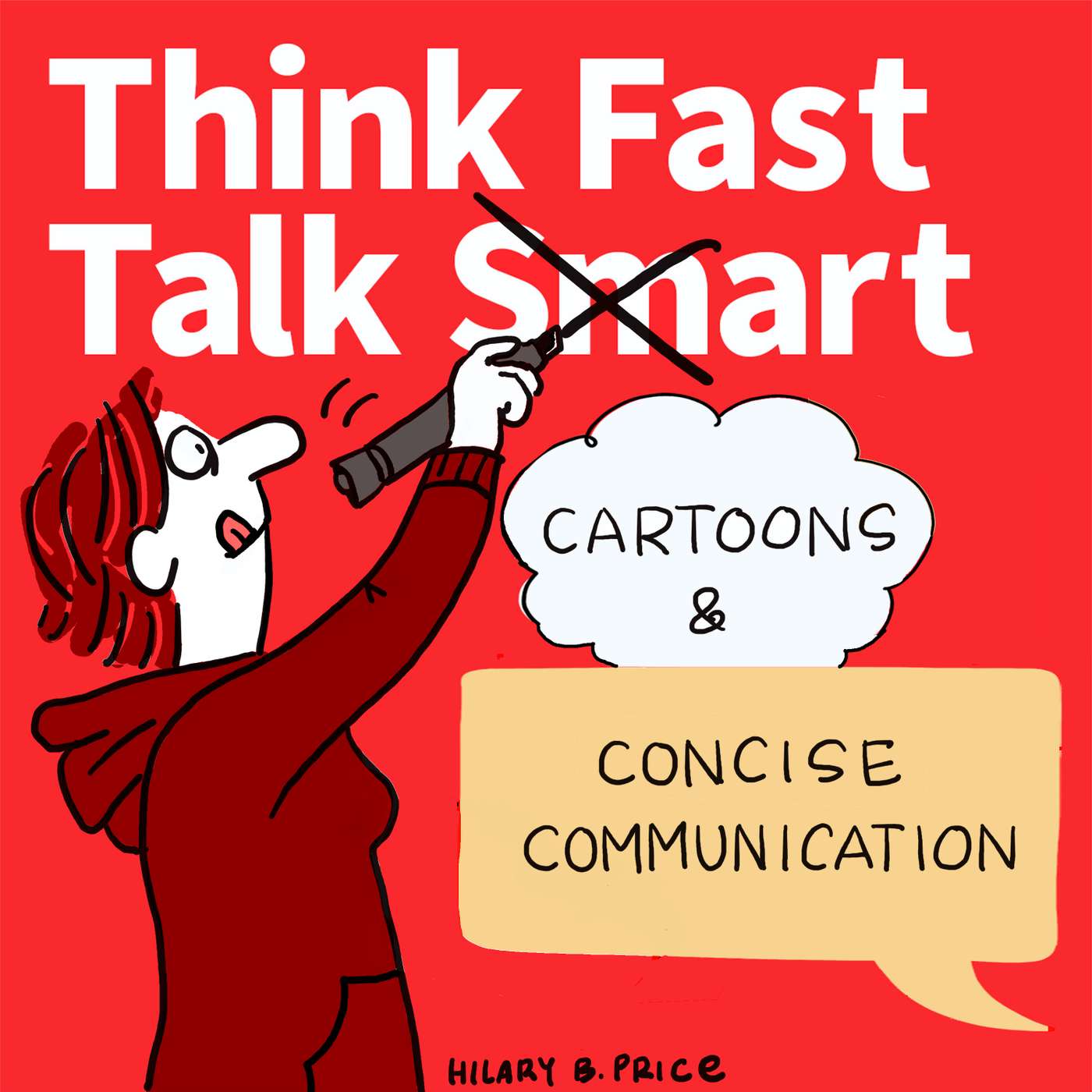 Between the Lines: In Storytelling, Simplify to Amplify - Premium Sampler
From 🇺🇸 Think Fast Talk Smart: Communication Techniques, published at 2024-12-05 14:00
Visit fastersmarter.io/premium to become a Premium subscriber."Start with the action moment or right before it," advises Hilary Price whose one-panel comic strips offer insights far beyond humor—they’re lessons in concise storytelling that resonate with anyone seeking to communicate effectively. “Simplify and amplify,” Price advises, emphasizing the art of clarity and impact. Every stroke of her pen strips away the unnecessary, letting the essentials shine through.Creating her daily comic strip, Rhymes with Orange, Price starts with the game of “what if,” merging unexpected ideas to surprise and engage her readers. “You want to start at the action moment—or just before,” she notes, pointing out how the unsaid often speaks louder. Price extends this philosophy beyond cartoons: whether crafting a presentation, a joke, or a story, it’s essential to leave room for the audience to co-create meaning. “Don’t spoon-feed your readers,” she says. “The joy comes from not getting it, then getting it.” In this bonus episode of Think Fast Talk Smart, Price joins host Matt Abrahams to explore the power of surprise, stakes, and shared experience in storytelling—reminding us that the punchline, whether in humor or communication, is where the magic happens.Episode Reference Links:Hilary PriceRhymes With OrangeEp.170 Advice From Nontraditional Storytellers Part 1Ep.171 Advice From Nontraditional Storytellers Part 2 Connect:Premium Signup >>>> Think Fast Talk Smart PremiumEmail Questions & Feedback >>> [email protected] Transcripts >>> Think Fast Talk Smart WebsiteNewsletter Signup + English Language Learning >>> FasterSmarter.ioThink Fast Talk Smart >>> LinkedIn, Instagram, YouTubeMatt Abrahams >>> LinkedInChapters:(00:00) - Introduction (01:45) - What Makes a Good Story? (02:38) - Crafting a Story (03:58) - Auditioning the Characters (07:02) - Stories in Daily Life (08:50) - Visuals in Storytelling (10:37) - The Power of a Punchline (12:44) - Admired Storytellers (14:41) - Communicating with Titles (16:13) - Conclusion
-
 172. Bring Mindfulness to Your Communication
From 🇺🇸 Think Fast Talk Smart: Communication Techniques, published at 2024-12-03 14:00
Mindfulness can transform your communication and your career.When we react, our instincts and impulses are in the driver’s seat. But when we take the time to reflect, that’s when Marshall Goldsmith says we take back control of how we respond.“Before speaking at work, breathe,” Goldsmith says. “Is my comment going to improve this other human being's commitment? At home, breathe. Is my comment going to improve this relationship with someone I love? If the answer is no, why am I saying it?”As a world-renowned executive coach, speaker, and best-selling author, Goldsmith teaches how a mindful approach can change how we relate to others, to ourselves, and even to our career goals and ambitions. Through reflection, we identify our values, which we can use to live what Goldsmith calls an “earned life — when the choices, risks, and effort we make in each moment align with an overarching purpose in our lives.”In this episode of Think Fast, Talk Smart, Goldsmith joins host Matt Abrahams to explore practical strategies for bettering our interactions with others and ourselves, from his “feed forward” method for giving and receiving constructive critique to his "daily questions" practice, which prompts reflective self-inquiry to keep us focused on what truly matters.Episode Reference Links:Marshall GoldsmithMarshall’s Books: What Got Here Won't Get You There / Triggers Ep.138 Speak Your Truth: Why Authenticity Leads to Better CommunicationConnect:Premium Signup >>>> Think Fast Talk Smart PremiumEmail Questions & Feedback >>> [email protected] Transcripts >>> Think Fast Talk Smart WebsiteNewsletter Signup + English Language Learning >>> FasterSmarter.ioThink Fast Talk Smart >>> LinkedIn, Instagram, YouTubeMatt Abrahams >>> LinkedInChapters:(00:00) - Introduction (00:45) - Key Communication Advice (01:27) - An Earned Life (03:24) - Transition to Leadership (04:55) - Breathe Before Speaking (06:10) - Feedforward vs. Feedback (07:10) - Managing Triggers (09:01) - Daily Success Checklist (11:39) - Using AI for Coaching (13:08) - Influencing Up Leadership (14:43) - The Final Three Questions (17:38) - Conclusion
-
 171. Advice from Nontraditional Storytellers Part 2
From 🇺🇸 Think Fast Talk Smart: Communication Techniques, published at 2024-11-28 14:00
Make your audience a part of the story.Great storytellers don't just relay information — they create experiences. As magicians, TikTok influencers, and stand-up comedians, these masters of engagement know that true connection happens when you make your audience a part of the story.In part two of this special series on storytelling, host Matt Abrahams explores the art of audience connection with an extraordinary lineup. For magician Alex Moffat, it’s about immersive performance. “How can I get the audience to not [just] sit there watching? They've got to be able to feel it too,” he says. As TikTok's head of creator marketing, Kudzi Chikumbu says authenticity is everything. "Be your authentic self. Show yourself in a way that other people don't." And for standup comedian Orlando Leyba, it’s about leveraging presence and responsiveness to transform a performance into a genuine conversation.In this episode of Think Fast, Talk Smart, discover how these engagement experts create stories that don't just inform or entertain — they forge genuine connections with every audience member.Episode Reference Links:Alex MoffatKudzi ChikumbuOrlando Leyba Ep.168 How Story Can Change Everything in Your CareerEp.50 Telling Good Stories: How to Use the Elements of Narrative to Keep Listeners Engaged Connect:Premium Signup >>> Think Fast Talk Smart PremiumEmail Questions & Feedback >>> [email protected] Transcripts >>> Think Fast Talk Smart WebsiteNewsletter Signup + English Language Learning >>> FasterSmarter.ioThink Fast Talk Smart >>> LinkedIn, Instagram, YouTubeMatt Abrahams >>> LinkedInChapters:(00:00) - Introduction (00:56) - Linear vs. Nonlinear Storytelling (04:22) - Tools for Engaging an Audience (07:47) - Key Ingredients of a Good Story (09:36) - Authenticity in Storytelling (10:45) - Description in Storytelling (11:12) - Positivity in Storytelling (14:45) - Engaging Through Presence (16:22) - Conclusion
-
 170. Advice from Nontraditional Storytellers Part 1
From 🇺🇸 Think Fast Talk Smart: Communication Techniques, published at 2024-11-26 14:00
Wisdom from the witness stand to the newsstand.The best storytellers might not call themselves storytellers at all. But from litigating in the courtroom to crafting newspaper cartoons, these experts know how to weave narratives that resonate.In part one of this special two-part series, host Matt Abrahams explores the foundations of effective storytelling with tech litigator Neel Chatterjee and syndicated cartoonist Hilary Price. Chatterjee, drawing parallels to stand-up comedy, emphasizes the critical importance of those first few lines: "We have to figure out the two to three-line statement on 'this is a case about'..." Meanwhile, Price reveals the power of restraint in storytelling. "You want to simplify and amplify," she says. "I only want to put the elements that are important. Never spoon-feed your reader."In this episode of Think Fast, Talk Smart, nontraditional storytelling masters share their approach to structure, framing, and audience engagement, revealing insights that we can all use to transform our communication — whether in convincing a jury, crafting the perfect punchline, or sharing stories in everyday life.Episode Reference Links:Neel ChatterjeeHilary PriceEp.168 How Story Can Change Everything in Your CareerEp.50 Telling Good Stories: How to Use the Elements of Narrative to Keep Listeners Engaged Connect:Premium Signup >>>> Think Fast Talk Smart PremiumEmail Questions & Feedback >>> [email protected] Transcripts >>> Think Fast Talk Smart WebsiteNewsletter Signup + English Language Learning >>> FasterSmarter.ioThink Fast Talk Smart >>> LinkedIn, Instagram, YouTubeMatt Abrahams >>> LinkedInChapters:(00:00) - Introduction (01:53) - Structure in Storytelling (04:33) - The Premise and Promise (05:32) - Being Concise in Storytelling (09:28) - Visuals in Storytelling (12:31) - Conclusion
-
 169. Don't Be a ZQ: Make Your Conversations Count
From 🇺🇸 Think Fast Talk Smart: Communication Techniques, published at 2024-11-19 14:00
What makes a great conversation?“Many of us dread small talk,” says Harvard Business School professor and author Alison Wood Brooks. Yet she believes these everyday exchanges are the gateway to deeper connection and opportunity. An expert in the science of conversation, Wood Brooks, teaches a popular course titled Talk and has spent years researching what makes a great conversation. "Big things often start with small talk," she notes. "It’s not about avoiding it; it’s about knowing how to use it to uncover something meaningful."In this LinkedIn Live episode of Think Fast, Talk Smart, Wood Brooks joins host Matt Abrahams to share a practical framework for mastering small talk and making it enjoyable, even for those who loathe it. Drawing from her "topic pyramid" approach, Wood Brooks breaks down how to elevate a conversation from mundane chitchat to something memorable. “Think of it as a treasure hunt,” she suggests. “Small talk is where you start looking for golden nuggets that can lead to deeper engagement.”Episode Reference Links:Alison Wood Brooks Alison's Book: TalkEp.73 Listen Up: Why It’s Better to Be Interested than Interesting Ep.89 Listen, Listen, Listen: How to Build Deep Connections Connect:Premium Signup >>>> Think Fast Talk Smart PremiumEmail Questions & Feedback >>> [email protected] Transcripts >>> Think Fast Talk Smart WebsiteNewsletter Signup + English Language Learning >>> FasterSmarter.ioThink Fast Talk Smart >>> LinkedIn, Instagram, YouTubeMatt Abrahams >>> LinkedInChapters:(00:00) - Introduction (00:52) - What Makes a Good Conversation? (03:11) - The Topic Pyramid (05:52) - Preparation for Small Talk (08:08) - Remembering Conversation Details (09:46) - Asking Too Many Questions (11:39) - Conversation Goals and Contexts (15:33) - Virtual vs In-Person Conversations (17:22) - The Importance of Listening (21:16) - Think Fast Talk Smart Premium (22:34) - Conclusion
-
 Launching: Think Fast Talk Smart Premium
From 🇺🇸 Think Fast Talk Smart: Communication Techniques, published at 2024-11-14 14:00
Introducing our new Premium membership, designed to enhance communication and career skills with expanded content and tools. Enjoy early access to live events, AMAs (Ask Matt Anything), eQuips—Essential Quick Insight Playlists—Extended Deep Thinks episodes, and the AI Chat Matt tool.The focus is on building a global community where members can connect, share insights, and receive feedback. A portion of membership fees will support charities dedicated to developing communication skills worldwide. Connect:Premium Signup >>>> Think Fast Talk Smart PremiumEmail Questions & Feedback >>> [email protected] Transcripts >>> Think Fast Talk Smart WebsiteNewsletter Signup + English Language Learning >>> FasterSmarter.ioThink Fast Talk Smart >>> LinkedIn, Instagram, YouTubeMatt Abrahams >>> LinkedIn
-
 168. How Story Can Change Everything in Your Career
From 🇺🇸 Think Fast Talk Smart: Communication Techniques, published at 2024-11-12 14:00
Make your message memorable.“Immediately forgettable” — that’s how Matthew Dicks describes most of the business communication that he encounters. If you want to be remembered, he says, it’s time to tell stories.A veteran elementary school teacher, storytelling coach, and best-selling author, Dicks knows how the right narrative can transform mundane messages into stories that stick. In his book, Storyworthy: Engage, Teach, Persuade, and Change Your Life through the Power of Storytelling, he explores how to capture and hold an audience’s attention, which is particularly critical for business leaders. "When we tell a story about a product or service, the people we work with, our company, we become memorable and interesting and entertaining in a way that doesn't happen very often in business," he says.In this episode of Think Fast, Talk Smart, Dicks and host Matt Abrahams discuss practical techniques for crafting compelling narratives, from setting a scene to creating suspense. “Don’t build a building. Don’t buy a machine,” he says. Becoming a better storyteller is one of the most effective ways to level up. “It’s a crazy thing for businesses,” he says.Episode Reference Links:Matthew DicksMatthew’s Book: Storyworthy Ep.50 Telling Good Stories: How to Use the Elements of Narrative to Keep Listeners EngagedEp.47 Quick Thinks: How to Use Storytelling to Be a Better Founder Connect:Premium Signup >>>> Think Fast Talk Smart PremiumEmail Questions & Feedback >>> [email protected] Transcripts >>> Think Fast Talk Smart WebsiteNewsletter Signup + English Language Learning >>> FasterSmarter.ioThink Fast Talk Smart >>> LinkedIn, Instagram, YouTubeMatt Abrahams >>> LinkedInChapters:(00:00) - Introduction (00:49) - Why Storytelling Matters in Business (02:25) - The Essence of a Good Story (04:26) - Become a Better Storyteller (06:06) - Using Suspense in Stories (08:12) - Suspense in Business Communication (10:14) - Structuring Stories Like Scenes (12:23) - Relating Stories to Life (14:50) - Homework for Life (17:30) - Storytelling Delivery (18:37) - The Final Three Questions (22:42) - Conclusion
-
 167. Hollywood Lessons For Successful Communication
From 🇺🇸 Think Fast Talk Smart: Communication Techniques, published at 2024-11-05 14:00
Beyond the Big Screen.Every business meeting, product launch, or marketing communication has something in common with your favorite movie: they all succeed or fail based on their ability to make you feel something. Just ask Jeff Small, CEO of Amblin Partners."Good stories win," says Small, who leads one of the world's most renowned independent film and television companies alongside Steven Spielberg. As both a business leader and storytelling expert, Small knows that successful communication is built on person-to-person connection through the power of story. "Whatever walk of life you're in, you have to be able to tell a story to connect with people, to get across the message that you're trying to get across."In this episode of Think Fast, Talk Smart, Small joins host Matt Abrahams to share insights from his experience at the intersection of creativity and commerce, unpacking how effective storytelling can transform your communication, whether leading teams through industry disruption, resolving conflicts at work and at home, or creating films to inspire audiences for generations to come.Episode Reference Links:Jeff SmallEp.153 Listen Up, Leaders: A Record-Setting Coach’s Guide to CommunicationEp.35 Leading From The Hot Seat: How To Communicate Under PressureConnect:Premium Signup >>>> Think Fast Talk Smart PremiumEmail Questions & Feedback >>> [email protected] Transcripts >>> Think Fast Talk Smart WebsiteNewsletter Signup + English Language Learning >>> FasterSmarter.ioThink Fast Talk Smart >>> LinkedIn, Instagram, YouTubeMatt Abrahams >>> LinkedInChapters:(00:00) - Introduction (01:13) - What Makes a Good Story? (02:06) - Bringing Emotion into Communication (02:42) - Storytelling Across Professions (04:46) - Crafting an Effective Story (06:32) - Uniqueness in Storytelling (07:35) - Balancing Creativity and Business (09:04) - Managing Conflict with Connection (10:53) - Screen Time and Family (12:33) - Navigating Industry Change (14:53) - The Final Three Questions (21:18) - Conclusion
-
 166. Why Relying on Talent Alone Will Fail You
From 🇺🇸 Think Fast Talk Smart: Communication Techniques, published at 2024-10-29 13:00
Why practice is the key to success.If there’s anyone who knows about performing under pressure, it’s former NFL quarterback Andrew Luck. Whether playing in front of thousands or presenting to ten, his key to success is practice."There's a romantic notion that you rise to the occasion," says Luck, a Stanford graduate and four-time Pro Bowl selection. "But I think you settle to the level of your training. We practiced those high-pressure situations all the time.” From calling critical game-winning plays to navigating communication off the field, our performance in high-stakes situations, Luck maintains, is determined by our level of preparation.In this episode of Think Fast, Talk Smart, Luck and host Matt Abrahams explore how deliberate practice can help us hone our performance across all domains of our lives. From managing high-pressure situations to building psychological safety in homes and workplaces, Luck shares insights gained from both sides of the field — as a player and now as a coach.Episode Reference Links:Andrew LuckEp.153 Listen Up, Leaders: A Record-Setting Coach’s Guide to Communication Connect:Premium Signup >>>> Think Fast Talk Smart PremiumEmail Questions & Feedback >>> [email protected] Transcripts >>> Think Fast Talk Smart WebsiteNewsletter Signup + English Language Learning >>> FasterSmarter.ioThink Fast Talk Smart >>> LinkedIn, Instagram, YouTubeMatt Abrahams >>> LinkedInChapters:(00:00) - Introduction (01:09) - Communication in High-Stress Situations (03:19) - Staying Calm Under Pressure (05:49) - Earning Leadership Through Respect (07:12) - Overcoming Conflict Aversion (08:19) - Decision to Retire from the NFL (10:26) - Returning to Education (12:04) - Life Lessons Through Coaching (14:25) - The Final Three Questions (17:33) - Conclusion
-
 165. Building Your Personal Brand Makes a Promise: Are You Keeping It?
From 🇺🇸 Think Fast Talk Smart: Communication Techniques, published at 2024-10-22 13:00
Create more meaningful communication by defining your audience. Before you even think about communicating a message, defining a brand, or developing a strategy, Seth Godin says you have to ask these questions: “Who’s it for? What’s it for? And what’s the change [you] seek to make?”As a best-selling author, entrepreneur, and marketing expert, Godin understands that effective communication rests on purpose and intent. “Branding is not logoing,” he says, but a “promise” that an individual or company makes about who they are and what others can expect of them. By intentionally defining who we are and who our audience is, Godin argues we can create more meaningful connections and drive real change.In this episode of Think Fast, Talk Smart, Godin and host Matt Abrahams explore how we can be more deliberate in our communication, using storytelling, clarity of messaging, and defining the impact we want to make on our audience and the world.Episode Reference Links:Seth GodinSeth’s Books: This Is Strategy / This Is MarketingEp.64 Best of: Techniques for Managing Your ReputationEp.118 Maximizing your Personal Brand: Communicating Who You Are to Help Get What You Want Connect:Premium Signup >>>> Think Fast Talk Smart PremiumEmail Questions & Feedback >>> [email protected] Transcripts >>> Think Fast Talk Smart WebsiteNewsletter Signup + English Language Learning >>> FasterSmarter.ioThink Fast Talk Smart >>> LinkedIn, Instagram, YouTubeMatt Abrahams >>> LinkedInChapters:(00:00) - Introduction (00:51) - Defining Branding and Marketing (02:32) - The Role of Status in Podcast Growth (04:41) - Storytelling as a Powerful Tool (06:21) - The Smallest Viable Audience (07:54) - Clarity in Messaging (10:11) - Strategy Defined (13:34) - Developing Effective Strategies (16:10) - The Final Three Questions (20:17) - Conclusion
-
 164. Rethinks: Using "Pre-suasion" to Influence Others
From 🇺🇸 Think Fast Talk Smart: Communication Techniques, published at 2024-10-15 18:24
The inner workings of social influence and persuasion.Want to change someone’s mind? First, explains Robert Cialdini, you have to change their framing.For Cialdini, the Regent's Professor Emeritus of Psychology and Marketing at Arizona State University, persuasion begins before we even deliver our pitch or presentation. Through what he calls “Pre-suasion,” communicators can prime audiences to receive messages in a specific way, simply by drawing their attention in specific directions. “It involves focusing people on—putting them in mind of—those motivators before they encounter [them] in the communicator’s message,” Cialdini says, “bringing people’s focus of attention onto something that is nested in the message…before that message is delivered, so they have been readied for the concept.”In this episode, Matt Abrahams and Cialdini talk about the motivating power of FOMO, getting better advice from others, and how your next wine purchase could be influenced by what music is playing in the shop.Episode Reference Links:Robert CialdiniRobert's books: Influence / Pre-SuasionEp.11 The Science of Influence: How to Persuade Others And Hold Their AttentionEp.142 Power and Persuasion: Live Insights from Stanford Experts Original Episode: Ep.76 Change My Mind: Using “Pre-suasion” to Influence Others Connect:Premium Signup >>>> Think Fast Talk Smart PremiumEmail Questions & Feedback >>> [email protected] Transcripts >>> Think Fast Talk Smart WebsiteNewsletter Signup + English Language Learning >>> FasterSmarter.ioThink Fast Talk Smart >>> LinkedIn, Instagram, YouTubeMatt Abrahams >>> LinkedInChapters:(00:00) - Introduction (01:56) - Persuasion and Pre-suasion (05:17) - Priming and Framing in Pre-suasion (07:58) - Understanding Scarcity (10:48) - The Unity Principle (14:04) - Social Proof and Influence (19:24) - The Role of Language in Persuasion (22:23) - The Final Three Questions (26:49) - Conclusion
-
 163. Is Your Audience Ignoring You? How Authenticity Creates Connection
From 🇺🇸 Think Fast Talk Smart: Communication Techniques, published at 2024-10-08 13:00
How acceptance and authenticity can transform all of our interactions.What’s the key to experiencing deeper connection in our communication? According to Alan Alda, it starts with acceptance — of others and ourselves."Connecting, communicating, and clarity," Alda explains, "they're all based on hearing what the other person is really saying; letting the person be real; accepting them.” As an acclaimed actor, writer, director, and author of If I Understood You, Would I Have This Look on My Face?, Alda has spent much of his career exploring how acceptance enables us to be our authentic selves, leading to better communication and truer connection. “There’s nothing more engaging than the real you,” he says.Also the founder of the Alan Alda Center for Communicating Science at Stony Brook University, Alda strives to help scientists and health professionals communicate more effectively with the public. “Science can't do its work unless it gets funded. And it can't get funded if people don't understand what the scientists are trying to do,” he says.In this episode of Think Fast, Talk Smart, Alda and host Matt Abrahams discuss how acceptance and authenticity can transform all of our interactions, from complicated science conversations to everyday communication.Episode Reference Links:Alan AldaAlan’s Book: If I Understood You, Would I have This Look on My Face? Alan Alda Center for Communicating Science Ep.82 It’s Not About You: Why Effective Communicators Put Others First Ep.114 Communication Means Paying Attention: The Four Pillars of Active Listening Connect:Premium Signup >>>> Think Fast Talk Smart PremiumEmail Questions & Feedback >>> [email protected] Transcripts >>> Think Fast Talk Smart WebsiteNewsletter Signup + English Language Learning >>> FasterSmarter.ioThink Fast Talk Smart >>> LinkedIn, Instagram, YouTubeMatt Abrahams >>> LinkedInChapters:(00:00) - Introduction (00:59) - Motivation for Communication (02:59) - Avoiding Communication Pitfalls (05:15) - The Role of Clarity and Vividness (06:22) - Reflection in Communication (07:12) - Connection in Conversations (08:27) - Reframing Communication Anxiety (10:07) - Asking Meaningful Questions (11:02) - Matt’s Communication Journey (12:49) - The Art of Storytelling (15:16) - The Final Three Questions (17:23) - Conclusion
-
 162. Unlock Career Opportunities: How to Make the Right Moves
From 🇺🇸 Think Fast Talk Smart: Communication Techniques, published at 2024-10-01 13:00
Being present in the moment and staying open to whatever unfolds.We all want to lead lives and careers full of joy and fulfillment. Maggie Baird certainly has, and the key, she says, is to stay open to new possibilities and “let your passion lead.”Baird is an accomplished actress, improv teacher at the Groundlings Theater, mother to music sensations Billie Eilish and Phineas, and founder of Support and Feed, a nonprofit addressing food equity and the climate crisis. Through it all, she has embodied the improv principle of "Yes, and..." — being present in the moment and staying open to whatever unfolds. “I have done many things,” she says, “but I never approached any of them as a career change. They all came out of new interests and new experiences.”In this episode of Think Fast, Talk Smart, Baird joins host Matt Abrahams to explore the critical role of communication in developing a career, and how improv principles can help us engage, as Baird says, “From a place of open-heartedness, appreciation, [and] collaboration.”Episode Reference Links:Support And FeedEp.118 Maximizing your Personal Brand: Communicating Who You Are to Help Get What You WantEp.1 Speaking Without a Net: How to Master Impromptu CommunicationEp.9 Quick Think: How Being Present-Oriented Improves Communication Connect:Premium Signup >>>> Think Fast Talk Smart PremiumEmail Questions & Feedback >>> [email protected] Transcripts >>> Think Fast Talk Smart WebsiteNewsletter Signup + English Language Learning >>> FasterSmarter.ioThink Fast Talk Smart >>> LinkedIn, Instagram, YouTubeMatt Abrahams >>> LinkedInChapters:(00:00) - Introduction (00:53) - Career Transitions (01:45) - Teaching and Confidence Through Improv (04:03) - Improv as a Communication Tool (05:45) - Structure and Freedom in Improv (07:37) - Teaching with Empathy (10:34) - Advocacy in the Music Industry (13:18) - Collaboration and Positive Change (16:07) - The Final Three Questions (17:46) - Conclusion
-
 Bonus: How to Manage Speaking Anxiety the Think Faster, Talk Smarter Way
From 🇺🇸 Think Fast Talk Smart: Communication Techniques, published at 2024-09-26 13:00
Gain control over your speaking and excel in your communication.For the first anniversary of his book Think Faster, Talk Smarter, Matt Abrahams shares strategies from the first chapter, focusing on managing speaking anxiety and improving spontaneous communication. Through personal anecdotes and practical techniques, he explains how to handle unexpected questions, reframe anxiety as excitement, and use mindfulness and breathing exercises to stay calm under pressure. The episode also offers tips for managing physical symptoms of anxiety and staying mentally focused during high-stakes situationsAudio excerpt courtesy of Simon & Schuster Audio from THINK FASTER, TALK SMARTER by Matt Abrahams, read by the author. Copyright 2023 by Matthew Abrahams LLC. Used with permission of Simon & Schuster, Inc.Reference Links:Link to buy book in your country: Think Faster, Talk Smarter Ep.48 Speaking Up Without Freaking Out: How to Tackle Communication Anxiety Connect:Premium Signup >>>> Think Fast Talk Smart PremiumEmail Questions & Feedback >>> [email protected] Transcripts >>> Think Fast Talk Smart WebsiteNewsletter Signup + English Language Learning >>> FasterSmarter.ioThink Fast Talk Smart >>> LinkedIn, Instagram, YouTubeMatt Abrahams >>> LinkedInChapters:(00:00) - Introduction (00:37) - The Onion Interview (02:19) - Speaking Up Without Freaking Out (04:47) - The ABCs of Speaking Anxiety (06:01) - Mindfulness Matters (08:19) - Reframe Anxiety as Excitement (09:43) - Cooling Down and Managing Physical Symptoms (13:32) - Taming Negative Thoughts (14:43) - The Power of Repetition (15:21) - Preparing Questions (17:46) - Rationalizing the Odds (18:49) - Conclusion
-
 161. Do Your Homework: Know What to Say by Knowing Who You’re Talking To
From 🇺🇸 Think Fast Talk Smart: Communication Techniques, published at 2024-09-24 13:00
Know your audience and tailor the message for them.In high-stakes communication, every word counts. For Jen Psaki, that means knowing who she’s talking to — so she knows just what to say.As the former White House Press Secretary and current host of Inside with Jen Psaki on MSNBC, Psaki has discovered that communication isn’t about “saying the most words or saying them the loudest,” but about knowing your audience well enough to tailor the message just for them. “You need to think about how you're going to get your audience to listen to you,” she says. “The goal of communicating is to crack the door open so somebody wants to hear more.”In this episode of Think Fast, Talk Smart, Psaki and host Matt Abrahams explore her approach to strategic communication: identifying your audience and using what you know to engage with them and get them to engage with you.Episode Reference Links:Jen Psaki Jen’s Book: Say MoreEp.22 Under Pressure How to Communicate Clearly and Timely During CrisisEp.155 Can We Be Candid? How to Communicate Clearly and DirectlyConnect:Premium Signup >>>> Think Fast Talk Smart PremiumEmail Questions & Feedback >>> [email protected] Transcripts >>> Think Fast Talk Smart WebsiteNewsletter Signup + English Language Learning >>> FasterSmarter.ioThink Fast Talk Smart >>> LinkedIn, Instagram, YouTubeMatt Abrahams >>> LinkedInChapters:(00:00) - Introduction (01:07) - Principles of Communication (02:08) - Skills for Effective Listening (02:51) - Engagement and Lowering Barriers (03:50) - Tailoring Communication (05:14) - Preparation and Practice for Confidence (07:07) - The Value of Feedback (10:10) - Handling Difficult Questions (12:38) - High-Stakes Negotiation (15:30) - The Final Three Questions (19:48) - Conclusion
-
 160. Rethinks: How to Communicate Your Gameplan
From 🇺🇸 Think Fast Talk Smart: Communication Techniques, published at 2024-09-17 13:00
Why organizational strategy can be both top-down and bottom-up.As Professor Jesper Sørensen sees it, a winning strategy is the result of conversations, not commands, and that strategy can be directed from the C-suite, but it doesn’t have to be. “Lots of great strategies are discovered,” he says, “they’re discovered because the leaders were able to listen to their frontline workers or their frontline managers.” A more iterative approach, says Sørensen, helps companies adapt their strategy to an ever-changing landscape.In the latest episode of Think Fast, Talk Smart, Sørensen joins host and lecturer Matt Abrahams to discuss how organizations can use better communication to craft better strategies.Episode Reference Links:Jesper B. SørensenSørensen’s Book: Making Great StrategyOriginal Episode: Ep.71 Strategy Success: How to Communicate Your GameplanEp.103 Simple is a Superpower: How to Communicate Any Idea to Any AudienceEp.41 Speak Like a Founder: How Successful Entrepreneurs Communicate to Their TeamsConnect:Premium Signup >>>> Think Fast Talk Smart PremiumEmail Questions & Feedback >>> [email protected] Transcripts >>> Think Fast Talk Smart WebsiteNewsletter Signup + English Language Learning >>> FasterSmarter.ioThink Fast Talk Smart >>> LinkedIn, Instagram, YouTubeMatt Abrahams >>> LinkedInChapters:(00:00) - Introduction (01:38) - Defining Strategy (03:21) - Common Misconceptions about Strategy (05:07) - The Concept of a Strategy Argument (07:04) - Strategy as a Communication Tool (10:53) - The Dynamic Nature of Strategy (12:29) - Storytelling in Strategy Communication (14:55) - Propagating Strategy Through Storytelling (17:01) - The Final Three Questions (23:39) - Conclusion