#1137 - Duncan Trussell
Duncan Trussell is a stand-up comedian, and host of his own podcast “The Duncan Trussell Family Hour” available on Spotify. http://www.duncantrussell.com/ Learn more about your ad choices. Visit podcastchoices.com/adchoices
14766 episodes from United States
Duncan Trussell is a stand-up comedian, and host of his own podcast “The Duncan Trussell Family Hour” available on Spotify. http://www.duncantrussell.com/ Learn more about your ad choices. Visit podcastchoices.com/adchoices
Multidisciplinary artist and TED Fellow Paul Rucker is unstitching the legacy of systemic racism in the United States. A collector of artifacts connected to the history of slavery -- from branding irons and shackles to postcards depicting lynchings -- Rucker couldn't find an undamaged Ku Klux Klan robe for his collection, so he began making his own. The result: striking garments in non-traditional fabrics like kente cloth, camouflage and silk that confront the normalization of systemic racism in the US. "If we as a people collectively look at these objects and realize that they are part of our history, we can find a way to where they have no more power over us," Rucker says. (This talk contains graphic images.) Hosted on Acast. See acast.com/privacy for more information.
Thousands of years ago, ancient Nubians drew pictures on tomb walls of a terrible disease that turns the eyelids inside out and causes blindness. This disease, trachoma, is still a scourge in many parts of the world today -- but it's also completely preventable, says Caroline Harper. Armed with data from a global mapping project, Harper's organization Sightsavers has a plan: to focus on countries where funding gaps stand in the way of eliminating the disease and ramp up efforts where the need is most severe. Learn more about their goal of consigning trachoma to the history books -- and how you can help. (This ambitious plan is one of the first ideas of The Audacious Project, TED's new initiative to inspire global change.) Hosted on Acast. See acast.com/privacy for more information.
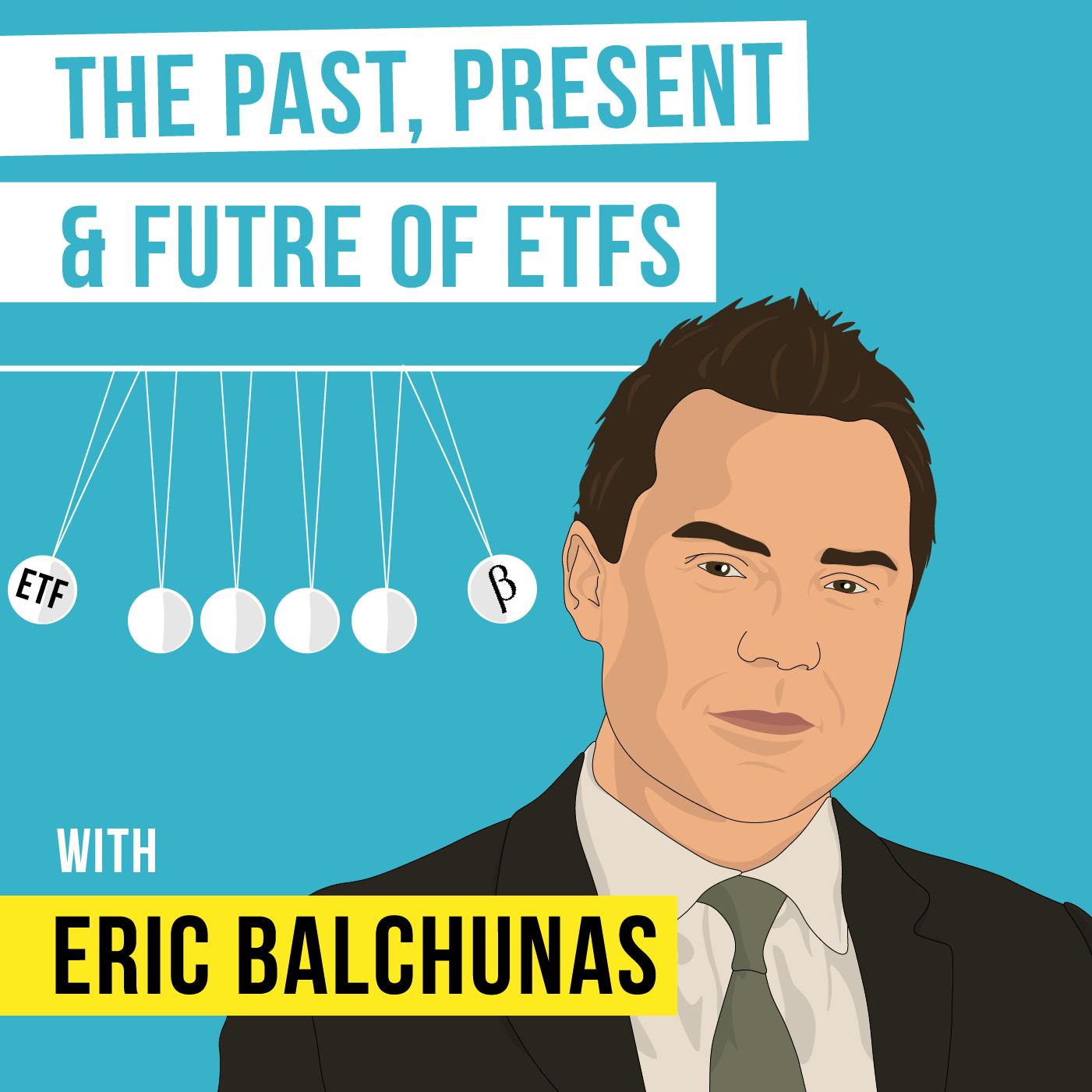
My guest this week is Eric Balchunas, the senior ETF analyst for Bloomberg and the author of the Institutional ETF toolbox. This episode is intended for those in the asset or wealth management industry who have considered using ETFs in their portfolios, or for the individual investor who likes to stay up to date on trends in the market for asset management products. We cover all aspects of ETFs in some detail, and luckily in ways that have little overlap with a few other recent ETF-centric episodes on two of my favorite podcasts: the Meb Faber Show and Capital Allocators with Ted Seides with Matt Hougan and Tom Lydon respectively. We open with Eric’s favorite ETF tickers, discuss the pros and cons of ETFs versus other investment vehicles, and explore the largest areas of opportunities for new ETFs coming to market in the years to come. ETFs have become the vehicle of choice for many investors, so it was about time we covered them in depth in this forum. As you’ll hear, Eric is the right person to teach the world about ETFs, thanks to deep domain knowledge and unflagging enthusiasm. Please enjoy my conversation with Eric Balchunas on the past, present, and future of ETFs. For more episodes go to InvestorFieldGuide.com/podcast. Sign up for the book club, where you’ll get a full investor curriculum and then 3-4 suggestions every month at InvestorFieldGuide.com/bookclub. Follow Patrick on Twitter at @patrick_oshag Books Referenced Quantitative Momentum: A Practitioner's Guide to Building a Momentum-Based Stock Selection System Links Referenced Chart – There Are Now More Indexes Than Stocks Show Notes 2:32 - (First Question) – Eric’s favorite ETF tickers 4:07 – How Eric got started into his career and how it led him into the ETF world 8:04 – An overview of the ETF landscape 10:10 – Active managed ETFs 12:17 – Chart – There Are Now More Indexes Than Stocks 13:32 – Key variables he thinks about when assessing a new ETF 15:18 – Evaluating shiny object ETFs 17:30 – The appeal of ETFs 20:18 – Future regulatory concern of the tax treatments of ETFs 22:10 – The liquidity advantage of ETFs and why that can actually be bad for investors 24:19 – What would Eric do to build the perfect ETF 26:03 – What are the future trends for new ETF’s launched 29:40 – Categories that work well in the ALT world of ETFs 31:32 – Most effective marketing strategy for ETFs 35:50 – Quantitative Momentum: A Practitioner's Guide to Building a Momentum-Based Stock Selection System 36:28 – How will the winning asset managers have done differently in this space 41:56 – How the next downturn could impact ETFs 46:17 – Do ETF’s create pricing distortions 50:33 – What trend is Eric most interested in right now 53:21 – Alpha through Beta 55:51 – Kindest thing anyone has done for Eric Learn More For more episodes go to InvestorFieldGuide.com/podcast. Sign up for the book club, where you’ll get a full investor curriculum and then 3-4 suggestions every month at InvestorFieldGuide.com/bookclub Follow Patrick on twitter at @patrick_oshag

Hamilton Morris is a writer, documentarian, psychonaut and scientific researcher. His show "Hamilton's Pharmacopeia" is available on VICELAND. Learn more about your ad choices. Visit podcastchoices.com/adchoices
There's a creeping sameness in many of our newest urban buildings and streetscapes, says architect Vishaan Chakrabarti. And this physical homogeneity -- the result of regulations, mass production, safety issues and cost considerations, among other factors -- has blanketed our planet in a social and psychological homogeneity, too. In this visionary talk, Chakrabarti calls for a return to designing magnetic, lyrical cities that embody their local cultures and adapt to the needs of our changing world and climate. Hosted on Acast. See acast.com/privacy for more information.
Maria Shriver, the Peabody- and Emmy-award winning journalist, producer and best-selling author, sits down with Oprah to share inspiring quotations, prayers and reflections featured in her number one New York Times best-selling book "I've Been Thinking...: Reflections, Prayers, and Meditations for a Meaningful Life." Oprah and Maria discuss their nearly 40-year friendship and the lessons they both learned from Maria's mother, Eunice Kennedy Shriver. Maria looks back on the personal challenges she's experienced, including how she found the strength to navigate her mother's death and the grief that came afterward. Maria speaks candidly about growing up as a member of the powerful Kennedy family, and opens up about seeking her own passion and purpose beyond the legacy of her famous forebears. Maria is the founder of the Women's Alzheimer's Movement, a nonprofit committed to researching why women are disproportionately affected by Alzheimer's disease and, in so doing, finding a cure.
Ari Shaffir is a stand-up comedian and also hosts the podcasts Ari Shaffir’s Skeptic Tank & Punch Drunk Sports both available on Spotify. See Ari at this year's Edinburgh Festival Fringe from August 3-27. Learn more about your ad choices. Visit podcastchoices.com/adchoices
What can we learn from the slimy, smelly side of life? In this playful talk, science journalist Anna Rothschild shows us the hidden wisdom of "gross stuff" and explains why avoiding the creepy underbelly of nature, medicine and technology closes us off to important sources of knowledge about our health and the world. "When we explore the gross side of life, we find insights that we never would have thought we'd find, and we even often reveal beauty that we didn't think was there," Rothschild says. Hosted on Acast. See acast.com/privacy for more information.
Writer and artist James Bridle uncovers a dark, strange corner of the internet, where unknown people or groups on YouTube hack the brains of young children in return for advertising revenue. From "surprise egg" reveals and the "Finger Family Song" to algorithmically created mashups of familiar cartoon characters in violent situations, these videos exploit and terrify young minds -- and they tell us something about where our increasingly data-driven world is headed. "We need to stop thinking about technology as a solution to all of our problems, but think of it as a guide to what those problems actually are, so we can start thinking about them properly and start to address them," Bridle says. Hosted on Acast. See acast.com/privacy for more information.
Kyle Dunnigan is a writer, actor and comedian. Check out his hilarious Instagram page: https://www.instagram.com/kyledunnigan1/ Learn more about your ad choices. Visit podcastchoices.com/adchoices
Compensation is a topic near and dear to everyone’s heart… but what does “compensation” fully mean — and what does it include, what doesn’t it include? How do entrepreneurs compete for talent in an intensely competitive environment, while balancing t...
Netflix changed the world of entertainment -- first with DVD-by-mail, then with streaming media and then again with sensational original shows like "Orange Is the New Black" and "Stranger Things" -- but not without taking its fair share of risks. In conversation with TED curator Chris Anderson, Netflix co-founder and CEO Reed Hastings discusses the company's bold internal culture, the powerful algorithm that fuels their recommendations, the $8 billion worth of original content they're planning to produce this coming year and his philanthropic pursuits supporting innovative education, among much more. Hosted on Acast. See acast.com/privacy for more information.
Dennis McKenna is an ethnopharmacologist, author, and brother to well-known psychedelics proponent Terence McKenna. His new book "Ethnopharmacologic Search for Psychoactive Drugs: 50 Years of Research (1967-2017)" is available here: http://www.synergeticpress.com/shop/ethnopharmacologic-search-psychoactive-drugs-50-years-research/ Learn more about your ad choices. Visit podcastchoices.com/adchoices
The global refugee crisis is a mental health catastrophe, leaving millions in need of psychological support to overcome the traumas of dislocation and conflict. To undo the damage, child psychiatrist and TED Fellow Essam Daod has been working in camps, rescue boats and the shorelines of Greece and the Mediterranean Sea to help refugees (a quarter of which are children) reframe their experiences through short, powerful psychological interventions. "We can all do something to prevent this mental health catastrophe," Daod says. "We need to acknowledge that first aid is not just needed for the body, but it has also to include the mind, the soul." Hosted on Acast. See acast.com/privacy for more information.
Oprah’s conversation with superstar quarterback of the New England Patriots, Tom Brady, continues. After nearly two decades in the NFL, Tom explains to Oprah what he still wants to accomplish and why “life after football” may have to wait just a little bit longer. Tom’s supermodel wife Gisele Bündchen stops by to support her husband as he talks about parenting, marriage and his childhood. Tom also shares how he and his team chose to address the recent trend of NFL players taking a knee during the National Anthem. Tom also reveals how he found resilience after the headline-grabbing “Deflategate” controversy. Tom also discusses his approach to mind, body and spiritual balance. Oprah asks Tom to end their conversation by reading an emotional Facebook message that he recently posted representing his beliefs.
Heidi Grant, a social psychologist, explains the right ways and wrong ways to ask colleagues for help. She says people are much more likely to lend us a hand than we think they are; they just want it to be a rewarding experience. Grant is the author of “Reinforcements: How to Get People to Help You.”
What happens when technology knows more about us than we do? Poppy Crum studies how we express emotions -- and she suggests the end of the poker face is near, as new tech makes it easy to see the signals that give away how we're feeling. In a talk and demo, she shows how "empathetic technology" can read physical signals like body temperature and the chemical composition of our breath to inform on our emotional state. For better or for worse. "If we recognize the power of becoming technological empaths, we get this opportunity where technology can help us bridge the emotional and cognitive divide," Crum says. Hosted on Acast. See acast.com/privacy for more information.
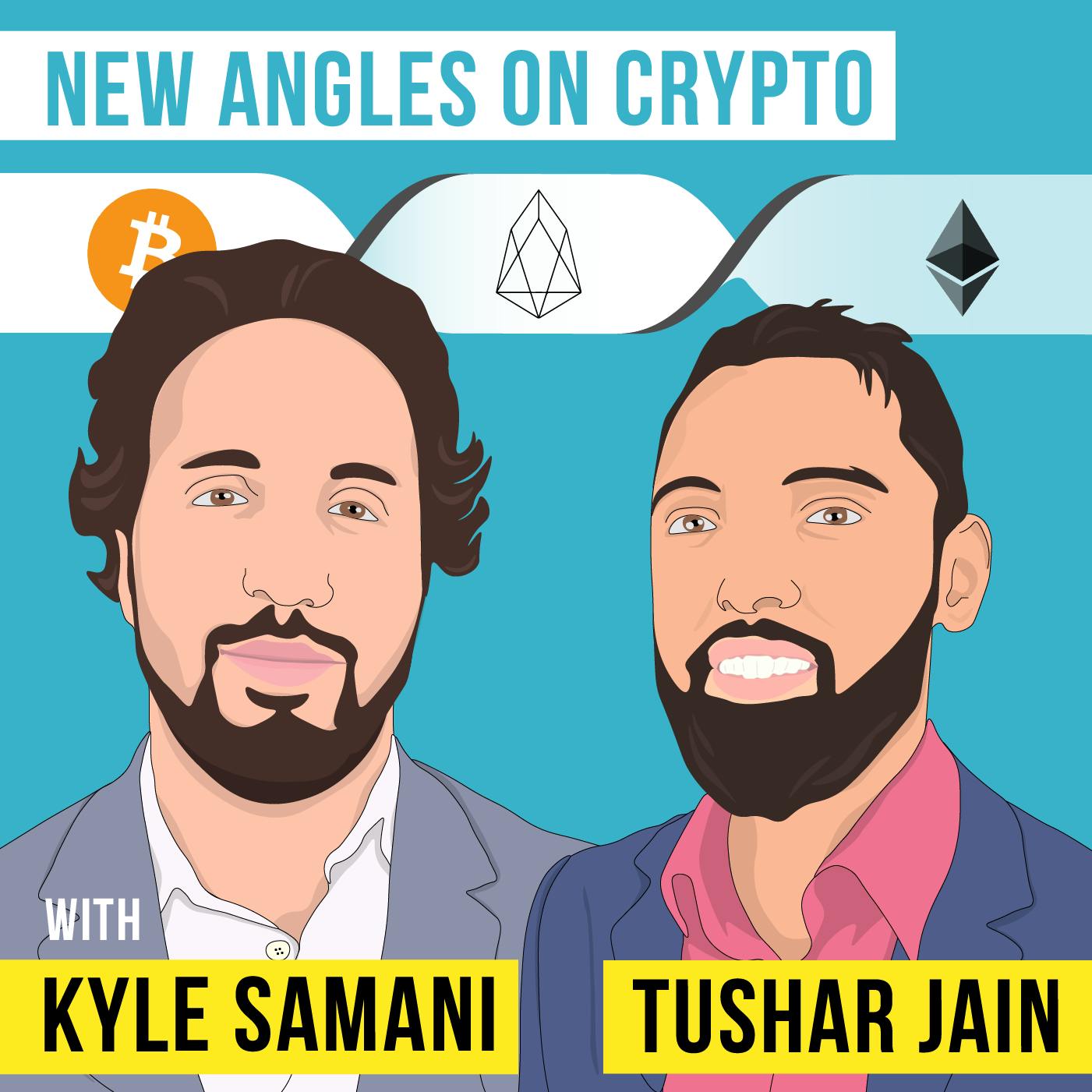
My guests this week are Kyle Samani and Tushar Jain, both managing partners at Multicoin Capital. I’ve taken a bit of a break from crypto because I hadn’t sensed many new angles to explore in this forum, from an investor’s point of view. I felt that while things keep evolving, the major investment theses have been established and explored. Kyle and Tushar are interesting because of their often divergent views. For example, Kyle has been an outspoken supporter of Ethereum relative to bitcoin. This conversation, which is meant for those still curious about crypto, offers lots of new food for thought. We discuss smart contract platforms, network effects, the coming platform wars, and why blockchains may not matter in ten years. Please enjoy my conversation with the partners of Multicoin Capital. Hash Power is presented by Fidelity Investments For more episodes go to InvestorFieldGuide.com/podcast. Sign up for the book club, where you’ll get a full investor curriculum and then 3-4 suggestions every month at InvestorFieldGuide.com/bookclub. Follow Patrick on Twitter at @patrick_oshag Links Referenced Paths to Tens of Trillions An (Institutional) Investor’s Take on Cryptoassets On the Network Effects of Store Value If SaaS Products Sell Themselves, Why Do We Need Sales? Money, blockchains, and social scalability Nakamoto Institute Token Economy Multicoin.capital Crypto Cannon Show Notes 2:11 - (First Question) – What would get the entire cryptocurrencies ecosphere to 5-10 trillion dollars 2:53 – Paths to Tens of Trillions 4:37 – What will be the effective uses for crypto currencies, store value vs utility value 4:38 – An (Institutional) Investor’s Take on Cryptoassets 8:48 – Why they are negative on bitcoin and more positive on Ethereum 10:07 – Where will start to see widespread adaption of the utility value of cryptocurrencies 14:44 – What is the major breakthrough that cryptocurrencies create 21:21 – How do we gain confidence that a utility token will become a sound investment 25:16 – The different type of network effects 25:47 – On the Network Effects of Store Value 31:18 – How do you convince institutional investors to consider the crypto space 34:21 – Factors that they care about when first evaluating a crypto currency 39:21 – How does technological development and marketing factor into their decision when picking a crypto currency 40:31 – If SaaS Products Sell Themselves, Why Do We Need Sales? 41:42 – Where these two men disagree the most right now 44:07 – Why there’s a chance blockchain technology as we know it today could be irrelevant 44:25 – Money, blockchains, and social scalability 47:56 – Most compelling trends in this world today 51:51 – A favorite resource or person people can look into if they want to learn more 52:22 – Nakamoto Institute 52:57 – Token Economy 53:24 – Multicoin.capital 53:30 – Crypto Cannon 54:14 – Kindest thing anyone has done for them Learn More For more episodes go to InvestorFieldGuide.com/podcast. Sign up for the book club, where you’ll get a full investor curriculum and then 3-4 suggestions every month at InvestorFieldGuide.com/bookclub Follow Patrick on twitter at @patrick_oshag
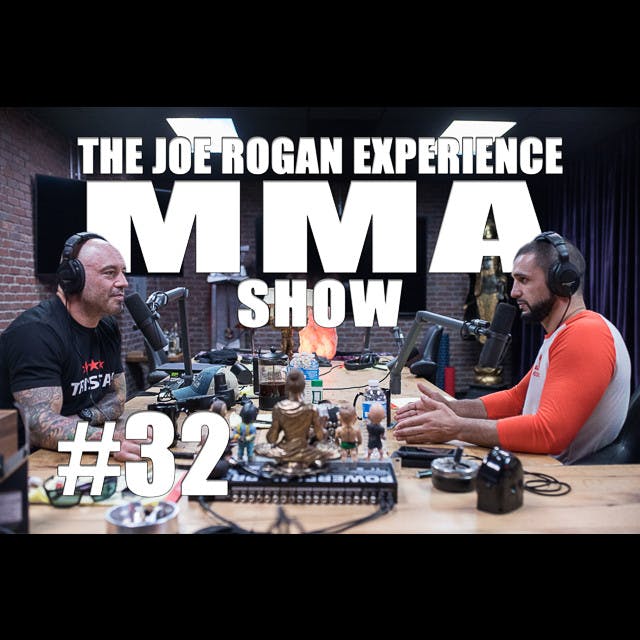
Joe sits down with the head coach of Tristar Gym, Firas Zahabi. Learn more about your ad choices. Visit podcastchoices.com/adchoices
Explore the diverse voices and perspectives from podcast creators in United States. Each episode offers unique insights into the culture, language, and stories from this region.