-
 Innovating and Deciding, for Companies and People
From 🇺🇸 a16z Podcast, published at 2022-02-20 07:33
with @annieduke @pmarca @smc90 Marc Andreessen and Sonal interview author, consultant/advisor, and former pro poker player Annie Duke, in one of her first few appearances with us, and in a conversation quite unlike her other conversations. We cover a broad range of topics relevant to both companies and individuals, all about thinking in bets when it comes to innovation in your business or change in your personal life.
-
Geo-engineering and the Power of Narrative
From 🇺🇸 a16z Podcast, published at 2022-02-19 07:31
with @andersen @omnivorousread @smc90 On making a really wild (quite literally wild;) geo-engineering idea at massive scale real – specifically, bringing back lab-grown woolly mammoths, which was discussed in a 2017 feature by Andersen in The Atlantic (and also discussed in the 2020 documentary with Stewart Brand, We Are As Gods) -- and is still a relevant and active topic today. But the conversation is also about the evergreen power of narrative...
-
M&A, Before and After: What Founders Need to Know
From 🇺🇸 a16z Podcast, published at 2022-01-26 21:25
Welcome to the a16z podcast. Today we’re talking about the mindsets and frameworks founders should know about when navigating the mergers and acquisitions or M&A process, both before and after – including how to think about the pricing dynamics, factors that go into the decision-making process, and what to expect from the integration once the deal is done. A16z editorial partner Zoran Basich recently talked to two a16z experts here to give us their big-picture view of the most important things to know – for founders seeking to acquire companies and how they might think about it, or those considering selling a company, or just those deciding to merge with an acquirer. Blake Kim is a partner on our Enterprise Network team and a former investment banker who works with companies on strategic partnerships; he also recently co-wrote a post on Future outlining all the different exit options and considerations for companies. And general partner Martin Casado discusses common M&A issues and shares his experiences both as observer and participant – including the challenges of integration, which he saw from the inside with Nicira, which he cofounded and was acquired by VMware for $1.26 billion in 2012, and where he remained for years to lead its networking and security business unit. As a reminder, none of the following should be taken as investment advice. Please see a16z.com/disclosures for more important information. They start the discussion by outlining the frameworks for understanding M&A dynamics, including the “kingmaking dynamic” and the difference between “selling your company” and “getting acquired.”
-
How 'Hyperscalers' are Innovating — and Competing — in the Data Center
From 🇺🇸 a16z Podcast, published at 2021-12-10 20:24
Innovation in the data center has been constrained by the traditional model of suppliers providing fixed-function chips that limit how much the biggest data center operators can differentiate. But programmable chips have emerged that allow these companies to not only increase performance, but innovate throughout the pipeline, from operating system to networking interface to user application. This is a major trend among hyperscalers, which are some of the world’s most well known companies running massive data centers with tens of thousands of servers. We’re talking about companies like Amazon, Facebook, Microsoft, Google, Apple, Alibaba, Tencent. To talk about the trends in data centers and how software may be “eating the world of the data center,” we talked this summer to two experts. Martin Casado is an a16z general partner focused on enterprise investing. Before that he was a pioneer in the software-defined networking movement and the cofounder of Nicira, which was acquired by VMWare. He’s joined by Nick McKeown, a Stanford professor of computer science who has founded multiple companies (and was Martin’s cofounder at Nicira) and has worked with hyperscalers to innovate within their data centers. After this podcast was recorded, Nick was appointed Senior Vice President and General Manager of a new Intel organization, the Network and Edge Group.
-
Kickstarting Network Effects
From 🇺🇸 a16z Podcast, published at 2021-12-06 20:12
Network effects can be found powering almost every major technology company, from messaging apps and workplace collaboration tools, like Slack and Zoom, to marketplaces, like Airbnb and Instacart to even the internet itself. In this podcast, we look at the role of network effects creator-driven social platforms, with Alexis Ohanian, cofounder from Reddit, Paul Davison, cofounder from Clubhouse, and a16z general partner Andrew Chen, whose new book, "The Cold Start Problem: How to Start and Scale Network Effects" comes out this week (see coldstart.com for more). We cover: how do you cold start and get your first creators? How does your relationship to creators change as you scale? And how is web3 changing the incentives and dynamics around network effects?
-
NFTs, Explained
From 🇺🇸 a16z Podcast, published at 2021-11-25 17:00
with @jessewldn @ljxie @smc90 Everything you need or want to know about NFTs (or to help others understand NFTs.) Cuts through the noise to share the signal: covering what NFTs are, the underlying crypto big picture, and then specifically what forms they take; addressing common myths and misconceptions from “just a JPG” to the question of energy use; sharing briefly how NFTs work; providing a quick overview of the players/ ecosystem; and throughout, discussing various applications too. This episode was originally released in March 2021.
-
Play-to-Earn Gaming and How Work is Evolving in Web3
From 🇺🇸 a16z Podcast, published at 2021-11-11 19:43
In today's episode we’re talking about an emerging model of gaming called play to earn, in which players can make actual money based on how much time and effort they put into a game. Play to earn is also part of broader trends — the changing relationship between players and platforms, new incentives for participants in blockchain-based networks, and the new internet era that is coming to be known as a web3. The top play-to-earn game is called Axie Infinity, operated by a Vietnam-based company called Sky Mavis. Players of the game acquire unique digital pets called Axies, and battle other teams of Axies. These NFT Axies can be created and sold using the game’s in-game currency, SLP, which can be traded for traditional currency. Think of it as Pokemon on the blockchain, with a social network built-in, and an actual economy, and even companies built around the game that help players onboard and loan them money to get started playing. The game has made more than $3 billion in total sales since launching in March 2018, with much of its early growth in the Philippines. (As a reminder, none of the following should be taken as investment advice, please see a16z.com/disclosures for more important information.) Our guests today are Jeff Zirlin, the cofounder of Sky Mavis; Gabby Dizon, the cofounder of Yield Guild Games, a play to earn gaming guild that gives players the resources to start playing; and a16z crypto general partner Arianna Simpson. They talk to a16z's Zoran Basich about the tech trends that enabled the emergence of play to earn, why and where it caught on first, and the role of community, as well as the challenges, which include onboarding and scalability, and the economic sustainability of this model. The panel also discusses what the play-to-earn movement say about the future of work. Stay Updated: Find a16z on X Find a16z on LinkedIn Listen to the a16z Show on Spotify Listen to the a16z Show on Apple Podcasts Follow our host: https://twitter.com/eriktorenberg Please note that the content here is for informational purposes only; should NOT be taken as legal, business, tax, or investment advice or be used to evaluate any investment or security; and is not directed at any investors or potential investors in any a16z fund. a16z and its affiliates may maintain investments in the companies discussed. For more details please see a16z.com/disclosures. Hosted by Simplecast, an AdsWizz company. See https://pcm.adswizz.com for information about our collection and use of personal data for advertising.
-
 On container ships, supply chains, and the physical world
From 🇺🇸 a16z Podcast, published at 2021-11-02 14:44
@smc90 reads out loud @typesfast essay on container ships, supply chains, standardization, and a software layer over the physical world
-
Crypto Security and the New Web3 Mindsets for Users
From 🇺🇸 a16z Podcast, published at 2021-10-15 20:24
Today’s episode is all about crypto security — that is, the new mindsets and the new strategies for storing crypto assets safely while also allowing holders control and access. As a reminder, none of the following should be taken as investment advice, please see a16z.com/disclosures for more important information. We’ve covered security trends more broadly a ton in our content, which you can find at a16z.com/security, as well as crypto-related trends including NFTs, and the creator and ownership economies; you can find all of that at a16z.com/nfts But as more people enter crypto lately — thanks to the boom in NFTs, decentralized finance, and much more — we share specific best practices and options for securing crypto as well as discussing how it all fits this next evolution of the internet: web3. Our expert today is a16z crypto data scientist Eddy Lazzarin, who joins host Zoran Basich to cover practical approaches ranging from passwords to crypto wallets and what users can do; the evolution of crypto briefly; and the big picture mindset shifts involved here as well. We quickly begin with the practical shift crypto security represents compared to how people interact with traditional financial institutions, and then we go into the big picture trends in security when it comes to abstraction and usability. Stay Updated: Find a16z on X Find a16z on LinkedIn Listen to the a16z Show on Spotify Listen to the a16z Show on Apple Podcasts Follow our host: https://twitter.com/eriktorenberg Please note that the content here is for informational purposes only; should NOT be taken as legal, business, tax, or investment advice or be used to evaluate any investment or security; and is not directed at any investors or potential investors in any a16z fund. a16z and its affiliates may maintain investments in the companies discussed. For more details please see a16z.com/disclosures. Hosted by Simplecast, an AdsWizz company. See https://pcm.adswizz.com for information about our collection and use of personal data for advertising.
-
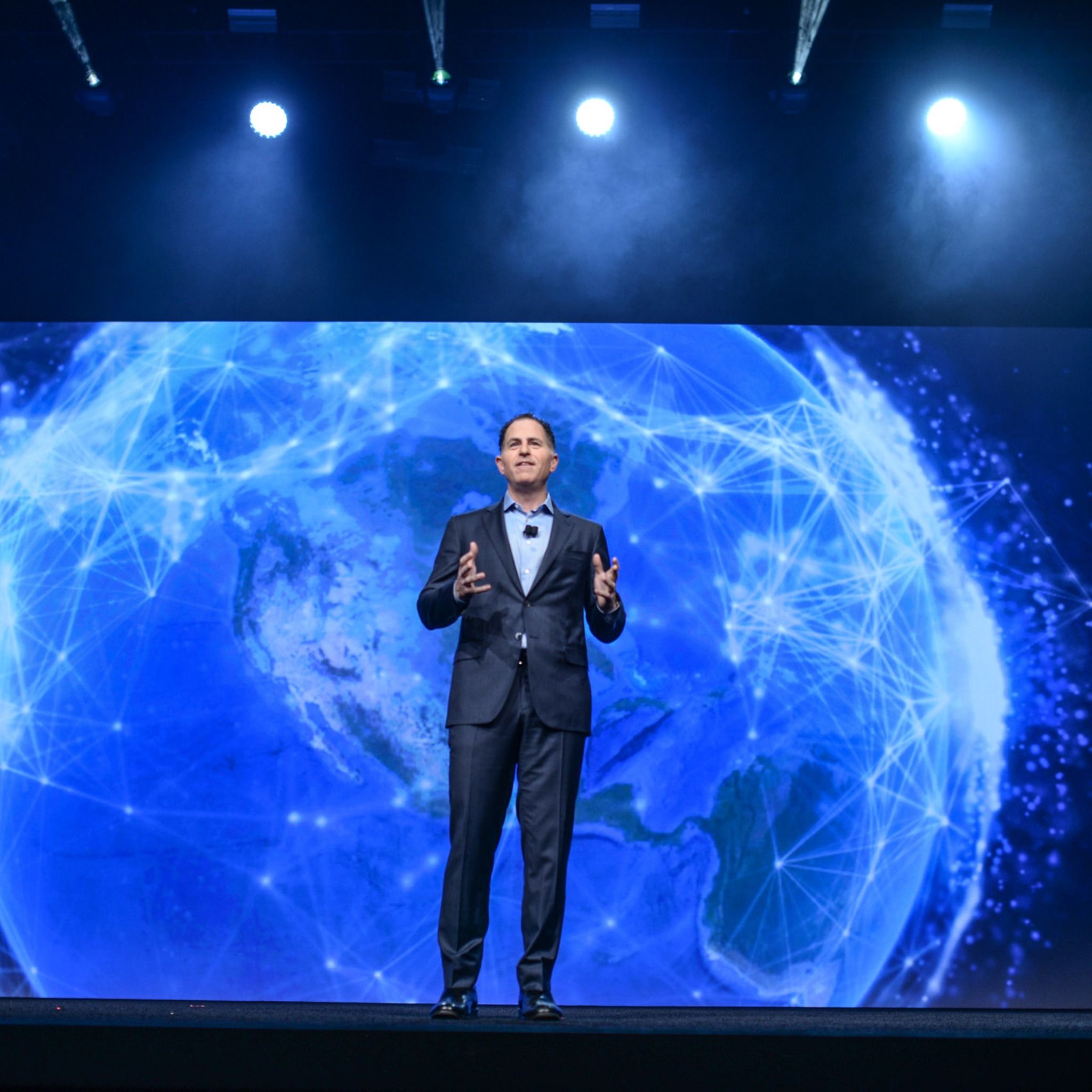 Cloud Wars and Company Wars: Play Nice But Win
From 🇺🇸 a16z Podcast, published at 2021-10-02 05:34
with @michaeldell @martin_casado @pmarca @smc90 It's rare to see a company go public then private then back to public again, as Dell Technologies did -- and which also pulled off one of the most epic mergers of all time with Dell + EMC + VMWare. How does one not just start, but keep -- and transform -- a company and business, especially as it adapts to broader, underlying tech platform shifts like demise of PC, end of cloud, cloud wars, and much more? This is really a story about innovation: who decides, who judges, who does it, and where.
-
 Uncontrolled Spread: Science, Policy, Institutions, Infrastructure
From 🇺🇸 a16z Podcast, published at 2021-09-20 02:13
with @ScottGottliebMD @pmarca @vintweeta @vijaypande @smc90 We were at an inflection point with the COVID pandemic, between old and new tech, science institutions, public health policy, more. So what can we learn from the past for the future? Former head of the FDA Dr. Scott Gottlieb (author of the upcoming new book, Uncontrolled Spread) shares stories from behind the scenes, debating probing ethical and policy questions with a16z co-founder Marc Andreessen and a16z bio general partners Vineeta Agarwala MD, Phd and Vijay Pande PhD.
-
 Systems Leadership for Disruptors and Incumbents
From 🇺🇸 a16z Podcast, published at 2021-07-24 06:55
with @robsiegel @jeffimmelt @jeff_jordan @smc90 There's been a false dichotomy in technology and management lore over the past decade, between "brain" and "brawn", digital and physical, independence and interdependence, software culture versus industrial culture… Whether you're an early startup or a Fortune 500 company, today's leaders have to think completely differently, in terms of ecosystems; and they're often in the position of having to influence but not have control. So where and when to partner, when to go it alone?
-
NFT Use Cases, Today and Tomorrow
From 🇺🇸 a16z Podcast, published at 2021-05-19 18:30
Recently, a16z and the Stanford Center for Blockchain Research hosted the NFT Virtual Summit, which brought together leading thinkers and builders on the topic of NFTs, or non-fungible tokens — these tokens are enabling new creator and ownership economies to emerge. We’ve covered NFTs in other podcasts and articles, including a curated list of reading resources. Today we’re sharing one of the discussions from that virtual summit (all of which were also published on our a16z Live feed) — this episode features General Partner Katie Haun chatting with Devin Finzer, cofounder of NFT marketplace OpenSea, on the topic of NFT “Use Cases, Today, and Tomorrow” — they cover the "tokenization of everything." ### The views expressed here are those of the individual AH Capital Management, L.L.C. (“a16z”) personnel quoted and are not the views of a16z or its affiliates. Certain information contained in here has been obtained from third-party sources, including from portfolio companies of funds managed by a16z. While taken from sources believed to be reliable, a16z has not independently verified such information and makes no representations about the enduring accuracy of the information or its appropriateness for a given situation. In addition, this content may include third-party advertisements; a16z has not reviewed such advertisements and does not endorse any advertising content contained therein. This content is provided for informational purposes only, and should not be relied upon as legal, business, investment, or tax advice. You should consult your own advisers as to those matters. References to any securities or digital assets are for illustrative purposes only, and do not constitute an investment recommendation or offer to provide investment advisory services. Furthermore, this content is not directed at nor intended for use by any investors or prospective investors, and may not under any circumstances be relied upon when making a decision to invest in any fund managed by a16z. (An offering to invest in an a16z fund will be made only by the private placement memorandum, subscription agreement, and other relevant documentation of any such fund and should be read in their entirety.) Any investments or portfolio companies mentioned, referred to, or described are not representative of all investments in vehicles managed by a16z, and there can be no assurance that the investments will be profitable or that other investments made in the future will have similar characteristics or results. A list of investments made by funds managed by Andreessen Horowitz (excluding investments for which the issuer has not provided permission for a16z to disclose publicly as well as unannounced investments in publicly traded digital assets) is available at https://a16z.com/investments/. Charts and graphs provided within are for informational purposes solely and should not be relied upon when making any investment decision. Past performance is not indicative of future results. The content speaks only as of the date indicated. Any projections, estimates, forecasts, targets, prospects, and/or opinions expressed in these materials are subject to change without notice and may differ or be contrary to opinions expressed by others. Please see https://a16z.com/disclosures for additional important information.
-
Man, Mosquito, Malaria Vaccine
From 🇺🇸 a16z Podcast, published at 2021-05-02 01:36
with @jorgecondebio @rvenkayya @smc90 We dig into what's hype/ what's real about news of a breakthrough malaria vaccine candidate, beyond the headlines and beyond the buzz: data, science, tech, and the long arc of innovation. Because this is an innovation story that's been nearly a century in the making, yet also playing out amongst a global pandemic.
-
Crypto, an Oral Essay
From 🇺🇸 a16z Podcast, published at 2021-04-17 22:56
This is a special episode of the a16z podcast — it's an audio history, told through the voices of the a16z crypto team, about what crypto is, how it really works, and why it matters. This "innovation overview" is meant as a resource, and it features hallway-style conversations with the a16z team as well as outside experts. In brief segments, we’ll take you from the ground up — from the basics, to the most current developments, and beyond that to a look at what we might see in the future. Here are the topics and voices you'll hear: The Beginning Introduction — Zoran Basich, a16z crypto editor Before bitcoin: previous attempts to create digital money, 1:45 — Dan Boneh, computer science professor at Stanford and a16 advisor The core innovations of Satoshi’s white paper, 3:36 — Dan Boneh Proof of work, 5:36 — Alex Pruden, chief strategy officer at Aleo Systems and former a16z crypto partner Mining and why it’s important, 7:10 — Alex Pruden The history of mining, 8:20 — Alex Pruden Value in monetary systems, or why bitcoin is worth anything, 9:53 — Arianna Simpson, a16z crypto partner Bitcoin as store of value, 11:30 — Arianna Simpson Security in crypto, 12:45 — Alex Pruden Expansion Why is it called a blockchain? 14:00 — Eddy Lazzarin, a16z data scientist Why the blockchain matters and what you can do with it, 15:09 — Chris Dixon, a16z general partner Beyond bitcoin, 17:01 — Eddy Lazzarin Ethereum as logical extension of open source, 17:36 — Eddy Lazzarin Tokens: What are they? 19:04 — Eddy Lazzarin Tokens and the functions they serve, 19:53 — Scott Kupor, a16z managing partner Tokens and the ownership economy, 21:19 — Jesse Walden, Variant Fund founder, former a16z partner, and Mediachain founder What tokens enable for creators, 22:18 — Ali Yahya, a16z general partner Right Now What DeFi means, 23:58 — Eddy Lazzarin Yield farming: What is it? 25:16 — Eddy Lazzarin NFTs: What they are and why they matter, 27:15 — Linda Xie, Scalar Capital managing director, and Jesse Walden Developer ecosystems, crypto, and composability, 30:17 — Jesse Walden Decentralized networks, value capture, and what it means for builders, 33:05 — Ali Yahya The Future The big picture, web3, and DAOs, 35:38 — Chris Dixon For more crypto resources, please see our Crypto Startup School page, our documentary about the program, and our NFT Canon. ### The views expressed here are those of the individual AH Capital Management, L.L.C. (“a16z”) personnel quoted and are not the views of a16z or its affiliates. Certain information contained in here has been obtained from third-party sources, including from portfolio companies of funds managed by a16z. While taken from sources believed to be reliable, a16z has not independently verified such information and makes no representations about the enduring accuracy of the information or its appropriateness for a given situation. In addition, this content may include third-party advertisements; a16z has not reviewed such advertisements and does not endorse any advertising content contained therein. This content is provided for informational purposes only, and should not be relied upon as legal, business, investment, or tax advice. You should consult your own advisers as to those matters. References to any securities or digital assets are for illustrative purposes only, and do not constitute an investment recommendation or offer to provide investment advisory services. Furthermore, this content is not directed at nor intended for use by any investors or prospective investors, and may not under any circumstances be relied upon when making a decision to invest in any fund managed by a16z. (An offering to invest in an a16z fund will be made only by the private placement memorandum, subscription agreement, and other relevant documentation of any such fund and should be read in their entirety.) Any investments or portfolio companies mentioned, referred to, or described are not representative of all investments in vehicles managed by a16z, and there can be no assurance that the investments will be profitable or that other investments made in the future will have similar characteristics or results. A list of investments made by funds managed by Andreessen Horowitz (excluding investments for which the issuer has not provided permission for a16z to disclose publicly as well as unannounced investments in publicly traded digital assets) is available at https://a16z.com/investments/. Charts and graphs provided within are for informational purposes solely and should not be relied upon when making any investment decision. Past performance is not indicative of future results. The content speaks only as of the date indicated. Any projections, estimates, forecasts, targets, prospects, and/or opinions expressed in these materials are subject to change without notice and may differ or be contrary to opinions expressed by others. Please see https://a16z.com/disclosures for additional important information.
-
On Monetizing Community with Patreon Cofounder Sam Yam
From 🇺🇸 a16z Podcast, published at 2021-04-08 21:31
with @samyamiam @ljin18 @laurenmurrow It's clear from the growth of Patreon, Substack, TikTok, Clubhouse and many more that the power of the Creator Economy continues to build. In this episode, first published a year ago, Patreon cofounder Sam Yam, Atelier Ventures' Li Jin (formerly a16z), and host Lauren Murrow discuss monetizing community, why creators today are effectively making more money off fewer fans, and what all of this means for the future of work.
-
The Creator Economy: NFTs and Beyond
From 🇺🇸 a16z Podcast, published at 2021-04-03 21:13
In today’s episode of the a16z Podcast, we’re talking about the Creator Economy, and how NFTs (but not just NFTs!) are making it possible for artists, musicians, videogamers, game developers, and writers to create entirely new markets to make money from their work and engage with their fans. Part of this emerging picture is social tokens, which share a crypto foundation with NFTs, but unlike NFTs (which are non-fungible tokens, in which each token is unique), social tokens are typically fungible, meaning each token has the same value. (Listen to our explainer episode "All About NFTs" with Sonal Choksi, Jesse Walden, and Linda Xie, or see our curated NFT Canon for much more info on NFTs!) This hallway-style chat features a16z General Partner and crypto investor Chris Dixon, talking with Kevin Chou, who founded Kabam, and is the founder of Rally, an open network on Ethereum where creators can launch social tokens; and Jesse Walden, the founder of MediaChain, a music rights protocol that was acquired by Spotify; he’s now the founder of crypto venture fund Variant. They’ll talk about how musicians, artists, and writers can think about NFTs and social tokens as well, and how those different types of assets can interact to create models that haven’t existed before. But Chris starts off the discussion by talking about the emergence of crypto tokens, and a look at how videogames and gamers were early to the idea of community engagement and digital assets, and how that model is beginning to spread outward.
-
 All about NFTs
From 🇺🇸 a16z Podcast, published at 2021-03-28 05:59
with @ljxie @jessewldn @smc90 From "I've never seen anything like this before" to "is this like ICOs all over again" to "it's just a jpg I don't get it" to "but what about the energy use!" -- this special deep-dive episode from the a16z Podcast network breaks down everything you need or want to know about NFTs... while cutting through the noise for what’s hype/ what’s real.
-
 The Next Wave of Marketplace Startups
From 🇺🇸 a16z Podcast, published at 2021-03-24 15:00
with @conniechan @DCoolican @jeff_jordan @laurenmurrow and @sriramk Marketplaces encompass a huge swath of services we use every day, from grocery delivery to online shopping to remote learning. Which marketplace companies are on a tear and which are locked in close competition? Which categories are poised for growth, and which may make a comeback? In this episode, we discuss the post-pandemic outlook for marketplaces—based on data from the Marketplace 100—and the most promising companies and categories on the rise.
-
The Third Vaccine, and Vaccine Choice
From 🇺🇸 a16z Podcast, published at 2021-03-18 05:24
Understanding J&J vaccine efficacy and more.