🇺🇸 United States Episodes

14812 episodes from United States

E24: Markets trend down, political manipulation via COVID "Zeroism," stimulus breakdown, biological Patriot Act

From All-In with Chamath, Jason, Sacks & Friedberg

Follow the besties: https://twitter.com/chamath https://linktr.ee/calacanis https://twitter.com/DavidSacks https://twitter.com/friedberg Follow the pod: https://twitter.com/theallinpod https://linktr.ee/allinpodcast Intro Music Credit: https://rb.gy/tppkzl https://twitter.com/yung_spielburg Intro Video Credit: https://twitter.com/MikeSylvan Referenced in the show: NY Magazine - Zero COVID Risk Is the Wrong Standard https://nymag.com/intelligencer/article/school-opening-science-coronavirus-teacher-unions-zeroism.html Released COVID-19 Response Contracts https://covid19.ca.gov/contracts Chesa's "response" to Sacks https://twitter.com/chesaboudin/status/1366508970102247424 GoFundMe for SF DA reporter https://www.gofundme.com/f/report-on-chesa-boudin-san-francisco-crime The Verge - Entire school board resigns in shame after forgetting their WebEx call was public https://www.theverge.com/tldr/2021/2/21/22294457/oakley-school-board-resigns-zoom Show Notes: 0:00 Markets tank, reasons for optimism in the short-term 15:29 Breaking down the stimulus 24:12 California's COVID emergency stimulus mishaps, political manipulation via "Zeroism" 38:27 Biological Patriot Act, freedom of choice post-vaccination 49:23 Newsom recall update, SF DA Chesa Boudin's high school friend responds to Sacks, SF bureaucratic issues 1:00:33 Grading Biden's first 60 days in office, Oakley School Board mishap, teacher's union issues, Jason's red pill bender

Should we cry at work? | TED Business

From TED Talks Daily

Feelings are complicated. And even more so at work. We like to believe the ultimate professional is stoic, but what important information do we miss when we disregard our emotions on the job? In this episode, Harvard psychologist Susan David helps us break free from the "tyranny of positivity" and embrace the full range of our emotions. After the talk, host Modupe Akinola extends this idea to the workplace by examining a time she shed tears at a meeting with colleagues. Listen and subscribe to "TED Business" and more podcasts from the TED Audio Collective at audiocollective.ted.com.Learn more about our flagship conference happening this April at attend.ted.com/podcast Hosted on Acast. See acast.com/privacy for more information.

#158 - Buying Michael Jordan's House (and Making a Profit), Investing in Athletes & Successful Startup-Studios

From My First Million

MFM #158 Andrew Chen story University of Washington has a program for gifted high schoolers who want to do college early. Andrew took part and graduated at 19. He met some pretty cool people doing this including emmit of twitch, and head of hedge funds. Shaan got into a Duke program as a teenager via TIP program by scoring high on PSAT. Shaan: This is a great marketing trick -- he’ll do this when he starts his school For athletics, the opposite is done. MJ’s house Michael Jordan’s Chicago home went on sale for $30m many years ago, but hasn’t sold. Today it’s on sale for $14m. Idea #1: Buy the house using crowdfunding and through NFTs, any fan can own a fraction of the property. From there, the property can be turned into a museum. Idea #2: Instead of turning the house into a museum, turn into a great Airbnb. Obama’s Hawaii house (the Plantation Estate) rents for $6k a night or $180k a month. You have to make it the dream “man cave”/sports fan getaway. Make it an alternative to Vegas for bachelor’s parties. Fill the house with Jordan memorabilia, and make it an incredible experience for fans to come to. Famous homes: There's a precedent for taking famous homes and turning them into museums.  Graceland: Elvis’ former home receives 600k visitors each paying ~$30 Painted Ladies: Painted Ladies and “Full House” house are mainstay attractions. “Full House” house sold for a premium above market price.  Counter: Sam is sceptical of crowdfunding on Rally Road because of the difficulty in liquidating. Shaan counters by saying fractional ownership makes liquidity less of an issue. Also many aren’t concerned about selling. Would rather wait and hold. Big League Advance BLA: Offers cash to minor league baseball players with the promise of making money if the baseball player hits it big. Fernando Tatis Jr: Took cash when he was in the minors from BLA, but now has to pay out ~$30m after signing a $300m+ deal Opportunity: Baseball is the easiest to model, but the NBA presents a great opportunity because of guaranteed contracts. If a player gets a $100m, 5 year deal, you can offer them $80m upfront for the contract. Instead of  Counter: This is a risky business. The business only works if you can model properly and get big hits to cover the losses. Startup studio Instead of investing in companies or starting just one company, startup studios invest and incubate several businesses at once. Shaan: Historically very tough and didn’t work. Garret Camp, Mark Pincus, Kevin Rose, and Michael Birch (Monkey Inferno where Shaan worked) all had studios which had no big winners. Successful studios: The tides may be shifting as a few studios have begun getting hits. Thrive Capital by Josh Kushner (Oscar), Atomic by Jack Abraham (Hims), Prehype (Barkbox and Ro) Atomic: Only works at one project at a time and the team has 9 months to raise a series A or else may be out of a job. Also focused more on B2B than consumer. eFounders: European studio that only does SaaS. They’ve been able to make the model successful Kevin Ryan: Part of DoubleClick when it was sold. Made about $20m and created AlleyCorp which incubated companies like MongoDB, Business Insider, Zola and Guilt. Good: It’s a dream job because you work on multiple ideas. Unlike a traditional startup, when failure happens you can just move onto a new project as a team Bad: For a startup to work, you need laser focus. Often what happens, when a startup hits a plateau, you can pivot to an area that’s working. At studios, the team is more inclined to move onto another project altogether. No do-or-die, back-to-the-wall mentality as with startups. --------- Have you joined our private Facebook group yet? Go to https://www.facebook.com/groups/ourfirstmillion and join thousands of other entrepreneurs and founders scheming up ideas. Editing thanks to Jonathan Gallegos (@jjonthan)

#166 – Cal Newport: Deep Work, Focus, Productivity, Email, and Social Media

From Lex Fridman Podcast

Cal Newport is a computer scientist who also writes about productivity. Please support this podcast by checking out our sponsors: – ExpressVPN: https://expressvpn.com/lexpod and use code LexPod to get 3 months free – Linode: https://linode.com/lex to get $100 free credit – Sun Basket: https://sunbasket.com/lex and use code LEX to get $35 off – SimpliSafe: https://simplisafe.com/lex and use code LEX to get a free security camera EPISODE LINKS: A World Without Email (book): https://amzn.to/3blXyjv Deep Work (book): https://amzn.to/3c0npMM Digital Minimalism (book): https://amzn.to/3kJPMmx Cal’s Website: https://www.calnewport.com/ Deep Questions (podcast): https://www.calnewport.com/podcast/ PODCAST INFO: Podcast website: https://lexfridman.com/podcast Apple Podcasts: https://apple.co/2lwqZIr Spotify: https://spoti.fi/2nEwCF8 RSS: https://lexfridman.com/feed/podcast/ YouTube Full Episodes: https://youtube.com/lexfridman YouTube Clips: https://youtube.com/lexclips SUPPORT & CONNECT: – Check out the sponsors above, it’s the best way to support this podcast – Support on Patreon: https://www.patreon.com/lexfridman – Twitter: https://twitter.com/lexfridman – Instagram: https://www.instagram.com/lexfridman – LinkedIn: https://www.linkedin.com/in/lexfridman – Facebook: https://www.facebook.com/LexFridmanPage – Medium: https://medium.com/@lexfridman OUTLINE: Here’s the timestamps for the episode. On some podcast players you should be able to click the timestamp to jump to that time. (00:00) – Introduction (08:24) – Deep work (13:10) – Focus (18:52) – Time blocking (25:47) – Deadlines (35:22) – Do less, do better, know why (38:04) – Clubhouse (52:07) – Burnout (58:34) – Boredom (1:06:19) – Quit social media for 30 days (1:16:13) – Social media (1:41:21) – How email destroyed our productivity at work (1:51:07) – How we fix email (1:58:09) – Over-optimization (2:02:23) – When to use email and when not to (2:10:06) – Podcasting (2:14:42) – Alan Turing proving the impossible (2:18:41) – Fragility of math in the face of randomness (2:27:30) – Neural networks (2:36:16) – What will the P=NP proof look like? (2:39:55) – Is math discovered or invented? (2:44:02) – Book publishing (2:54:09) – Love (2:57:30) – Death (3:00:26) – Meaning of life

#1615 - Hamilton Morris

From Joe Rogan Experience

Hamilton Morris is the creator and host of the Vice TV documentary series "Hamilton's Pharmacopeia," now in its third season. Learn more about your ad choices. Visit podcastchoices.com/adchoices

Climate change is our reality. Here’s how we’re taking action | Al Gore, Gloria Kasang Bulus, Nana Firman, Ximena Loría and Tim Guinee

From TED Talks Daily

With the Climate Reality Project, Al Gore is helping mold future leaders to build the movement for climate survival and social justice from the ground up. He introduces us to four of the Project’s graduates, each of whom confronts climate change on their own terms: Ximena Loría, founder of Misión 2 Grados, an NGO influencing public policy in Central America; Nana Firman, “daughter of the rainforest” and advocate for climate justice among Indigenous peoples; Gloria Kasang Bulus, a Nigerian activist for women and education; and Tim Guinee, a first responder and climate change fighter in upstate New York. Together, they’re gathering local actors into a global, grassroots movement that aims to turn the climate fight around.Learn more about our flagship conference happening this April at attend.ted.com/podcast Hosted on Acast. See acast.com/privacy for more information.

Matteo Franceschetti – Modernizing Sleep – [Founder’s Field Guide, EP. 23]

My guest today is Matteo Franceschetti, the founder and CEO of Eight Sleep, a smart mattress company. I’m a customer of Eight Sleep and this was one of the most unique founder conversations I’ve had on the show, in both the focus on the product and the exploration of sleep. We talk about which biometrics matter, how hard it is to start a hardware company and launch manufacturing overseas, how Matteo manages his own sleep, and the massive potential for preventative health companies like Eight Sleep may have in the future. I hope you enjoy this conversation with Matteo Franceschetti.    For the full show notes, transcript, and links to mentioned content, check out the episode page here. ----- Founder's Field Guide is a property of Colossus Inc. For more episodes of Founder's Field Guide, visit joincolossus.com/episodes.      Stay up to date on all our podcasts by signing up to Colossus Weekly, our quick dive every Sunday highlighting the top business and investing concepts from our podcasts and the best of what we read that week. Sign up here. Follow us on Twitter: @patrick_oshag | @JoinColossus   Show Notes [00:02:36] - [First question] - Origins of the Eight Sleep business [00:03:21] - Designing and testing the original product [00:04:17] - Goal of the product [00:05:19] - How temperature can improve sleep [00:06:28] - Accuracy of the sensors in this product [00:08:30] - Valuable inputs for health that they measure, HRV (heart rate variability) [00:09:59] - Amount of research on the variables they measure and impact on health [00:11:45] - Hardest data for them to measure in their mattress [00:14:03] - Early challenges to launching the business [00:15:27] - Lessons from the early manufacturing process [00:16:50] - Working through the potential business models [00:17:56] - Goal of less sleep and reducing light sleep [00:19:45] - Behavior changes he’s made as a result of understanding his sleep more [00:21:08] - How alcohol/caffeine impacts sleep [00:22:01] - How food impacts sleep [00:23:01] - Why glucose spikes are bad for sleep [00:23:40] - Challenges in the business after the crowdfunding stage [00:25:34] - Marketing lessons from a high price point and infrequently purchased product [00:26:42] - Most exciting day in the researching phase [00:27:48] - Turning an infrequent purchase into a frequent sale [00:28:54] - What it’s like to work with his wife [00:30:03] - Future of the quantified self-movement [00:31:23] - The hardest challenge in the business [00:32:13] - Most valuable things he’s learned as a fan of Formula 1 racing [00:33:41] - Future of the mattress business [00:35:28] - Other businesses he has learned from [00:36:40] - Lessons from the data part of the business [00:38:26] - Collecting more data from their customers without being intrusive [00:39:56] - What he’s learned through Apple Health  [00:41:39] - What has him excited for the long term future of Eight Sleep [00:42:32] - Kindest thing anyone has done for him

Rapid Response: A prescription for healthy growth, with FIGS Co-CEO Heather Hasson

From Masters of Scale

How does a start-up geared to healthcare workers balance giving back during Covid with the desire for growth? FIGS, an emerging lifestyle brand for medical professionals that built its name around premium scrubs, faced key choices amid the pandemic. Co-founder and co-CEO Heather Hasson explains why a commitment to offering free PPE, isolation gowns, and more supported both FIGS's mission and its community. Shifting supply lines, leaning into a robust e-commerce system, and expanding internationally in response to demand, the FIGS team used the moment to reinforce their relationship with their customers – and saw annual revenue climb past $250 million. Hasson likens medical professionals to star athletes, under high pressure for hours on end, with huge stakes in the balance. By treating them with special care, and championing their contributions, FIGS has built enviable brand allegiance among a community that, until Covid hit, was often overlooked.Read a transcript of this episode at https://mastersofscale.comSubscribe to the Masters of Scale weekly newsletter at https://mastersofscale.com/subscribeSee Privacy Policy at https://art19.com/privacy and California Privacy Notice at https://art19.com/privacy#do-not-sell-my-info.

#290 - Dr Diana Fleischman - How Catching Covid Can Change Your Personality

From Modern Wisdom

Dr Diana Fleischman is a Senior Lecturer in the Department of Psychology at the University of Portsmouth and an author. When we get sick with a virus like Covid-19, our bodies respond, but our behaviour and personality also change in a number of important ways and sometimes, it doesn't change back. Expect to learn why avoiding new foods when ill makes evolutionary sense, whether needing the bathroom reduces your belief in free will, why extraversion is reduced when you're sick, what Diana thinks about Evolutionary Psychology's place in mindfulness and much more... Sponsors: Get 20% discount on all pillows at https://thehybridpillow.com Extra Stuff: Follow Diana on Twitter - https://twitter.com/sentientist  Check out Diana's blog - https://dianaverse.com/ Check out Diana's website - https://www.dianafleischman.com/  Get my free Ultimate Life Hacks List to 10x your daily productivity → https://chriswillx.com/lifehacks/ To support me on Patreon (thank you): https://www.patreon.com/modernwisdom - Get in touch. Join the discussion with me and other like minded listeners in the episode comments on the MW YouTube Channel or message me... Instagram: https://www.instagram.com/chriswillx Twitter: https://www.twitter.com/chriswillx YouTube: https://www.youtube.com/ModernWisdomPodcast Email: https://www.chriswillx.com/contact Learn more about your ad choices. Visit megaphone.fm/adchoices

My mother's final wish — and the right to die with dignity | Elaine Fong

From TED Talks Daily

After a terminal cancer diagnosis upended 12 years of remission, all Elaine Fong's mother wanted was a peaceful end of life. What she received instead became a fight for the right to decide when. Fong shares the heart-rending journey to honor her mother's choice for a death with dignity -- and reflects on the need to explore our relationship to dying so that we may redesign this final and most universal of human experiences.Learn more about our flagship conference happening this April at attend.ted.com/podcast Hosted on Acast. See acast.com/privacy for more information.

#1614 - Tiller Russell

From Joe Rogan Experience

Tiller Russell is the director of the new feature film "Silk Road," and Netflix's limited documentary series "Night Stalker: The Hunt for a Serial Killer". Learn more about your ad choices. Visit podcastchoices.com/adchoices

Oprah Winfrey: The Roots

From Oprah's Super Soul

There is no moving up and out in the world unless we are fully acquainted with the person we are meant to be. Whatever our calling, it’s already rooted within, and while those roots may get trampled on or tugged at, they can never be removed. They grow stronger only when tended, nurtured and most importantly, shared with others. In this Super Soul conversation, Oprah Winfrey sits down with such inspired writers and thinkers as Nate Berkus, Brian Grazer, Lin-Manuel Miranda, Tracy Morgan, Sister Joan Chittister, the Rev. Ed Bacon, RuPaul Charles, Glennon Doyle, President Joe Biden and Pastor Wintley Phipps. Each share individual stories of what it was like to tap into their own roots and wellsprings of talent to discover their greater purpose and deeper levels of fulfillment. Interviews with these talented writers, speakers and thought leaders are excerpted from Oprah’s Emmy Award-winning show Super Soul Sunday. You can also find this compilation, and other insightful conversations, in Oprah’s best-selling book The Path Made Clear.

#157 - Instagram Food Drops Making $200k a Week, Chrome Extensions That are Crushing It & Open Salaries

From My First Million

MFM #157 Rewarding hustle: MFM is hiring two kids to do video production because they took the job without permission. They heard Sam complain about needing a recording studio and offered to do the work https://twitter.com/DylanJardon/status/1366274333858017282?s=20.  This is how you get the job you want. Don’t send a resume. Do the work instead. Don’t ask for permission. Food topics The food companies of Instagram: Companies mycookiedealer.com, 1-900-Ice-Cream, and Allie’s Banana Bread are crushing it on IG with food drops that sell out in seconds. Why it’s big: These work because it’s at the intersection of many trends: cloud kitchens (no need for expensive restaurant infrastructure), DTC (no need to get costly distribution deals and shelf space) and have virality baked into them. My Cookie Dealer is estimated to be doing $200k per weekly drop. This is a potential $10m business today. Formula: Sam breaks down how these companies are going viral, and how you can copy. Make a side ingredient the main thing (cheese, cookie dough) Make it in an unusual color (rainbow bagel, rainbow kettle cork, green ketchup, cloud bread) Make it huge (huge sundae, massive pizza cookie, sushi-rito, massive KitKat) Frankenfood: combine two different foods (cronut, pancake cereal, donut cereal, cream cheese, bell pepper, desert burger, ramen burger, spaghetti donuts, fairy bread) Food allergy or remove stuff from it (vega ice cream, Banza) Make junk food or simple food ultra-fancy (tater tots, mozzarella sticks) https://www.youtube.com/watch?v=2IFYt20QON8  Tiller money Spreadsheet plugins: The guys have talked Chrome plugins and browser extensions in the past, but an overlooked niche is spreadsheet plugins. Plugins are great businesses because they are sticky and capitalize on an existing platform and user base. They can be light, simple tools that can gain huge adoption quickly.  Tiller Money (https://www.tillerhq.com/): Personal finance nerd Sam loves the simplicity of this plugin. Most people already manage their money on a spreadsheet, Tiller Money just makes it easier to do so. Supermetrics (https://supermetrics.com/): Marketing data plugin Sam uses. He predicts the business does 8-figures in revenue. Open salaries Open salaries: Should companies publish employee salaries? Open salary data is becoming a legal requirement, starting with 🍃 Colorado: "From 2021 employers must disclose pay rates or ranges in job postings for jobs that could be worked in Colorado (including remote)" Source Open salaries is part of the culture of some companies. Buffer used it as a growth hack. The company continues to publish a lot of it’s financials and all employee salaries. Companies doing it now: Glassdoor shows average and anonymous salaries but can be inaccurate They were acquired for $1.2B in 2018. At the time did $170m in revenue with 700 employees  Founded by Rich Barton (we’ve spoken about him a few times before). Famous for saying “Information wants to be free”. Started Zillow, Expedia, and Glassdoor off this principle. Levels.fyi: A helpful guide to understanding what employees at top tech firms should be making. They even help you negotiate a salary.  Take: Open salaries tend to benefit employees (more transparency means higher, more equal pay) and is more detrimental to employers. Apple stopped doing it. Buffer has also said it’s not helpful anymore and was only good for initial growth. Pat Flynn published his income for several years, but eventually stopped as he started getting hate.  --------- Have you joined our private Facebook group yet? Go to https://www.facebook.com/groups/ourfirstmillion and join thousands of other entrepreneurs and founders scheming up ideas. Editing thanks to Jonathan Gallegos (@jjonthan)

#1613 - Ayaan Hirsi Ali

From Joe Rogan Experience

Ayaan Hirsi Ali is a human rights activist and author of the new book "Prey: Immigration, Islam, and the Erosion of Women's Rights." Learn more about your ad choices. Visit podcastchoices.com/adchoices

How compassion could save your strained relationships | Betty Hart

From TED Talks Daily

When personal relationships and ideological differences collide, the result can lead to strained relations -- or even years of silence and distance. Actor Betty Hart offers an alternative to cold shoulders and haughty hellos: compassion, and a chance for growth and change instead of losing important time with loved ones.Learn more about our flagship conference happening this April at attend.ted.com/podcast Hosted on Acast. See acast.com/privacy for more information.

What Black Leaders Bring to the Table

From HBR IdeaCast

Chad Sanders, a former tech executive and entrepreneur, says that people of color, especially Black men like him, often feel the need to assimilate to white corporate culture. They learn to code switch and downplay their race. But Sanders realized a few years into his career that, by trying to fit in, he was failing to leverage the strengths he'd developed growing up as a minority in the United States. After digging into the stories of successful Black leaders, he discovered some common threads to their leadership styles, including empathy, resilience and creative thinking, and he has advice for rising Black executives who want to put those attributes to work as well as the organizations who employ them. Sanders is the author of "Black Magic: What Black Leaders Learned from Trauma and Triumph."

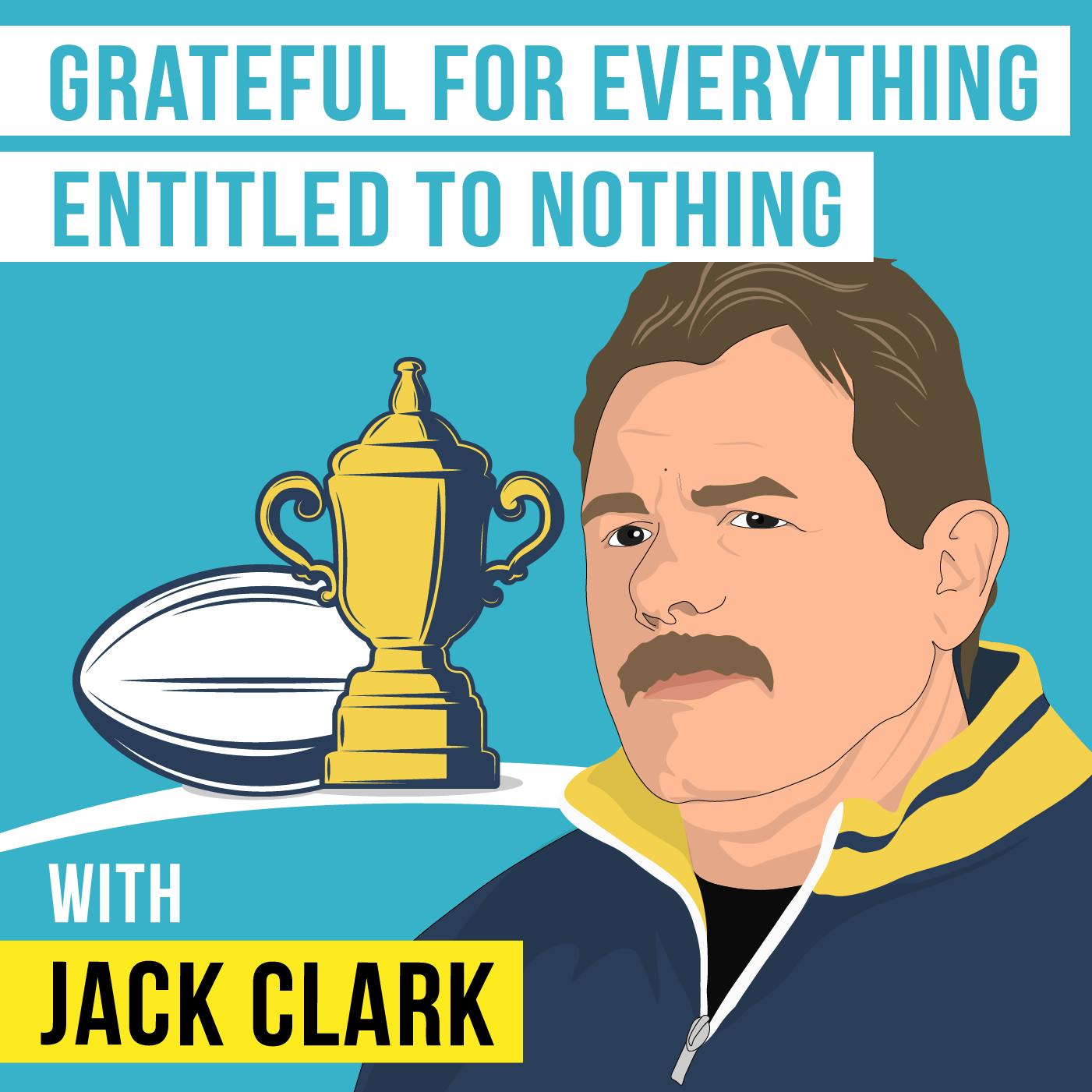
Jack Clark - Grateful for Everything, Entitled to Nothing

My guest today is Jack Clark, head coach of the University of California Varsity Rugby team. Jack has one of the highest winning percentages not only at the collegiate level but in sports history, winning an incredible 90% of games since his start as a coach in 1984. That includes a 98 game winning streak from 1990 to 1996 and a 115 game winning streak from 2004 to 2009. In our conversation, we dive into how Jack builds high-performing teams, the shared vocabulary he creates across his organization, and his work with companies applying what he's learned on the field to operating businesses. Please enjoy this conversation with Jack Clark.    For the full show notes, transcript, and links to mentioned content, check out the episode page here. ----- This episode is brought to you by Tegus. Tegus has built the most extensive primary information platform available for investors.   With Tegus, you can learn everything you’d want to know about a company in an on-demand digital platform. Investors share their expert calls, allowing others to instantly access more than 10,000 calls on Affirm, Teladoc, Roblox, or almost any company of interest. All you have to do is log in. Visit tegus.co/patrick to learn more. ------ This episode is brought to you by MIT Investment Management Company. MITIMCO is the endowment office of MIT. New and small investment funds listen up. MITIMCO is looking to find investors starting funds today.   MITIMCO is partnership-driven, long-term focused, and has an extensive history of backing investors early in their careers. These partners are key in delivering the outstanding investment returns required to support MIT's pursuit of world-class education, cutting-edge research, and groundbreaking innovation. MITIMCO is focused on finding and partnering with the best investors across the globe, no matter the market environment. No firm is too small, too young, or too non-institutional.   If you or someone you know is currently in the process of starting a fund or recently launched, please email [email protected] or discover more on their website at mitimco.org/partner. ------   Invest Like the Best is a property of Colossus Inc. For more episodes of Invest Like the Best, visit joincolossus.com/episodes.  Stay up to date on all our podcasts by signing up to Colossus Weekly, our quick dive every Sunday highlighting the top business and investing concepts from our podcasts and the best of what we read that week. Sign up here.   Follow us on Twitter: @patrick_oshag | @JoinColossus   Show Notes [00:03:44] - [First question] - Overview of his playing and coaching career [00:06:02] - The importance of creating a set of values for a team [00:07:53] - Why selflessness is such an important trait he looks for in teams [00:09:20] - Examples of selflessness in the teams [00:10:06] - The Winner Within: A Life Plan for Team Players [00:10:24] - Lessons on gratitude and entitlement [00:11:34] - Being a meritocracy on the team [00:12:55] - Rewarding merit as a coach [00:14:18] - Improving a team today, the power of the basics and fundamentals [00:15:29] - Defining toughness for players and teams [00:17:29] - Mark Bingham, the epitome of toughness [00:18:33] - Why he created and how he uses a glossary [00:22:09] - Creating a high rate of conversion in recruiting [00:25:01] - What qualities did the teams that beat him share [00:27:22] - Take on pride and something he is exceedingly proud of [00:29:17] - Translating the concepts from the court into the business world [00:32:20] - Where companies have room to improve [00:33:16] - Changing a company culture [00:34:21] - Coaches he has learned from  [00:36:00] - The power of non-cognitive grit [00:38:45] - Advice for companies creating a value set [00:40:40] - Kindest thing anyone has done for him

Disney’s Bob Iger: How acquisitions become an ecosystem, part 1

From Masters of Scale

For any distinctive brand or business, it can be a challenge to expand reach without diluting what makes you special. No one has a keener understanding of this issue than Bob Iger, executive chair and former CEO of the Walt Disney Company. In this special two-part episode, Iger takes us through how he supercharged the House of Mouse while acquiring Pixar, Marvel, Lucasfilm, and 21st Century Fox. The trick, he explains, is setting up a diverse ecosystem that preserves the culture, methods, and core talent of both old parts and new parts – and fitting them together in ways that make everyone more successful.Read a transcript of this episode at https://mastersofscale.comSubscribe to the Masters of Scale weekly newsletter at https://mastersofscale.com/subscribeSee Privacy Policy at https://art19.com/privacy and California Privacy Notice at https://art19.com/privacy#do-not-sell-my-info.

The real life skills you need to master video games | William Collis

From TED Talks Daily

What does it take to be a pro gamer? Esports expert William Collis charts the rise of the multibillion-dollar competitive gaming industry and breaks down three skills needed to master video games like Fortnite, League of Legends and Rocket League. And watch out, Collis says: these skills can set you up for crushing it at work, too.Learn more about our flagship conference happening this April at attend.ted.com/podcast Hosted on Acast. See acast.com/privacy for more information.

Page 467 of 741 (14812 episodes from United States)

🇺🇸 About United States Episodes

Explore the diverse voices and perspectives from podcast creators in United States. Each episode offers unique insights into the culture, language, and stories from this region.