🇺🇸 United States Episodes

14736 episodes from United States

#2433 - James McCann

From Joe Rogan Experience

James Donald Forbes McCann is a comedian, author, and host of “The James Donald Forbes McCann Catamaran Plan." His latest special, "James Donald Forbes McCann: Black Israelite," is streaming on YouTube.www.jdfmccann.comwww.youtube.com/@JamesDonaldForbesMcCannwww.patreon.com/jdfmccann Perplexity: Download the app or ask Perplexity anything at https://pplx.ai/rogan. Get a free welcome kit with your first subscription of AG1 at https://drinkag1.com/joerogan 50% off your first box at https://www.thefarmersdog.com/rogan! Learn more about your ad choices. Visit podcastchoices.com/adchoices

Indicators of the Year, Past and Future

From Planet Money

2025 is finally over. It was a wild year for the U.S. economy. Tariffs transformed global trading, consumer sentiment hit near-historic lows, and stocks hit dramatic new heights! So … which of these economic stories defined the year?We will square off in a family feud to make our case, debate, and decide it. Also, as we enter 2026, we are watching the trends and planning out what next years stories are likely to be. So we’re picking  which indicators will become next years most telling. On today’s episode, our indicators of this past year AND our top indicator predictions for 2026.Related episodes:The Indicators of this year and next (2024)This indicator hasn’t flashed this red since the dot-com bubble What would it mean to actually refund the tariffs?What AI data centers are doing to your electric bill What indicators will 2025 bring? Pre-order the Planet Money book and get a free gift. / Subscribe to Planet Money+Listen free: Apple Podcasts, Spotify, the NPR app or anywhere you get podcasts.Facebook / Instagram / TikTok / Our weekly Newsletter.This episode of Planet Money was produced by James Sneed. The episodes of The Indicator were produced by Angel Carreras, edited by Julia Ritchey, engineered by Robert Rodrigez and Kwesi Lee, and fact-checked by Sierra Juarez. Kate Concannon is the editor of the Indicator. Alex Goldmark is our executive producer. For sponsor-free episodes of The Indicator and Planet Money, subscribe to Planet Money+ via Apple Podcasts or at plus.npr.org.Learn more about sponsor message choices: podcastchoices.com/adchoicesNPR Privacy Policy

If you want a rich life, watch this before 2026

From My First Million

Get Jesse's guide to plan a massive 2026 (his exact system for building billion-dollar companies): https://clickhubspot.com/akd Episode 780: Shaan Puri ( ⁠https://x.com/ShaanVP⁠ ) flies to Jesse Itzler’s ( https://x.com/JesseItzler ) home to plan an epic 2026.  Show Notes: (0:00) Intro (6:00) Step 1: Get Light (11:30) Step 2: Close the books (24:38) Step 3: Plan your year (42:16) Step 4: 8 boxes — Links: • The Big A## Calendar - https://thebigasscalendar.com/  • Jesse’s YouTube channel - https://www.youtube.com/channel/UCHs5VVcrc-CgIpx1G3ioZ-A  — Check Out Shaan's Stuff: • Shaan's weekly email - https://www.shaanpuri.com  • Visit https://www.somewhere.com/mfm to hire worldwide talent like Shaan and get $500 off for being an MFM listener. Hire developers, assistants, marketing pros, sales teams and more for 80% less than US equivalents. • Mercury - Need a bank for your company? Go check out Mercury (mercury.com). Shaan uses it for all of his companies! Mercury is a financial technology company, not an FDIC-insured bank. Banking services provided by Choice Financial Group, Column, N.A., and Evolve Bank & Trust, Members FDIC — Check Out Sam's Stuff: • Hampton - https://www.joinhampton.com/ • Ideation Bootcamp - https://www.ideationbootcamp.co/ • Copy That - https://copythat.com • Hampton Wealth Survey - https://joinhampton.com/wealth • Sam’s List - http://samslist.co/ My First Million is a HubSpot Original Podcast // Brought to you by HubSpot Media // Production by Arie Desormeaux // Editing by Ezra Bakker Trupiano //

An ode to living on Earth | Oliver Jeffers (re-release)

From TED Talks Daily

If you had to explain to a newborn -- or an alien -- what it means to be a human being living on Earth in the 21st century, what would you say? Visual artist Oliver Jeffers put his answer in a letter to his son, sharing pearls of wisdom on existence and the diversity of life. He shares observations of the "beautiful, fragile drama of human civilization" in this poetic talk paired with his original illustrations and animations. Hosted on Acast. See acast.com/privacy for more information.

The Inside Story of Growth Investing at a16z

From a16z Podcast

This episode is a special replay of David George’s conversation with Harry Stebbings on 20VC. David is a General Partner on a16z’s growth team, and in this discussion he breaks down how he thinks about breakout growth investing: why great business models are now table stakes, where real edge comes from non-consensus views on TAM, and how to underwrite upside in a world of higher prices and increasing competition. They also dig into the mechanics behind the scenes: unit economics at growth, “pull vs push” products, winner-take-most market structures, and how David decides when to double or triple down on a company. Along the way, they touch on SPACs, the rise of crossover funds, single-trigger decision making, and how David manages fear, pressure, and performance over the long arc of an investing career.

[State of Post-Training] From GPT-4.1 to 5.1: RLVR, Agent & Token Efficiency — Josh McGrath, OpenAI

From Latent Space: The AI Engineer Podcast

From pre-training data curation to shipping GPT-4o, o1, o3, and now GPT-5 thinking and the shopping model, Josh McGrath has lived through the full arc of OpenAI's post-training evolution—from the PPO vs DPO debates of 2023 to today's RLVR era, where the real innovation isn't optimization methods but data quality, signal trust, and token efficiency. We sat down with Josh at NeurIPS 2025 to dig into the state of post-training heading into 2026: why RLHF and RLVR are both just policy gradient methods (the difference is the input data, not the math), how GRPO from DeepSeek Math was underappreciated as a shift toward more trustworthy reward signals (math answers you can verify vs. human preference you can't), why token efficiency matters more than wall-clock time (GPT-5 to 5.1 bumped evals and slashed tokens), how Codex has changed his workflow so much he feels "trapped" by 40-minute design sessions followed by 15-minute agent sprints, the infrastructure chaos of scaling RL ("way more moving parts than pre-training"), why long context will keep climbing but agents + graph walks might matter more than 10M-token windows, the shopping model as a test bed for interruptability and chain-of-thought transparency, why personality toggles (Anton vs Clippy) are a real differentiator users care about, and his thesis that the education system isn't producing enough people who can do both distributed systems and ML research—the exact skill set required to push the frontier when the bottleneck moves every few weeks. We discuss: Josh's path: pre-training data curation → post-training researcher at OpenAI, shipping GPT-4o, o1, o3, GPT-5 thinking, and the shopping model Why he switched from pre-training to post-training: "Do I want to make 3% compute efficiency wins, or change behavior by 40%?" The RL infrastructure challenge: way more moving parts than pre-training (tasks, grading setups, external partners), and why babysitting runs at 12:30am means jumping into unfamiliar code constantly How Codex has changed his workflow: 40-minute design sessions compressed into 15-minute agent sprints, and the strange "trapped" feeling of waiting for the agent to finish The RLHF vs RLVR debate: both are policy gradient methods, the real difference is data quality and signal trust (human preference vs. verifiable correctness) Why GRPO (from DeepSeek Math) was underappreciated: not just an optimization trick, but a shift toward reward signals you can actually trust (math answers over human vibes) The token efficiency revolution: GPT-5 to 5.1 bumped evals and slashed tokens, and why thinking in tokens (not wall-clock time) unlocks better tool-calling and agent workflows Personality toggles: Anton (tool, no warmth) vs Clippy (friendly, helpful), and why Josh uses custom instructions to make his model "just a tool" The router problem: having a router at the top (GPT-5 thinking vs non-thinking) and an implicit router (thinking effort slider) creates weird bumps, and why the abstractions will eventually merge Long context: climbing Graph Blocks evals, the dream of 10M+ token windows, and why agents + graph walks might matter more than raw context length Why the education system isn't producing enough people who can do both distributed systems and ML research, and why that's the bottleneck for frontier labs The 2026 vision: neither pre-training nor post-training is dead, we're in the fog of war, and the bottleneck will keep moving (so emotional stability helps) — Josh McGrath OpenAI: https://openai.com https://x.com/j_mcgraph Chapters 00:00:00 Introduction: Josh McGrath on Post-Training at OpenAI 00:04:37 The Shopping Model: Black Friday Launch and Interruptability 00:07:11 Model Personality and the Anton vs Clippy Divide 00:08:26 Beyond PPO vs DPO: The Data Quality Spectrum in RL 00:01:40 Infrastructure Challenges: Why Post-Training RL is Harder Than Pre-Training 00:13:12 Token Efficiency: The 2D Plot That Matters Most 00:03:45 Codex Max and the Flow Problem: 40 Minutes of Planning, 15 Minutes of Waiting 00:17:29 Long Context and Graph Blocks: Climbing Toward Perfect Context 00:21:23 The ML-Systems Hybrid: What's Hard to Hire For 00:24:50 Pre-Training Isn't Dead: Living Through Technological Revolution

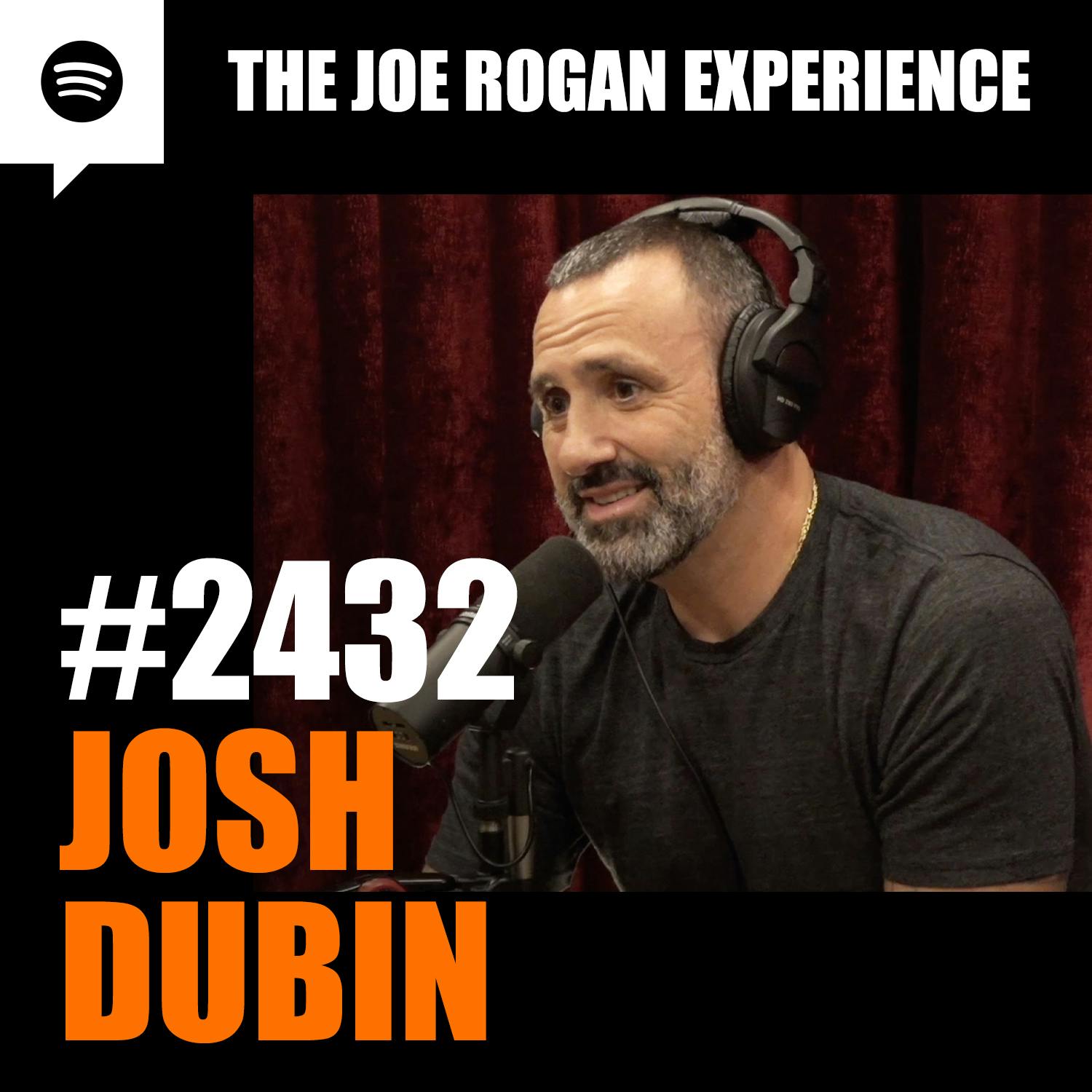
#2432 - Josh Dubin

From Joe Rogan Experience

Josh Dubin is the Executive Director of the Perlmutter Center for Legal Justice, a criminal justice reform advocate, and civil rights attorney.https://cardozo.yu.edu/directory/josh-dubin Perplexity: Download the app or ask Perplexity anything at https://pplx.ai/rogan. Visible. Live in the know. Join today at https://www.visible.com/ 50% off your first box at https://www.thefarmersdog.com/rogan! Learn more about your ad choices. Visit podcastchoices.com/adchoices

How to prepare yourself for 2026 (with 3 lessons from TED-Ed)

From TED Talks Daily

The end of the year is a time to reflect and think ahead. What hopes did you have for 2025, and what might be different for 2026? In this special episode, learn from three TED-Ed lessons on how to overcome your mistakes, make smarter decisions and get motivated even when you don’t feel like it. Hosted on Acast. See acast.com/privacy for more information.

[State of RL/Reasoning] IMO/IOI Gold, OpenAI o3/GPT-5, and Cursor Composer — Ashvin Nair, Cursor

From Latent Space: The AI Engineer Podcast

From Berkeley robotics and OpenAI's 2017 Dota-era internship to shipping RL breakthroughs on GPT-4o, o1, and o3, and now leading model development at Cursor, Ashvin Nair has done it all. We caught up with Ashvin at NeurIPS 2025 to dig into the inside story of OpenAI's reasoning team (spoiler: it went from a dozen people to 300+), why IOI Gold felt reachable in 2022 but somehow didn't change the world when o1 actually achieved it, how RL doesn't generalize beyond the training distribution (and why that means you need to bring economically useful tasks into distribution by co-designing products and models), the deeper lessons from the RL research era (2017–2022) and why most of it didn't pan out because the community overfitted to benchmarks, how Cursor is uniquely positioned to do continual learning at scale with policy updates every two hours and product-model co-design that keeps engineers in the loop instead of context-switching into ADHD hell, and his bet that the next paradigm shift is continual learning with infinite memory—where models experience something once (a bug, a mistake, a user pattern) and never forget it, storing millions of deployment tokens in weights without overloading capacity. We discuss: Ashvin's path: Berkeley robotics PhD → OpenAI 2017 intern (Dota era) → o1/o3 reasoning team → Cursor ML lead in three months Why robotics people are the most grounded at NeurIPS (they work with the real world) and simulation people are the most unhinged (Lex Fridman's take) The IOI Gold paradox: "If you told me we'd achieve IOI Gold in 2022, I'd assume we could all go on vacation—AI solved, no point working anymore. But life is still the same." The RL research era (2017–2022) and why most of it didn't pan out: overfitting to benchmarks, too many implicit knobs to tune, and the community rewarding complex ideas over simple ones that generalize Inside the o1 origin story: a dozen people, conviction from Ilya and Jakob Pachocki that RL would work, small-scale prototypes producing "surprisingly accurate reasoning traces" on math, and first-principles belief that scaled The reasoning team grew from ~12 to 300+ people as o1 became a product and safety, tooling, and deployment scaled up Why Cursor is uniquely positioned for continual learning: policy updates every two hours (online RL on tab), product and ML sitting next to each other, and the entire software engineering workflow (code, logs, debugging, DataDog) living in the product Composer as the start of product-model co-design: smart enough to use, fast enough to stay in the loop, and built by a 20–25 person ML team with high-taste co-founders who code daily The next paradigm shift: continual learning with infinite memory—models that experience something once (a bug, a user mistake) and store it in weights forever, learning from millions of deployment tokens without overloading capacity (trillions of pretraining tokens = plenty of room) Why off-policy RL is unstable (Ashvin's favorite interview question) and why Cursor does two-day work trials instead of whiteboard interviews The vision: automate software engineering as a process (not just answering prompts), co-design products so the entire workflow (write code, check logs, debug, iterate) is in-distribution for RL, and make models that never make the same mistake twice — Ashvin Nair Cursor: https://cursor.com X: https://x.com/ashvinnair_ Chapters 00:00:00 Introduction: From Robotics to Cursor via OpenAI 00:01:58 The Robotics to LLM Agent Transition: Why Code Won 00:09:11 RL Research Winter and Academic Overfitting 00:11:45 The Scaling Era and Moving Goalposts: IOI Gold Doesn't Mean AGI 00:21:30 OpenAI's Reasoning Journey: From Codex to O1 00:20:03 The Blip: Thanksgiving 2023 and OpenAI Governance 00:22:39 RL for Reasoning: The O-Series Conviction and Scaling 00:25:47 O1 to O3: Smooth Internal Progress vs External Hype Cycles 00:33:07 Why Cursor: Co-Designing Products and Models for Real Work 00:34:14 Composer and the Future: Online Learning Every Two Hours 00:35:15 Continual Learning: The Missing Paradigm Shift 00:44:00 Hiring at Cursor and Why Off-Policy RL is Unstable

The Most Hidden Path to Financial Freedom in America

From My First Million

Get 200 business ideas here: https://clickhubspot.com/fda Episode 779: Sam Parr ( ⁠https://x.com/theSamParr⁠ ) and Shaan Puri ( ⁠https://x.com/ShaanVP⁠ ) talk to Alex Smereczniak( https://x.com/AlexfromFranzy ) about one of the most overlooked paths to wealth creation.  Show Notes: (0:00) Intro (2:21) Turning $2K into $400K revenue (8:48) A case for franchising (10:56) The blueprint (16:02) How one operator opened 100 franchises (23:43) Another Nine (30:19) Waterloo Turf (33:47) PopUp Bagels (36:36) Red Flags (41:10) Nothing Bundt Cakes, Crumbl Cookie, home services (46:06) Garage Kings (50:15) Senior care (51:52) Funeral homes, crime scene clean up, pet cremation (55:24) Red flags (1:02:21) The Flynn Group — Links: • Franzy - https://franzy.com/  • List of Top Franchise Brands - https://go.franzy.com/download-franzys-top-ten-franchises-of-2026 • WakeWash - https://wakewashwfu.com/  • Dave’s Hot Chicken - https://daveshotchicken.com/  • Another Nine - https://anothernine.com/  • Waterloo Turf - https://waterlooturf.com/  • PopUp Bagels - https://www.popupbagels.com/  • Roark Capital - https://www.roarkcapital.com/  • Nothing Bundt Cakes - https://www.nothingbundtcakes.com/  • Benjamin Franklin Plumbing - https://www.benjaminfranklinplumbing.com/  • Garage Kings - https://garagekings.com/  • Bio 1 - https://bio1sd.com/  • Aftermath - https://aftermath.com/  • Flynn Group - https://flynn.com/  — Check Out Shaan's Stuff: • Shaan's weekly email - https://www.shaanpuri.com  • Visit https://www.somewhere.com/mfm to hire worldwide talent like Shaan and get $500 off for being an MFM listener. Hire developers, assistants, marketing pros, sales teams and more for 80% less than US equivalents. • Mercury - Need a bank for your company? Go check out Mercury (mercury.com). Shaan uses it for all of his companies! Mercury is a financial technology company, not an FDIC-insured bank. Banking services provided by Choice Financial Group, Column, N.A., and Evolve Bank & Trust, Members FDIC — Check Out Sam's Stuff: • Hampton - https://www.joinhampton.com/ • Ideation Bootcamp - https://www.ideationbootcamp.co/ • Copy That - https://copythat.com • Hampton Wealth Survey - https://joinhampton.com/wealth • Sam’s List - http://samslist.co/ My First Million is a HubSpot Original Podcast // Brought to you by HubSpot Media // Production by Arie Desormeaux // Editing by Ezra Bakker Trupiano //

253. Top 10: The Best Communication Tips from 2025

Our 10 favorite communication insights from 2025.The most transformative communication insights are the ones we actually remember to use. That’s why host Matt Abrahams is taking stock of his favorite communication tips from this year, so we can carry them into the next.In this annual Think Fast, Talk Smart tradition, Abrahams shares his top 10 communication insights from guests over the past year, from facilitating connection through Gina Bianchini's "proactive serendipity” to Jenn Wynn’s use of dialogue as a gateway to synergy. Whether you're looking to build trust, boost productivity, or speak more spontaneously, this year’s top 10 insights offer a reminder of all we’ve learned this year — and a roadmap for better communication in the year ahead.Episode Reference Links:Ep.177 Don’t Resolve, Evolve: Top 10 Lessons From 2024Ep.120 A Few of Matt’s Favorite Things: 10 Communication Takeaways from 2023's TFTS Episodes  Connect:Premium Signup >>>> Think Fast Talk Smart PremiumEmail Questions & Feedback >>> [email protected] Transcripts >>> Think Fast Talk Smart WebsiteNewsletter Signup + English Language Learning >>> FasterSmarter.ioThink Fast Talk Smart >>> LinkedIn, Instagram, YouTubeMatt Abrahams >>> LinkedInChapters:(00:00) - Introduction (01:23) - Facilitation and Productive Serendipity (02:58) - Toxic vs. Healthy Productivity (05:21) - Dialogue as the Path to Synergy (07:53) - How Actions Build Trust (09:19) - Communication as an Unselfish Act (11:14) - Be Present and Prepare to Be Spontaneous (13:19) - Why Memorable Words Matter (15:17) - Persuasion and Identity (17:06) - Finding Meaning Through Purpose (19:01) - Listening to Negative Emotions (21:18) - Conclusion

How to Manage -- and Motivate -- Gen Z

From HBR IdeaCast

How different is the newest generation in the workforce, really? While stereotypes abound — some of them unfair — it’s important to understand what the young adults of Gen Z have in common and how they differ from Millennials, Gen X and Boomers. Tim Elmore is a leadership coach and author who says that this generation in particular craves connection with their colleagues, meaningful work, and assurances that they’re seen as people not commodities. He explains how organizational leaders can adapt to the needs of these workers while still maintaining high standards, providing feedback, and building grit and resilience. Elmore wrote the book "The Future Begins with Z: Nine Strategies to Lead Generation Z as They Disrupt the Workplace."

Why a16z's Martin Casado Believes the AI Boom Still Has Years to Run

From a16z Podcast

This episode is a special replay from The Generalist Podcast, featuring a conversation with a16z General Partner Martin Casado. Martin has lived through multiple tech waves as a founder, researcher, and investor, and in this discussion he shares how he thinks about the AI boom, why he believes we’re still early in the cycle, and how a market-first lens shapes his approach to investing. They also dig into the mechanics behind the scenes: why AI coding could become a multi-trillion-dollar market, how a16z evolved from a small generalist firm into a specialized organization, the growing role of open-source models, and why Martin believes AGI debates often obscure more meaningful questions about how technology actually creates value.

Pioneers of AI: Mark Cuban’s investment strategy in this new era of tech

From Masters of Scale

Mark Cuban has spent decades as a serial entrepreneur and investor, with one of the best track records on the planet (including celebrity status on ABC’s Shark Tank). In this episode of Pioneers of AI, Cuban joins host Rana El Kaliouby for a wide-ranging conversation about whether we are in an AI bubble, how he’s applying his investment philosophy to AI, and why the AI world is tending to excite him less and less each day.Learn more about Pioneers of AI: http://pioneersof.ai/Visit the Rapid Response website here: https://www.rapidresponseshow.com/See Privacy Policy at https://art19.com/privacy and California Privacy Notice at https://art19.com/privacy#do-not-sell-my-info.

Nick Kokonas - Know What You Are Selling

Today, I am replaying my conversation with Nick Kokonas, one of my favorites from the show. Nick is the co-founder of 3 of the best restaurants and bars in America - Alinea, Next, and The Aviary as well as the co-founder and CEO of Tock, a comprehensive booking system for restaurants. He majored in philosophy before becoming a derivatives trader and is now one of the most well-known names in the hospitality industry. In this conversation, Nick shares his experience of bringing a business mindset to the restaurant industry. I'll remember it for why it's so important for a business to really know what it's selling and then actually sell it. Nick also pulls back the curtain on why restaurants and even book publishers can be great businesses if you do them the right way. I felt like this conversation could have gone on for hours and I hope you enjoy it. For the full show notes, transcript, and links to mentioned content, check out the episode page ⁠⁠⁠⁠⁠⁠⁠⁠⁠⁠⁠⁠⁠⁠⁠here. ----- This episode is brought to you by⁠⁠⁠⁠⁠⁠⁠⁠⁠⁠⁠⁠⁠⁠⁠⁠ Ramp⁠⁠⁠⁠⁠⁠⁠⁠⁠⁠⁠⁠⁠⁠⁠⁠. Ramp’s mission is to help companies manage their spend in a way that reduces expenses and frees up time for teams to work on more valuable projects. Go to⁠⁠⁠⁠⁠⁠⁠⁠⁠⁠⁠⁠⁠⁠⁠⁠ ramp.com/invest to sign up for free and get a $250 welcome bonus. ----- This episode is brought to you by⁠⁠⁠⁠⁠⁠⁠⁠⁠⁠⁠⁠⁠⁠⁠⁠⁠⁠ Ridgeline⁠⁠⁠⁠⁠⁠⁠⁠⁠⁠⁠⁠⁠⁠⁠⁠⁠⁠. Ridgeline has built a complete, real-time, modern operating system for investment managers. It handles trading, portfolio management, compliance, customer reporting, and much more through an all-in-one real-time cloud platform. Head to ⁠⁠⁠⁠⁠⁠⁠⁠⁠⁠⁠⁠⁠⁠⁠⁠⁠⁠ridgelineapps.com⁠⁠⁠⁠⁠⁠⁠⁠⁠⁠⁠⁠⁠⁠⁠⁠⁠⁠ to learn more about the platform. ----- This episode is brought to you by ⁠⁠⁠⁠⁠⁠⁠⁠⁠⁠⁠⁠AlphaSense⁠⁠⁠⁠⁠⁠⁠⁠⁠⁠⁠⁠. AlphaSense has completely transformed the research process with cutting-edge AI technology and a vast collection of top-tier, reliable business content. Invest Like the Best listeners can get a free trial now at⁠⁠⁠⁠⁠⁠⁠⁠⁠⁠⁠⁠ Alpha-Sense.com/Invest⁠⁠⁠⁠⁠⁠⁠⁠⁠⁠⁠⁠ and experience firsthand how AlphaSense and Tegus help you make smarter decisions faster. ----- Editing and post-production work for this episode was provided by The Podcast Consultant (⁠⁠⁠⁠⁠⁠⁠⁠⁠⁠⁠⁠⁠⁠⁠⁠https://thepodcastconsultant.com⁠⁠⁠⁠⁠⁠⁠⁠⁠⁠⁠⁠⁠⁠⁠⁠). Timestamps: (00:00) Welcome to Invest Like The Best (03:58) Intro to Nick Kokonas (4:36) – Why it’s so important to own something (6:09) – Make decisions that have outcomes (8:34) – His interest in the restaurant business (10:28) – Why restaurants are so tough (13:39) – How their business mindset changed their running of the restaurant (16:09) – Words they would avoid in the restaurant (17:53) – Asking the right questions in the restaurant business (22:14) – Importance in taking the right risks (23:36) – Coming up with innovative strategies for ticketing, selling meals ahead of time, and dynamic pricing (31:42) – Can dynamic pricing be extended to other businesses (32:54) – Origin of Tock (37:51) – Early days of Tock and identifying the right customers/challenges (43:07) – Importance of the first customer (45:56) – The typical restaurant business model (50:57) – Lessons from Tock and the importance of knowing what you’re selling (55:21) – Lessons from publishing (57:18) – Other aspects of business that people know but do nothing about (1:01:53) – Their response to Covid and lessons learned (1:09:17) – The real impact to the food delivery companies (1:10:58) – How businesses communicate their end processes to their customers (1:15:41) – The Kindest Thing

[State of AI Startups] Memory/Learning, RL Envs & DBT-Fivetran — Sarah Catanzaro, Amplify

From Latent Space: The AI Engineer Podcast

From investing through the modern data stack era (DBT, Fivetran, and the analytics explosion) to now investing at the frontier of AI infrastructure and applications at Amplify Partners, Sarah Catanzaro has spent years at the intersection of data, compute, and intelligence—watching categories emerge, merge, and occasionally disappoint. We caught up with Sarah live at NeurIPS 2025 to dig into the state of AI startups heading into 2026: why $100M+ seed rounds with no near-term roadmap are now the norm (and why that terrifies her), what the DBT-Fivetran merger really signals about the modern data stack (spoiler: it's not dead, just ready for IPO), how frontier labs are using DBT and Fivetran to manage training data and agent analytics at scale, why data catalogs failed as standalone products but might succeed as metadata services for agents, the consumerization of AI and why personalization (memory, continual learning, K-factor) is the 2026 unlock for retention and growth, why she thinks RL environments are a fad and real-world logs beat synthetic clones every time, and her thesis for the most exciting AI startups: companies that marry hard research problems (RAG, rule-following, continual learning) with killer applications that were simply impossible before. We discuss: The DBT-Fivetran merger: not the death of the modern data stack, but a path to IPO scale (targeting $600M+ combined revenue) and a signal that both companies were already winning their categories How frontier labs use data infrastructure: DBT and Fivetran for training data curation, agent analytics, and managing increasingly complex interactions—plus the rise of transactional databases (RocksDB) and efficient data loading (Vortex) for GPU-bound workloads Why data catalogs failed: built for humans when they should have been built for machines, focused on discoverability when the real opportunity was governance, and ultimately subsumed as features inside Snowflake, DBT, and Fivetran The $100M+ seed phenomenon: raising massive rounds at billion-dollar valuations with no 6-month roadmap, seven-day decision windows, and founders optimizing for signal ("we're a unicorn") over partnership or dilution discipline Why world models are overhyped but underspecified: three competing definitions, unclear generalization across use cases (video games ≠ robotics ≠ autonomous driving), and a research problem masquerading as a product category The 2026 theme: consumerization of AI via personalization—memory management, continual learning, and solving retention/churn by making products learn skills, preferences, and adapt as the world changes (not just storing facts in cursor rules) Why RL environments are a fad: labs are paying 7–8 figures for synthetic clones when real-world logs, traces, and user activity (à la Cursor) are richer, cheaper, and more generalizable Sarah's investment thesis: research-driven applications that solve hard technical problems (RAG for Harvey, rule-following for Sierra, continual learning for the next killer app) and unlock experiences that were impossible before Infrastructure bets: memory, continual learning, stateful inference, and the systems challenges of loading/unloading personalized weights at scale Why K-factor and growth fundamentals matter again: AI felt magical in 2023–2024, but as the magic fades, retention and virality are back—and most AI founders have never heard of K-factor — Sarah Catanzaro X: https://x.com/sarahcat21 Amplify Partners: https://amplifypartners.com/ Where to find Latent Space X: https://x.com/latentspacepod Substack: https://www.latent.space/ Chapters 00:00:00 Introduction: Sarah Catanzaro's Journey from Data to AI 00:01:02 The DBT-Fivetran Merger: Not the End of the Modern Data Stack 00:05:26 Data Catalogs and What Went Wrong 00:08:16 Data Infrastructure at AI Labs: Surprising Insights 00:10:13 The Crazy Funding Environment of 2024-2025 00:17:18 World Models: Hype, Confusion, and Market Potential 00:18:59 Memory Management and Continual Learning: The Next Frontier 00:23:27 Agent Environments: Just a Fad? 00:25:48 The Perfect AI Startup: Research Meets Application 00:28:02 Closing Thoughts and Where to Find Sarah

Why economists got free trade with China so wrong

From Planet Money

With the year coming to a close, we're sharing our most popular Planet Money bonus episode of 2025! As U.S. trade with China exploded in the early 2000's, American manufacturing began to shrivel. Those workers struggled to adapt and find new jobs. It ran counter to how mainstream economics at the time viewed free trade ... that it would be a clear win for the U.S. Greg Rosalsky talks with David Autor about why economists got free trade with China so wrong.  Autor, an MIT economics professor, and his colleagues published a series of eye-opening studies over the last 15 years or so that brought to light the costs of U.S. trade with China. We also hear Autor's thoughts on the role of tariffs and get an update on his research. With better, more precise data, Autor says we have a more nuanced and "bleaker" picture of what happened to these manufacturing workers. You can read about Autor's research and sign up for The Planet Money Newsletter here. To hear more bonus content like this and support NPR and public media, sign up for Planet Money+ in Apple Podcasts or at plus.npr.org/planetmoney. Regular episodes remain free to listen!Learn more about sponsor message choices: podcastchoices.com/adchoicesNPR Privacy Policy

The Private Equity Veterinary Scam Making You Poorer and Killing Your Pets

From The Tucker Carlson Show

Why’s it suddenly so expensive to take your dog to the vet? Here’s a hint: private equity. Joe Spector on the solution. (00:00) Why Is Veterinary Care So Expensive? (02:55) The Private Equity Firms Swallowing Small Businesses (23:14) The AVMA Cartel Pushing Lobbying Politicians (27:13) The Mass Veterinarian Shortage Paid partnerships with: Masa Chips: Get 25% off with code TUCKER at https://masachips.com/tucker Battalion Metals: Shop fair-priced gold and silver. Gain clarity and confidence in your financial future at https://battalionmetals.com/tucker Last Country Supply: Real prep starts with the basics. Here’s what we keep stocked: https://lastcountrysupply.com Learn more about your ad choices. Visit megaphone.fm/adchoices

Page 6 of 737 (14736 episodes from United States)

🇺🇸 About United States Episodes

Explore the diverse voices and perspectives from podcast creators in United States. Each episode offers unique insights into the culture, language, and stories from this region.