-
 Keith Rabois - If You Can’t Sell Them, Compete with Them
From 🇺🇸 Invest Like the Best with Patrick O'Shaughnessy, published at 2018-12-18 10:30
My guest this week is Keith Rabois. Keith is currently an investment partner at Khosla Ventures, but has a storied and diverse background as an investor, entrepreneur, and executive. He has worked in senior positions at Paypal, LinkedIn, and Square; has led investments in companies like Stripe, YouTube, Palantir, and AirBnB; and started the company OpenDoor, which aims to transform the process of selling a home through technology. One fun fact about Keith is that he may have the most impressive list of bosses I’ve ever seen, which we discuss during the episode. We cover a lot, but one thing we kept returning to was business strategy. Keith’s frameworks for gaining and building strategic power helped me clarify my thinking on the topic, and his examples of contrarian thinking will hopefully make you question some commonly held beliefs. Please enjoy our conversation. For more episodes go to InvestorFieldGuide.com/podcast. Sign up for the book club, where you’ll get a full investor curriculum and then 3-4 suggestions every month at InvestorFieldGuide.com/bookclub. Follow Patrick on Twitter at @patrick_oshag Show Notes 1:35 (First Question) – A look at his investing philosophy 3:16 – Favorite examples of his own investment history 4:40 – 7 Powers: The Foundations of Business Strategy 5:07 – Understanding what is anomalous in a given investment 7:07 – How much a secret needs to be protected within a business 11:51 – Why accumulating advantage with data is of interest to Keith 15:12 – Digital health companies and ideas that he finds compelling 16:17 – Nuance around financial services that investors should be mindful of 17:56 – How do they evaluate managers ability to recruit talent 19:36 – How similar are the roles of entrepreneur, board member, investor, etc that Keith has had in his career 24:02 – Ways that Keith is a contrarian, including his feelings on “lean startup.” 27:04 – Is problem identification a specific skill set 28:29 – Objection with experimentation/iteration 30:02 – Bad ideas in venture 31:36 – What he likes about Apple 31:51 – Creative Selection: Inside Apple's Design Process During the Golden Age of Steve Jobs 32:26 - Interview questions for identifying great talent 35:41 – Elements of good design 37:14 – Impact of platforms on opening new opportunities 38:42 – His take on valuation in the early stage environment 40:33 – Advice he would give people early in their careers 43:58 – Do high growth companies get beat by established larger businesses 45:25 – Popular narratives that he thinks are just wrong 48:22 – His thoughts on how people should learn, balancing experience vs information gathering 50:00 – Other investors that are taking a unique approach to investing 51:57 – Reflecting on the entrepreneur as a client model of private equity 55:04 – Books that he recommends that is least known 55:18 – The Upside of Stress: Why Stress Is Good for You, and How to Get Good at It 56:30 – Kindest thing anyone has done for Keith Learn More For more episodes go to InvestorFieldGuide.com/podcast. Sign up for the book club, where you’ll get a full investor curriculum and then 3-4 suggestions every month at InvestorFieldGuide.com/bookclub Follow Patrick on twitter at @patrick_oshag
-
 Bryan Krug – High Yield Credit Investing
From 🇺🇸 Invest Like the Best with Patrick O'Shaughnessy, published at 2018-12-11 10:30
My guest today is Bryan Krug, who manages the Artisan Partners Credit Team and overseas more than $3B in high yield credit investments for the firm. This was my first conversation on high yield, so I took it as an opportunity to get an overview on the investment universe and home in on the tools used for analysis and security selection. As an equity investor, I think one of the most fruitful areas of research is into ways that companies fail or go wrong, and credit investors focus almost entirely on this potential for impairment. My guess is that all equity investors will learn something useful from this conversation. Please enjoy. For more episodes go to InvestorFieldGuide.com/podcast. Sign up for the book club, where you’ll get a full investor curriculum and then 3-4 suggestions every month at InvestorFieldGuide.com/bookclub. Follow Patrick on Twitter at @patrick_oshag Show Notes 2:11 – Overview of the high yield debt markets 5:05 – Why should investors consider this investment class 7:11 – How analyzing a company’s debt is different from what equity analysts look for 8:42 – Primary factors when exploring a company’s ability to de-lever 9:43 – What is their alpha vs others in the space 12:02 – Deep dive into the quantitative factors for them to look into a deal 14:25 – Benchmarks he uses 16:08 – Portfolio construction 17:15 – Their preference for broadband providers over cable tv networks 20:01 – What piques his interest about spreads 21:50 – The ratings of debt 25:40 – A recent example of an opportunity and how the mispricing was identified 29:17 – Most valuable data sets in this world 31:51 – Favorite part of this process 32:26 – Most surprising new learning 33:01 Maintaining your advantage 34:49 – The biggest pools of error in this industry 48:00 – What industries interest Bryan 40:50 – Dedication to this market 41:45 – Evolution of his healthy skepticism 42:38 – Can things in the debt market help to project what will happen in the equity markets 44:56 – Current view of the world based on what is happening in the credit markets 45:51 – Categories of convenience that he cares about 49:15 – Anything that has him worried in high yield markets 50:38 – Kindest thing anyone has done for Bryan Learn More For more episodes go to InvestorFieldGuide.com/podcast. Sign up for the book club, where you’ll get a full investor curriculum and then 3-4 suggestions every month at InvestorFieldGuide.com/bookclub Follow Patrick on twitter at @patrick_oshag
-
 Maureen Chiquet – Leadership Through Hard Conversations
From 🇺🇸 Invest Like the Best with Patrick O'Shaughnessy, published at 2018-12-04 10:30
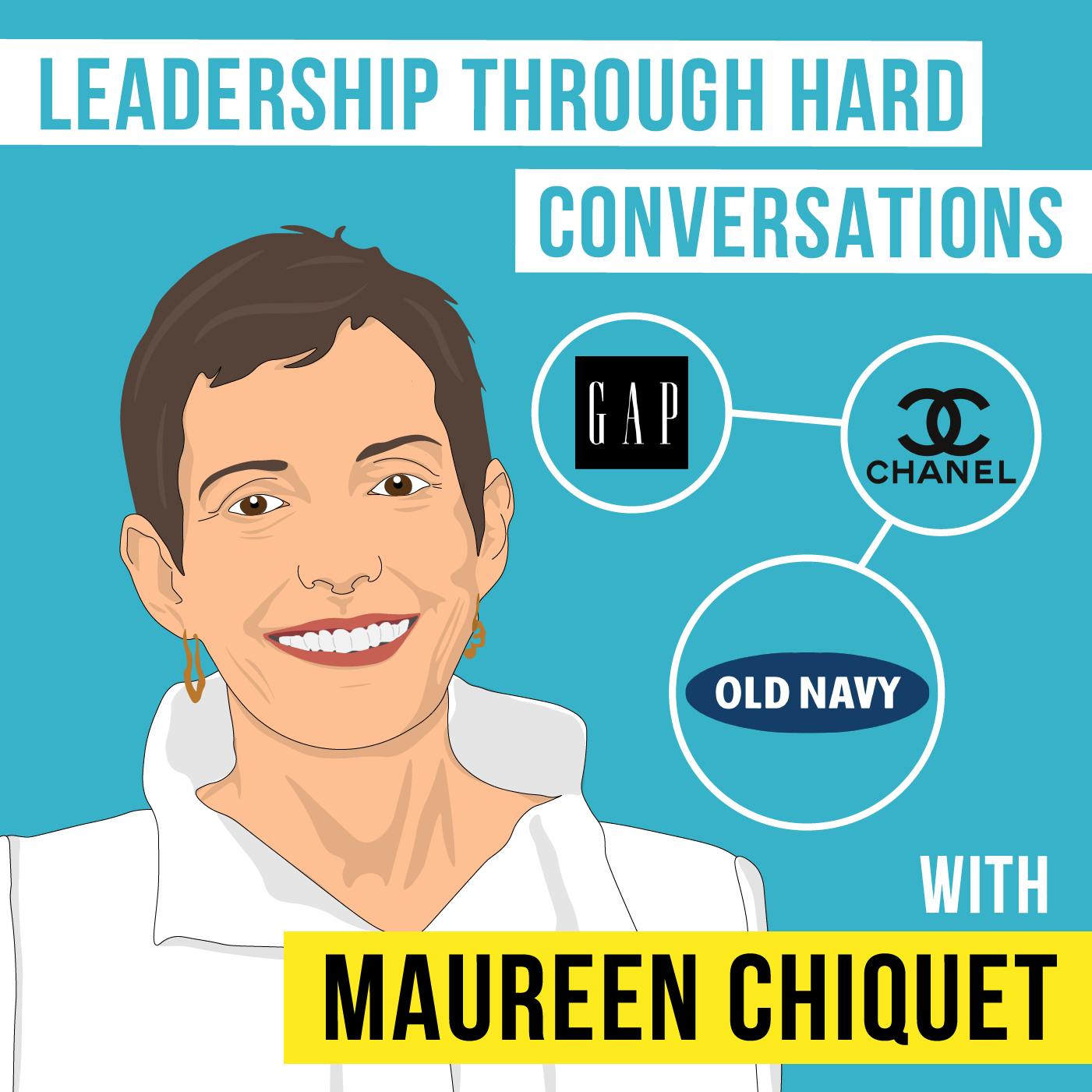
My guest this week is Maureen Chiquet, the former longtime CEO of Chanel. Maureen also spent much of her career at the Gap, growing Old Navy from scratch, and serving as the president of Banana Republic. The topic of discussion is her experience running large businesses and of finding one’s way in a career and as a leader of others. I hope you enjoy this unique conversation and that it encourages you to, among other things, travel somewhere new and interesting in the coming year. For more episodes go to InvestorFieldGuide.com/podcast. Sign up for the book club, where you’ll get a full investor curriculum and then 3-4 suggestions every month at InvestorFieldGuide.com/bookclub. Follow Patrick on Twitter at @patrick_oshag Show Notes 1:15 - (First Question) – The importance of being able to put yourself in other people’s shoes 3:05 – Scott Norton Podcast Episode 4:36 – Most memorable sale from her early career 5:03 – The intersection of facts and emotions in sales 6:40 – Most important emotions in business 7:30 – The importance of identity as part of the selling/marketing of sales and products 9:10 – Difference in strategy for luxury brands vs others 9:21 – The Luxury Strategy: Break the Rules of Marketing to Build Luxury Brands 10:55 – Striking a balance between tradition and innovation 13:46 – Advice for new brand company related to rarity 14:59 – Importance of being organic with your brand purpose 15:01 – Wild Company: The Untold Story of Banana Republic 16:26 – Maureen’s purpose over the years 18:44 – How to harness your purpose for your job 20:53 – Her process for writing and desire to do TV 24:01 – Her time with Micky Drexler 27:40 – As a leader, guiding people to succeed. 32:33 – Strategy for shifting culture at a company 37:54 – The importance of courageous conversations we should all be having 43:45 – Markers of courageous conversations 46:43 – How she thinks about introspection 50:12 – What draws here to certain locations 55:15 – Advice for younger people starting out their career 57:11 – Kindest thing anyone has done for Maureen Learn More For more episodes go to InvestorFieldGuide.com/podcast. Sign up for the book club, where you’ll get a full investor curriculum and then 3-4 suggestions every month at InvestorFieldGuide.com/bookclub Follow Patrick on twitter at @patrick_oshag
-
 Hunter Walk – Building Picks and Shovels
From 🇺🇸 Invest Like the Best with Patrick O'Shaughnessy, published at 2018-11-27 10:30
My guest this week is Hunter Walk, the co-founder of Homebrew, a unique venture capital firm. Hunter is a tool builder, having spent his career before venture at companies like Google and YouTube. The topic of our conversation is the intersection of creative expression, technology, human behavior, and problem solving. We discuss his time at the company behind the video game Second Life, building tools for creators at YouTube, and why a very hands-on style of early stage venture investing represents an interesting use of his skillset at this stage of his career. Please enjoy my conversation with Hunter Walk. For more episodes go to InvestorFieldGuide.com/podcast. Sign up for the book club, where you’ll get a full investor curriculum and then 3-4 suggestions every month at InvestorFieldGuide.com/bookclub. Follow Patrick on Twitter at @patrick_oshag Show Notes 1:24 - (First Question) – Background on Second Life and what role Hunter had there 6:10 – The virtual currency system at use in Second Life 9:51 – Measuring how people behaved in this virtual world 12:21 – How closely is the Second Life world mimicking real life 15:13 – The market for platforms that lets people take on creative ventures 17:58 – Investments that interest Homebrew 20:21 – Lessons learned while working at YouTube 28:34 – The idea behind Homebrew 33:44 – How to best describe good problems to solve for 36:10 – The Shadow economy and investing in companies operating there 42:17 – Monetization of attention 47:22 – His interest in fintech companies 54:03 – Major trends of change he’s observed over his first three funds 1:04:13 – What is there take on the state of returns for VC’s 1:09:52 – What is the most common way that founders need help and what advice is more helpful 1:14:35 – Kindest thing anyone has done for Hunter Learn More For more episodes go to InvestorFieldGuide.com/podcast. Sign up for the book club, where you’ll get a full investor curriculum and then 3-4 suggestions every month at InvestorFieldGuide.com/bookclub Follow Patrick on twitter at @patrick_oshag
-
 Alex Moazed – Building Modern Monopolies
From 🇺🇸 Invest Like the Best with Patrick O'Shaughnessy, published at 2018-11-20 10:30
[REPLAY] Modern Monopolies: What It Takes to Dominate the 21st Century Economy, which explores the platform business model (Uber, Airbnb, Github). Alex is also the founder and CEO of Applico, a company that he started in his dorm room that is since grown into a huge enterprise that helps startups and Fortune 500 innovate with platforms. Alex and I talk about history and future of businesses and different types of business models. There’s a lot in here for investors, entrepreneurs, and historians. Please enjoy! For more episodes go to InvestorFieldGuide.com/podcast. Sign up for the book club, where you’ll get a full investor curriculum and then 3-4 suggestions every month at InvestorFieldGuide.com/bookclub Follow Patrick on twitter at @patrick_oshag Books Referenced Modern Monopolies: What It Takes to Dominate the 21st Century Economy The Systems Bible: The Beginner's Guide to Systems Large and Small The Master Switch: The Rise and Fall of Information Empires Zero to One: Notes on Startups, or How to Build the Future Links Referenced Failed Color App Applico Show Notes 2:39 – (first question) – Exploring the history of business models from linear to platform. 5:46 – A look at the share of overall business platform companies have taken over 7:06 - Modern Monopolies: What It Takes to Dominate the 21st Century Economy 7:48 – The potential for platform businesses over the next 20 years 9:18 – Detailing the difference between a linear and a platform business 12:08 – Exploring transaction costs and core transactions across different business models 19:49 – Is the platform business model good for investors and VC’s since so many can get crushed when there’s a sole victor, or is it just for the founders and entrepreneurs. 24:35 – How the self-driving car is going to deliver more opportunity for consumer consumption 27:15 – Untapped supplies as the opportunity for new platforms and where we could see new openings 30:24 – How consolidated will things become across all platforms 33:16 – How do platform companies create a moat to keep others from replicating their business strategy 37:03 – Are there platform strategies that specifically don’t work 37:40 - Failed Color App 38:45 – Why complex systems typically don’t scale up and you should think small and easy to get started 38:47 – The Systems Bible: The Beginner's Guide to Systems Large and Small 40:02 – How the origin of so many larger companies started out small and localized, and why it makes investors more comfortable 41:37 – How Alibaba had to tweak their business model to accommodate the Chinese market 44:07 – Why are the modern monopolies better for consumers 47:52 – Exploring platforms that are asset heavy 49:00 – What do you look for as a VC to determine 52:05 – Alex’s take on whether a platform based company like Uber should be more asset heavy 54:31 – Exploring some lesser known platform businesses that Alex finds interesting 56:18 – If there is a demand in the secondary markets for a product, why don’t the primary suppliers simply raise their prices 57:03 – What Alex’s portfolio of platform-based businesses would look like 58:48 – A couple of most influential books Alex has read 59:12 – The Master Switch: The Rise and Fall of Information Empires 59:38 – Zero to One: Notes on Startups, or How to Build the Future and other Peter Thiel books 59:53 – Looking at Applico, how it started and how it become so focused on the platform business model 1:03:56 - Most memorable day for Alex 1:05:13 – Kindest person to Alex in his life 1:06:10 – What platform opportunities could exist in the financial world Learn More For more episodes go to InvestorFieldGuide.com/podcast. Sign up for the book club, where you’ll get a full investor curriculum and then 3-4 suggestions every month at InvestorFieldGuide.com/bookclub Follow Patrick on twitter at @patrick_oshag
-
 Cliff Asness – The Past, The Present & Future of Quant
From 🇺🇸 Invest Like the Best with Patrick O'Shaughnessy, published at 2018-11-13 10:30
My guest this week is Cliff Asness, the managing and founding principal at AQR Capital Management. 20 years after its founding in 1998, AQR manages $226 Billion dollars across a number of quantitatively based investing strategies. Cliff was an original quant researcher and he has long been one of the financial writers and thinkers that I look to for education and for inspiration. I distinctly remember reading one paper in particular—value and momentum everywhere—somewhat early in my career and thinking: this is the kind of research I want to do forever. You can always tell when talking to Cliff or hearing him speak that he just loves researching markets. There is a deep intellectual honesty in his work, and a respect for thinkers at different ends of the market spectrum, from Gene Fama and Ken French, to Jack Bogle, to Dick Thaler and Robert Shiller. Our conversation is about all things quant—past, present, and future. Cliff touches on many of the big issues facing quant investing and tells some great strong along the way. I hope you enjoy our discussion. Let’s dive in. For more episodes go to InvestorFieldGuide.com/podcast. Sign up for the book club, where you’ll get a full investor curriculum and then 3-4 suggestions every month at InvestorFieldGuide.com/bookclub. Follow Patrick on Twitter at @patrick_oshag Show Notes 1:47 - (First Question) – Favorite superhero 2:43 – Why ‘Ka nama kaa lajerama’ is part of his twitter profile. 3:38 – How portfolios have shifted the way they use factors in a portfolio 10:15 – What are good questions clients are asking right now 13:24 – Contrarian Factor Timing Is Deceptively Difficult 15:40 – Does technology impact investing strategy 22:14 – When to share information vs keep it proprietary for clients sake 26:40 – How their research process is governed 31:14 – How they will incorporate machine learning into their process 34:21 – What they will do when red flags show up 37:01 – Wackiest question from a client 41:47 – The Three Sharpe Ratio Strategy 41:53 – Liquid Alt Ragnarök 48:10 – Does his thinking change when it comes to asset allocation vs portfolio building 50:17 – Parallels Between the Cross-Sectional Predictability of Stock and Country Returns 53:01 – Sin a Little 57:14 – Trends in fees and pricing 1:02:43 – Thoughts on private equity markets 1:11:03 – Common attributes of really good researchers 1:13:21 – What is he most curious about right now 1:15:43 – What excites him outside of finance 1:17:00 – How much he discusses his work with his kids 1:18:35 – The Devil in HML’s details 1:19:36 – Kindest thing anyone has done for him Learn More For more episodes go to InvestorFieldGuide.com/podcast. Sign up for the book club, where you’ll get a full investor curriculum and then 3-4 suggestions every month at InvestorFieldGuide.com/bookclub Follow Patrick on twitter at @patrick_oshag
-
 [REPLAY] Peter Attia, M.D. - How to Live a Longer, Higher Quality Life
From 🇺🇸 Invest Like the Best with Patrick O'Shaughnessy, published at 2018-11-06 10:30
[REPLAY] My guest this week is Peter Attia, M.D., whose mission is to understand and improve human lifespan and healthspan (or quality of life). Reading Peter’s research, you find that there are many similarities between health and investing—ideas like compounding—which we explore in detail. We spend a lot of time on mind, body, spirit and performance as it relates to living a better life. Of particular interest is the strategic problem that we face when studying longevity. As Peter puts it in our conversation: we are the species of interest, but we can’t conduct the kinds of experiments on humans—randomized trials, with control groups—that we apply to solve other big problems. So we have to back our way into a better understanding of longevity and quality of life. To that end, we discuss what we can learn from studying centenarians, the problem of progress in science, a drug called Rapamycin (which Peter believes could be revolutionary), eating, the importance of muscle mass, and the idea of distressed tolerance. We emerge with a framework for thinking about health and well-being which can hopefully help us all live longer, better lives. Please enjoy! For comprehensive show notes on this episode go to http://investorfieldguide.com/attia For more episodes go to InvestorFieldGuide.com/podcast. Sign up for the book club, where you’ll get a full investor curriculum and then 3-4 suggestions every month at InvestorFieldGuide.com/bookclub Follow Patrick on twitter at @patrick_oshag Posts From Peter Attia That You Should Read Do Calories Matter How You Move Defines How You Live 2016 Update Long List of Questions Answered: Part 1 and Part 2 Links Referenced The Scientific Method-Richard Feynman Knowing Versus Understanding-Feynman again Books Referenced Barbarians at the Gate: The Fall of RJR Nabisco Diffusion of Innovations Good Calories, Bad Calories Show Notes 2:31 – (first question) – Getting Peter to define the concept of wealth and how it might have changed in his life 5:01 – How do you increase the number of really good people in your life. 6:50 – Looking at the relationship between healthspan and lifespan and a chart that Peter created on this specific topic. 11:11 – Drilling down into the different dimensions and aspects of this chart that could be most important for people, especially how compounding plays into our health. 16:57 – The difference between strategies and tactics that will help you extend lifespan 17:54 – The Scientific Method-Richard Feynman 21:41 – Different types of intermittent fasting 28:59 – What role does repair play in health 34:17 – Barbarians at the Gate: The Fall of RJR Nabisco 36:01 – Looking back, what health trends today will look absurd 36:19 – Diffusion of Innovations 39:24 – What are the primary benefits of weight lifting 40:21 – The importance of glucose disposal 45:07 – Good Calories, Bad Calories 46:31 – What is the state of progress in the scientific community 52:14 – Peter is asked about how he guards against getting too attached to old beliefs 1:01:51 – A look at how performance relates to healthspan 1:03:34 –Peter’s first great auto-racing experience 1:09:17 – Looking into Peter’s medical practice and understanding his thinking that goes into helping people 1:18:11 – The most memorable day in Peter’s career 1:22:31 – The kindest thing anyone has done for Peter Learn More For more episodes go to InvestorFieldGuide.com/podcast. Sign up for the book club, where you’ll get a full investor curriculum and then 3-4 suggestions every month at InvestorFieldGuide.com/bookclub Follow Patrick on twitter at @patrick_oshag
-
 Ryan Caldbeck – Quant in Private Markets
From 🇺🇸 Invest Like the Best with Patrick O'Shaughnessy, published at 2018-10-30 09:30
My guest this week is Ryan Caldbeck, a private equity investor who wants to bring quantitative rigor to the private markets. Ryan is the CEO of Circle Up, which uses a system it calls Helio to identify attractive investments in early stage consumer brands. While I am of course a fan of quantitative investing, I also know from experience how much harder private markets are than public markets when it comes to the transactions themselves. We discuss this and many other potential roadblocks to bringing models to private markets. Using many individual companies as examples, Ryan explains some of the major predictive factors they’ve uncovered in their research. We also discuss which parts of the private markets might be infiltrated by quant processes first, and which may never be. I expect many more to go on a journey similar to Ryan’s in the years to come. They serve as an interesting example for ambitious investors out there. Please enjoy our conversation. For more episodes go to InvestorFieldGuide.com/podcast. Sign up for the book club, where you’ll get a full investor curriculum and then 3-4 suggestions every month at InvestorFieldGuide.com/bookclub. Follow Patrick on Twitter at @patrick_oshag Show Notes 1:39 - (First Question) – Formation of Helio 6:57 – How they handle the relationship building needed to make investments in private markets 10:26 – Why consumer and retail are interesting spaces to apply their quantitative approach in private markets 12:54 – Searching for new relevant data 16:14 – How do they stay ahead of the commoditization of uniqueness 16:21 – Pattern Recognition and Machine Learning 17:24 – Sam Hinkie Podcast Episode 18:00 – Dominant predictive factors in this world 21:05 – Which is more important, relative value or rate of change 21:48 – What does the data say about online sales vs offline (being in a store) 23:30 – Variable that consumer investors think matters but it doesn’t 24:53 – Valuing companies and accounting for mispricing’s 25:36 – Michael Recce Podcast Episode 26:41 – Goes through the process using Liquid Ivy as an example 28:46 – Most interesting sub-categories 29:33 – Future for this model 32:10 – Albert Wenger Podcast Episode 35:19 – Other categories outside consumer and retail interest Ryan 36:28 – Biggest challenges for CircleUp as a business 38:46 – Handicapping their earnings expectations 41:36 – Take on the VC/PE landscape 43:03 – The types of models that are most interesting to the team 45:05 – Quantitative elements of brand that are most interesting 47:30 – Most unique brand and distribution strategy he’s come across 53:27 – Who has influenced Ryan the most 54:37 – His personal values 55:51 – More people who had an influence on Ryan 56:05 – The Innovator's Dilemma: The Revolutionary Book That Will Change the Way You Do Business 57:07 – Thoughts on goal setting at the company 59:29 – Unchangeable factors that shape their long-term vision 1:02:01 – Most interesting individual conversation as part of this journey 1:04:02 – If he could only keep one dataset, what would he keep 1:05:09 – kindest thing anyone has done for Ryan Learn More For more episodes go to InvestorFieldGuide.com/podcast. Sign up for the book club, where you’ll get a full investor curriculum and then 3-4 suggestions every month at InvestorFieldGuide.com/bookclub Follow Patrick on twitter at @patrick_oshag
-
 Howard Lindzon – Fintech and Trend Following
From 🇺🇸 Invest Like the Best with Patrick O'Shaughnessy, published at 2018-10-23 09:30
My guest this week aspires to be the Larry David of investing, and we discuss why. Howard Lindzon is hard to categorize. He’s primarily an early stage investor right now, but he’s participated in all types of investing. He describes himself as a trend follower and always has a unique take on popular topics. In this conversation, we cover his investing history and his take on the fintech investing landscape. What I’ll remember most is the idea that we should focus on what is happening versus what we think will happen or might happen. There is a Peter Lynch like quality to some of Howard’s thinking, and a willingness to embrace the weird that I find very appealing. The few times I’ve met Howard, I’ve smiled or laughed most of the time, which is about as nice a thing as I could say about someone. He’s a good example of why I like this podcast format. His investing style bears literally no resemblance to my own, but it got me thinking about a lot of new things. I hope you enjoy our chat. For more episodes go to InvestorFieldGuide.com/podcast. Sign up for the book club, where you’ll get a full investor curriculum and then 3-4 suggestions every month at InvestorFieldGuide.com/bookclub. Follow Patrick on Twitter at @patrick_oshag Show Notes 1:42 - (First Question) – Why he wants to be the Larry David of investing 2:00 – Why his investing style is best described as trend following 4:05 – The biggest inspirations/influencers on Howard’s investing 6:39 – What made his second mentor, Fred Wilson such a great investor 9:52 – Formation of Wall Strip 12:33 – Why weird is so important in his investment philosophy 14:56 – Understanding his investment philosophy through his investment in Rally Road. 21:02 – His assessment of the fintech space 28:54 – Why fintech pushes away from human nature 30:50 – Major trends in fintech that have his attention 35:02 – What stands out about the teams at these companies he invests in 36:37 – Thoughts on fractionalization plays 36:44 – Capital Allocators podcast episode 36:54 – Venture Stories Podcast 40:03 – Any major trends that are changing and worth attention 42:06 – The Tipping Point: How Little Things Can Make a Big Difference 43:26 – His take on the media landscape 45:10 – Kindest thing anyone has done for him Learn More For more episodes go to InvestorFieldGuide.com/podcast. Sign up for the book club, where you’ll get a full investor curriculum and then 3-4 suggestions every month at InvestorFieldGuide.com/bookclub Follow Patrick on twitter at @patrick_oshag
-
 CoVenture Credit - Esoteric Credit with Ail Hamed, Brian Harwitt, and Marc Porzecanski
From 🇺🇸 Invest Like the Best with Patrick O'Shaughnessy, published at 2018-10-16 09:30
My guests this week are Ali Hamed, Brian Harwitt and Marc Porzecanski who work together at CoVenture Credit. When I first had Ali on as a podcast guest, we discussed the many aspects of what his firm does, ranging from venture, to crypto, to credit. We glossed over the lending side of the business, but having since learned a lot from them on the topic, I was excited to get the chance to talk with members of their credit team for today’s longer exploration of esoteric high yield lending. I am always proselytizing the value of investor education, s this week we have a podcast first. The CoVenture team has prepared a long series of posts that correspond to our conversation and go even deeper into the topic of credit investing. You can find them in the shownotes at investorfieldguide.com/credit This is entirely differently from any conversation I’ve shared before, so I hope you learn as much as I did. Please enjoy my discussion with team CoVenture Credit. For more episodes go to InvestorFieldGuide.com/podcast. Sign up for the book club, where you’ll get a full investor curriculum and then 3-4 suggestions every month at InvestorFieldGuide.com/bookclub. Follow Patrick on Twitter at @patrick_oshag Show Notes 1:42 - (First Question) – The formation of their unique credit business 7:09 – Their advantage in seeing both the equity and credit side of their investments 10:23 – Looking at the Returnly deal as an example 14:07 – How they view these deals and are able to sustain them as long-term investments 18:09 – Their interest in payroll deduction lending 20:08 – Finding unique types of default risk 21:31 – What stands out in a platform that makes CoVenture want to take a deeper look 26:43 – Most interesting types of problem they have come across that they have yet to do a deal in 31:35 – What is going to change to make for more thoughtful underwriting of subprime lending 35:51 – Major structures of asset backed lending 39:49 – Whether the home serves as an interesting playground for credit opportunities and whether people will own anything again 42:44 – Mark’s experience working at a huge firm vs his experience at CoVenture 44:31 – How does the current credit cycle impact their view 47:04 – Lending against bitcoin 50:06 – Who is interested in these loans against bitcoin 50:57 – How to set interest rates against a weird asset like this 53:00 – What are the key determents of success in this business 1:02:27 – Kindest thing anyone has team for the team 1:03:52 – How to treat people that you pass on Learn More For more episodes go to InvestorFieldGuide.com/podcast. Sign up for the book club, where you’ll get a full investor curriculum and then 3-4 suggestions every month at InvestorFieldGuide.com/bookclub Follow Patrick on twitter at @patrick_oshag
-
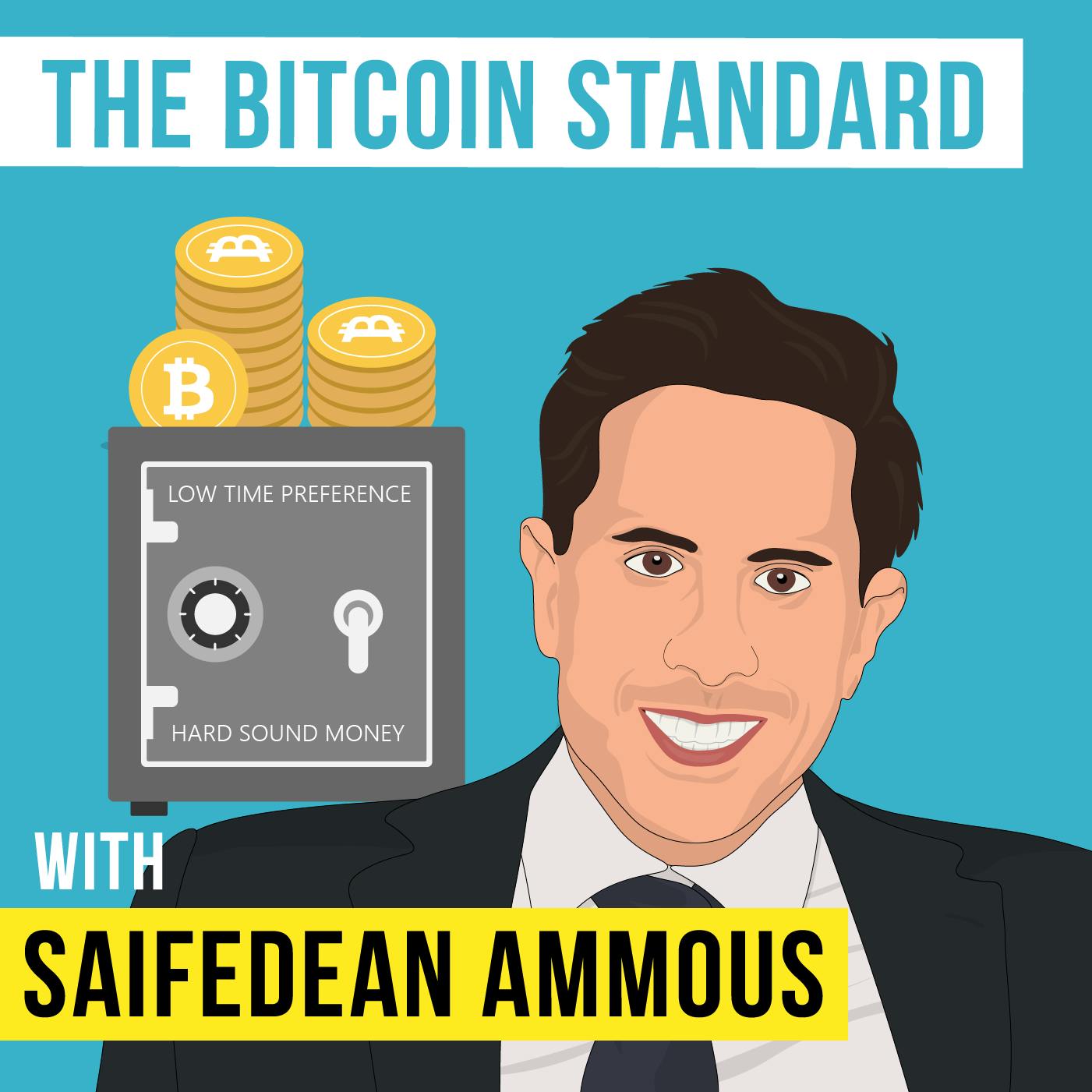 Saifedean Ammous – The Bitcoin Standard
From 🇺🇸 Invest Like the Best with Patrick O'Shaughnessy, published at 2018-10-09 09:30
My guest this week is Saifedean Ammous, author of the book the Bitcoin Standard. This was one of the more interesting conversations I’ve had in the world of cryptocurrency, primarily because we don’t talk about Bitcoin or Crypto until 25 minutes into the talk. Instead, we focus on history, economics, sound money, low time preference, and gold—all interesting topics. Saif’s thinking on cryptocurrencies other than bitcoin—which is that they are worthless—is unique and thought provoking. His reasoning around why gold shouldn’t be compared to the returns generated by assets like equities was also compelling. If you’ve followed my Hash Power episodes, this is a new a differentiated interpretation of Bitcoin as a technology for the store of value use case. Please enjoy our conversation. Hash Power is presented by Fidelity Investments For more episodes go to InvestorFieldGuide.com/podcast. Sign up for the book club, where you’ll get a full investor curriculum and then 3-4 suggestions every month at InvestorFieldGuide.com/bookclub. Follow Patrick on Twitter at @patrick_oshag Show Notes 2:10 - (First Question) – Explain Sound Money 4:25 – Examples of hard vs easy money 7:36 – the even money trap 9:36 – The benefits of hard money vs today’s standards 14:05 – Why this interests him 14:16 – Gold Wars: The Battle Against Sound Money As Seen From A Swiss Perspective 14:56 – Democracy – The God That Failed: The Economics and Politics of Monarchy, Democracy and Natural Order 16:17 – Correlation between time preference and people’s ability to succeed in life 19:59 – How money markets worked in the late 18th century vs today 27:57 – How he came across Bitcoin and how he thinks of it as a digital gold 35:42 – How will the world transition to a sound money standard 42:15 – The impacts of hyperinflation on crypto currencies 45:04 – The idea of a orderly upgrade of the world currency 48:20 – His thinking on alternative coins 54:05 – What it takes to compete with bitcoin 1:01:43 – How he diversifies 1:04:35 – Stalling bitcoins demand 1:06:11 – Does he apply his thinking of lower time preference elsewhere in his life 1:07:09 – Kindest thing anyone has done for him Learn More For more episodes go to InvestorFieldGuide.com/podcast. Sign up for the book club, where you’ll get a full investor curriculum and then 3-4 suggestions every month at InvestorFieldGuide.com/bookclub Follow Patrick on twitter at @patrick_oshag
-
 Jeremiah Lowin – Machine Learning in Investing
From 🇺🇸 Invest Like the Best with Patrick O'Shaughnessy, published at 2018-09-25 09:30
My guest this week is one of my best and oldest friends, Jeremiah Lowin. Jeremiah has had a fascinating career, starting with advanced work in statistics before moving into the risk management field in the hedge fund world. Through his career he has studied data, risk, statistics, and machine learning—the last of which is the topic of our conversation today. He has now left the world of finance to found a company called Prefect, which is a framework for building data infrastructure. Prefect was inspired by observing frictions between data scientists and data engineers, and solves these problems with a functional API for defining and executing data workflows. These problems, while wonky, are ones I can relate to working in quantitative investing—and others that suffer from them out there will be nodding their heads. In full and fair disclosure, both me and my family are investors in Jeremiah’s business. You won’t have to worry about that potential conflict of interest in today’s conversation, though, because our focus is on the deployment of machine learning technologies in the realm of investing. What I love about talking to Jeremiah is that he is an optimist and a skeptic. He loves working with new statistical learning technologies, but often thinks they are overhyped or entirely unsuited to the tasks they are being used for. We get into some deep detail on how tests are set up, the importance of data, and how the minimization of error is a guiding light in machine learning and perhaps all of human learning, too. Let’s dive in. For more episodes go to InvestorFieldGuide.com/podcast. Sign up for the book club, where you’ll get a full investor curriculum and then 3-4 suggestions every month at InvestorFieldGuide.com/bookclub. Follow Patrick on Twitter at @patrick_oshag Show Notes 2:06 - (First Question) – What do people need to think about when considering using machine learning tools 3:19 – Types of problems that AI is perfect for 6:09 – Walking through an actual test and understanding the terminology 11:52 – Data in training: training set, test set, validation set 13:55 – The difference between machine learning and classical academic finance modelling 16:09 – What will the future of investing look like using these technologies 19:53 – The concept of stationarity 21:31 – Why you shouldn’t take for granted label formation in tests 24:12 – Ability for a model to shrug 26:13 – Hyper parameter tuning 28:16 – Categories of types of models 30:49 – Idea of a nearest neighbor or K-Means Algorithm 34:48 – Trees as the ultimate utility player in this landscape 38:00 – Features and data sets as the driver of edge in Machine Learning 40:12 – Key considerations when working through time series 42:05 – Pitfalls he has seen when folks try to build predictive market investing models 44:36 – Getting started 46:29 – Looking back at his career, what are some of the frontier vs settled applications of machine learning he has implemented 49:49 – Does intereptability matter in all of this 52:31 – How gradient decent fits into this whole picture Learn More For more episodes go to InvestorFieldGuide.com/podcast. Sign up for the book club, where you’ll get a full investor curriculum and then 3-4 suggestions every month at InvestorFieldGuide.com/bookclub Follow Patrick on twitter at @patrick_oshag
-
 Trail Magic - Lessons from Two Years of the Podcast
From 🇺🇸 Invest Like the Best with Patrick O'Shaughnessy, published at 2018-09-18 09:30
This week, to mark the two-year anniversary of the podcast, I offer a quick summary looking back and forward.
-
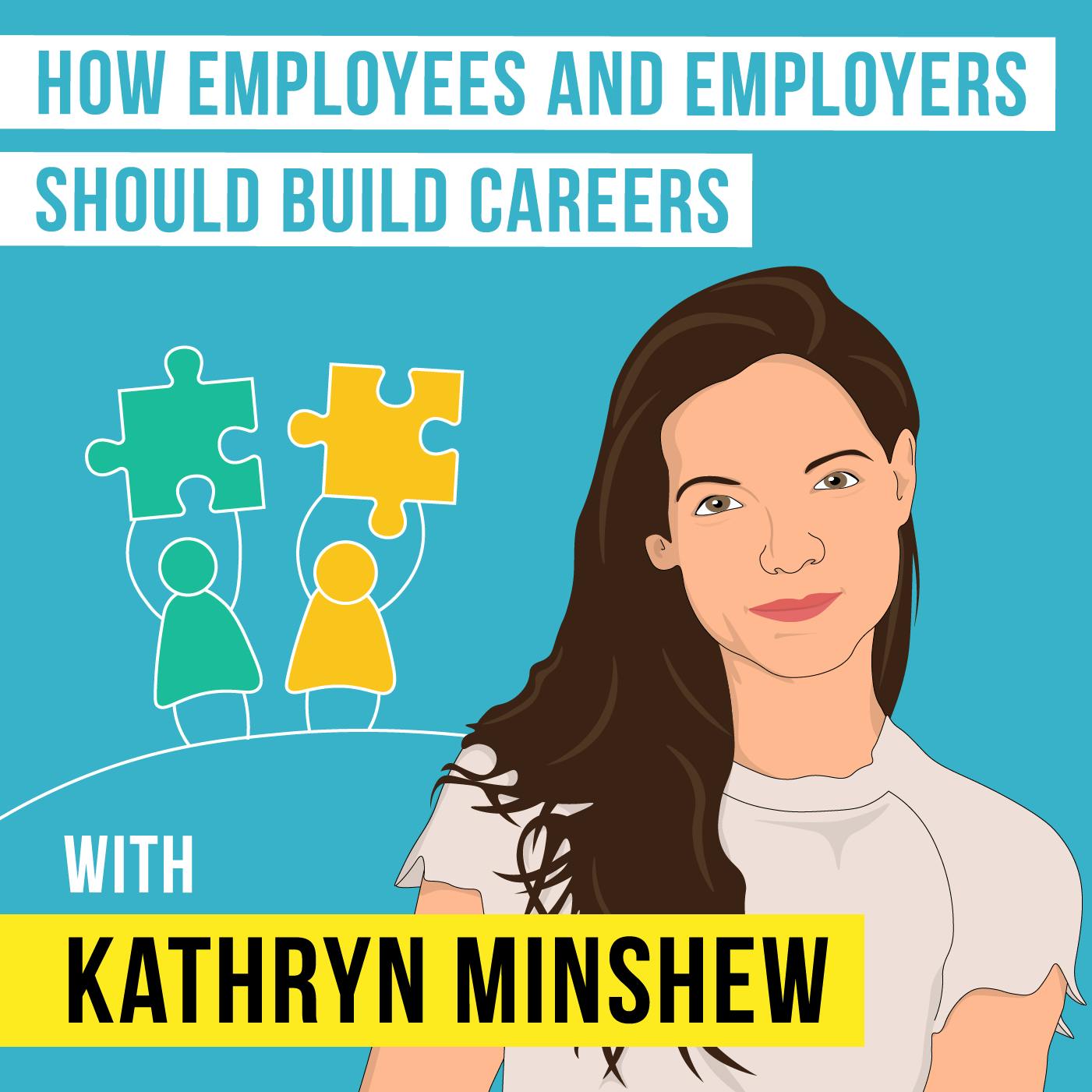 Kathryn Minshew - How Employers and Employees Should Build Careers
From 🇺🇸 Invest Like the Best with Patrick O'Shaughnessy, published at 2018-09-11 09:30
My guest this week is Kathryn Minshew, the co-founder and CEO of the Muse, and the co-author of The New Rules for Work: the Modern Playbook for Navigating Your Career. I’ve learned in business is that the quality of people and the culture they create dictate outcomes. Having made plenty of mistakes hiring, and having had many enormous successes, I am always interested in best practices for finding and successfully recruiting the right people. Given that Kathryn runs a jobs marketplace and has written a book on the topic, she is the perfect person to explore some the core concepts around pairing people with the right positions. We discuss how companies should market to prospective employees, how employees should represent themselves to employers, and the most common mistakes she sees across the hiring landscape. Please enjoy our conversation. For more episodes go to InvestorFieldGuide.com/podcast. Sign up for the book club, where you’ll get a full investor curriculum and then 3-4 suggestions every month at InvestorFieldGuide.com/bookclub. Follow Patrick on Twitter at @patrick_oshag Show Notes 1:31 - (First Question) Largest changes in the nature of work and how people approach finding the right job for them 3:27 – Can this work be jammed into a formula 5:18 – What strategies is she sharing with employers when it comes to hiring 8:31 – How long should the process take 9:33 – Biggest mistakes employers make in this process 10:39 – Besides the usual stuff, what can perspective employees do to bolster their chances 12:50 – How much more efficient will matching technology get in the years to come 16:00 – What will be the largest changes to work itself 19:09 – Will we move away from full time work into parsels of work units 20:50 – Most successful piece of content or content strategy the Muse has employed 22:34 – Advice for early stage entrepreneurs 26:24 – Kindest thing anyone has done for Kathryn Learn More For more episodes go to InvestorFieldGuide.com/podcast. Sign up for the book club, where you’ll get a full investor curriculum and then 3-4 suggestions every month at InvestorFieldGuide.com/bookclub Follow Patrick on twitter at @patrick_oshag
-
 Richard Craib - Crowdsourcing Predictive Algorithms
From 🇺🇸 Invest Like the Best with Patrick O'Shaughnessy, published at 2018-09-04 09:30
I intentionally avoid the world of quantitative investing on this podcast. The whole point of this format is to learn about many different fields, and the vast majority of my time is already spent in quant world. Occasionally I’ve broken this rule because of something unique, including this week’s conversation with Richard Craib, the founder and CEO of Numerai. If you listen to the podcast often you’ll have heard me reference Numerai, a hedge fund which blends quant investing, cryptocurrencies, crowdsourcing, and machine learning — talk about a PR company’s dream. One important note: Numerai is both incredibly open and very secretive. You may sense a bit of frustration on my part, but that is only because, as a fellow quant who loves details about data and modeling, we couldn’t go deeper into the details on the record. We discuss how Numerai has created an incentive structure to work with data scientists around the world in an attempt to build better investing models. The idea of having data scientists stake cryptocurrency in support of the quality of their models is fascinating. Like many hedge funds, Numerai doesn’t share its track record, so we don’t know if this works—but I hope you, like me, use this conversation as inspiration for how different technologies can intersect. Hash Power is presented by Fidelity Investments Please enjoy my conversation with Richard Craib. For more episodes go to InvestorFieldGuide.com/podcast. Sign up for the book club, where you’ll get a full investor curriculum and then 3-4 suggestions every month at InvestorFieldGuide.com/bookclub. Follow Patrick on Twitter at @patrick_oshag Show Notes 2:32 - (First Question) – How he came up with Numerai and how its related to his background 4:08 – How he works with and models the data for his system 5:24 – Describing machine learning as it relates to his work, and specifically linear regression 7:11 – The important stages in his sequence 8:46 – How the scale in the number of data scientists they use is different from other areas 11:30 – Which is the most important aspect of creating alpha; their data, algorithm work, proprietary ensembling of those algorithms. 14:30 – The idea of staking in blockchain 17:30 – Does the magnitude of the stake matter in blockchain 19:10 – Understanding the full incentive structure for both staked and unstaked work 21:07 – How is the prize pool determined 22:29 – Philosophy on how to source interesting data 26:11 – His thoughts on the crowd model and the wisdom of crowds 27:12 – The size of stakers for Numerai 27:51 – Interpreting the models and knowing when something is broken 30:03 – How they think about people not submitting their models 31:48 – Their model building 32:39 – Most interesting set of things they are working on to improve the overall process 35:38 – The Market for "Lemons": Quality Uncertainty and the Market Mechanism 37:11 – How people can come along with their own data 39:00 – His thoughts on the quantitative investment community 40:44 – What else is interesting him in the hedge fund world 44:03 – Building a marketplace and staving off competition 46:16 – Kindest thing anyone has done for him Learn More For more episodes go to InvestorFieldGuide.com/podcast. Sign up for the book club, where you’ll get a full investor curriculum and then 3-4 suggestions every month at InvestorFieldGuide.com/bookclub Follow Patrick on twitter at @patrick_oshag
-
 Elad Gil – How to Identify Interesting Markets
From 🇺🇸 Invest Like the Best with Patrick O'Shaughnessy, published at 2018-08-28 09:30
My guest this week has a fascinating background. He has a PhD in biology but has split his time as both an investor and an operator. As an investor, he’s involved in companies like Airbnb, Coinbase, Instacart, Opendoor, Stripe, Square, and Pinterest—not too shabby. As an operator, he helped both Google and Twitter scale their businesses, in the case of Twitter from 100 employees to 1500 over two years. He’s just written a book about these experiences called the High Growth Handbook. Our talk centered on what makes for a good investment and more specifically how Elad identifies an interesting market. Operators and early stage investors will find lots of nuggets in this fun conversation. Please enjoy. For more episodes go to InvestorFieldGuide.com/podcast. Sign up for the book club, where you’ll get a full investor curriculum and then 3-4 suggestions every month at InvestorFieldGuide.com/bookclub. Follow Patrick on Twitter at @patrick_oshag Show Notes 1:31 - (First Question) – Process for evaluating a young business 2:43 – Andy Rachleff Podcast Episode 3:09 – Data factors for evaluating a business 5:08 – Reference checks 6:42 – Advice for companies that are reliant on product cyclicality 7:01 – Where to Go After Product-Market Fit: An Interview with Marc Andreessen 7:31 – High Growth Handbook 9:30 - Lessons learned from marketing and growing companies 12:09 – How do you hire the best people to improve your distribution 13:16 – How does he think about lifetime customer value vs customer acquisition cost 15:57 – Should companies just focus on the high margin power users 16:35 – Best ways to organize a company hierarchy 19:16 – His interest and background in the area of longevity research 21:52 – Changes he has made in his own life as a result of this longevity research 22:56 – Most effective use of a CEO’s time 24:58 – How he evaluates or identifies interesting markets for potential businesses 28:03 – Any markets that fit his criteria that are underappreciated by investors 30:02 – Worst practices for businesses 32:19 – Kindest thing anyone has done for him 33:20 – What would be the topic of his next book 34:40 – Biggest lessons he’s learned about markets Learn More For more episodes go to InvestorFieldGuide.com/podcast. Sign up for the book club, where you’ll get a full investor curriculum and then 3-4 suggestions every month at InvestorFieldGuide.com/bookclub Follow Patrick on twitter at @patrick_oshag
-
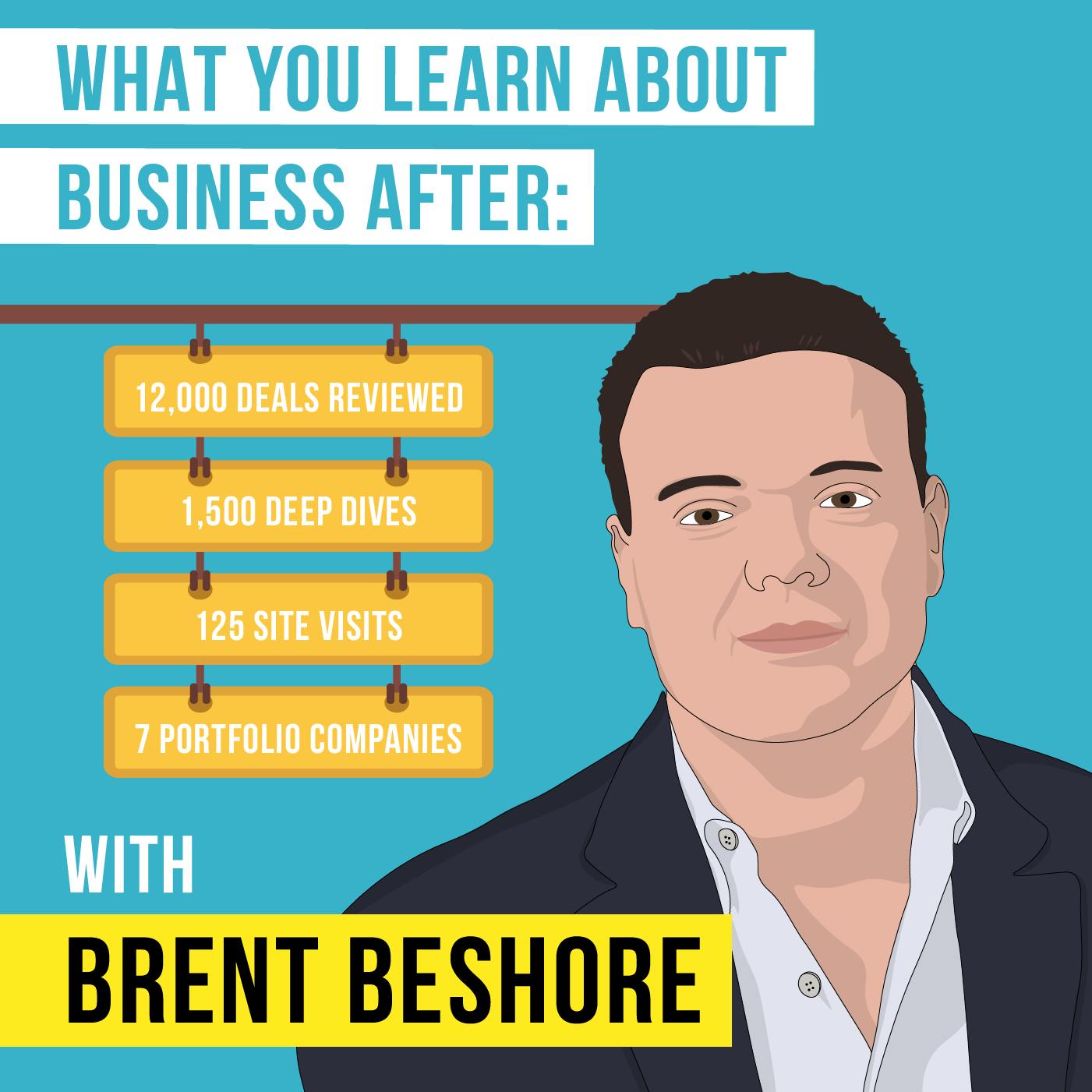 What You Learn About Business Deals After: 12,000 Deals Reviewed, 1,500 Deep Dives, 125 Site Visits, and 7 Portfolio Companies with Brent Beshore
From 🇺🇸 Invest Like the Best with Patrick O'Shaughnessy, published at 2018-08-21 09:30
For the 100th episode, I’ve brought back my good friend Brent Beshore. Brent was the 10th guest on the podcast, after we met because of a mutual interest in capital allocation. I quickly learned that Brent was one of the most unique and thoughtful investors around. He was an entrepreneur from the moment he left school, trying many different things before finding a fit buying smaller business with the intention of owning them forever. What amazes me about Brent is his encyclopedic understanding of business and the nuances of different business models and deal structures. This comes from reps. He and his team have looked at about 12,000 deals over the years, at every kind of business that you could imagine. I’ve been with him when he goes through this process and it’s fun to hear what makes certain businesses stand out from others, which is largely the topic of this conversation. You all know transparency is key for me, so it’s important to know that my family and I are investors in a fund called permanent equity, run by Brent and his firm Adventure.es. To commemorate this milestone episode, I can think of no one better than Brent, because he exemplifies what has made this podcast so fun for me: learning from other people who are willing to share what they themselves have learned through fun, blood, sweat, and tears. Please enjoy our conversation, and thank you so much for coming along on this journey. I can’t tell you how much it means to me. For more episodes go to InvestorFieldGuide.com/podcast. Sign up for the book club, where you’ll get a full investor curriculum and then 3-4 suggestions every month at InvestorFieldGuide.com/bookclub. Follow Patrick on Twitter at @patrick_oshag Show Notes 2:02 - (First Question) – How does he think about optimizing risk in terms of the capital stack when looking at deals 5:27 – What conditions would they add debt down the road after investing in a company 6:52 – What business sectors are most intriguing for Morgan to invest in right now 6:57 – Trent Griffin Podcast 9:34 – Why no HVAC businesses if it’s such an attractive sector 13:56 – thoughts on rolling up similar businesses and horizontal scale 16:04 – Another industry Brent would focus on 18:02 – Difference between property management in larger cities vs smaller metro areas 18:51 – What role does profit margin play when Brent is evaluating a business 22:46 – The appeal of a hyper cyclical business 22:52 – Brent Beshore Podcast Episode 27:27 – Favorite counter cyclical business 28:14 – How they judge assets, tangible vs intangible assets 33:58 – How does he think about wage inflation when considering the cost of a business 37:21 – His fascination with pet crematoriums 38:57 – History of the permanent equity fund and the changes by having a larger pool of capital 43:48 – Pitching investors on a new structure for the business 46:14 – How will this business model scale Learn More For more episodes go to InvestorFieldGuide.com/podcast. Sign up for the book club, where you’ll get a full investor curriculum and then 3-4 suggestions every month at InvestorFieldGuide.com/bookclub Follow Patrick on twitter at @patrick_oshag
-
 Boyd and Bronwyn Varty – Track Your Life
From 🇺🇸 Invest Like the Best with Patrick O'Shaughnessy, published at 2018-08-15 09:30
Today’s conversation is a continuation of my discussion on applying the lessons of tracking animals in the wild to tracking in your own life. I encourage to listen to that episode first. In this second part, Boyd’s sister Bronwyn joins and offers perspective on business and life. Given that Boyd and Bron grew up in this wild place, their perspective on the world is refreshing and very different. We discuss a wide range of things, But the section on restoration near the end is just phenomenal stuff. Please enjoy part two of my conversation with the Varty family. For more episodes go to InvestorFieldGuide.com/podcast. Sign up for the book club, where you’ll get a full investor curriculum and then 3-4 suggestions every month at InvestorFieldGuide.com/bookclub. Follow Patrick on Twitter at @patrick_oshag Show Notes 1:21 - (First Question) – Concept of shame and the role it plays in the lives of the people that visit 3:11 – Bron’s take on shame and if this is uniquely male issue 5:15 – How the Varty’s think about the concept of presence, and time with Nelson Mandela 13:34 – Selfishness as an impediment to presence 20:26 – Tending the cup 20:37 – Life is not a zero-sum game 23:15 – How they run the reserve as a business 30:18 – Importance of motivation as a business 33:55 – Cultivating a culture that makes a business a family 40:15 – How they help other family businesses 45:29 – The idea of restoration as a business and legacy 51:23 -Restoration model in investment 53:49 – The age of restoration will be born on the age of information 54:48 – Places that have given Varty’s deep connections (other than Africa) 1:00:46 – Kindest thing anyone has done for Bron Learn More For more episodes go to InvestorFieldGuide.com/podcast. Sign up for the book club, where you’ll get a full investor curriculum and then 3-4 suggestions every month at InvestorFieldGuide.com/bookclub Follow Patrick on twitter at @patrick_oshag
-
 Boyd Varty – Live Like a Tracker
From 🇺🇸 Invest Like the Best with Patrick O'Shaughnessy, published at 2018-08-14 09:30
An interesting question that I think about a lot: how do you balance exploring the new with savoring what you already know and love? Most of the time I prefer to explore, but the best part of this podcast experience for me has been meeting people who become close friends. For episodes 99 and 100, I’m bringing back two of the most popular past guest who are both now dear friends. This week’s episode is split into two parts, today and tomorrow. Today’s episode is with Boyd Varty and tomorrow is with both Boyd and his sister Bronwyn. The incredible Varty family hosted me in South Africa, so you’ll hear birds and elephants in the background as we talk. This conversation with Boyd is about our shared experience called “track your life” which I couldn’t recommend more highly. We tracked animals on foot for five days, and learned a lot from the environment itself. While we discuss our time together, this is much more about how to live. My original conversation with Boyd had a huge impact on me, and this continues the exploration of Boyd’s idea that we should all be going our own way, in the right way, instead of simply following well trodden paths. I hope you enjoy this conversation with Boyd and check back tomorrow for another conversation with the Vartys. For more episodes go to InvestorFieldGuide.com/podcast. Sign up for the book club, where you’ll get a full investor curriculum and then 3-4 suggestions every month at InvestorFieldGuide.com/bookclub. Follow Patrick on Twitter at @patrick_oshag Show Notes 1:55 - (First Question) – Encounter with five wild dogs 10:19 – The idea of a perfect day on the track 15:59 – The importance of silence 19:42 – Why we could all benefit from the power of silence 21:37 – Side effects of being on the track 23:49 – Following the smaller paths 25:20 – How culture can keep us from forging our own path 29:34 – The stress he puts on the watch at night 33:34 – The power of going from alert to rest and back again 35:11 – Why Zebras Don't Get Ulcers 38:25 – Disconnecting from the modern world and reconnecting with your life’s purpose 41:42 – How much does skill play into finding your life’s calling 43:23 – Common objections to what they do 49:58 – Importance of end of day on the track 52:33 – Silence and feeling of thousands of years of time passing through hallucinogenic 56:22 – His experience with bees Learn More For more episodes go to InvestorFieldGuide.com/podcast. Sign up for the book club, where you’ll get a full investor curriculum and then 3-4 suggestions every month at InvestorFieldGuide.com/bookclub Follow Patrick on twitter at @patrick_oshag
-
 Ryan Selkis - The Crypto Barbell and Token Curated Registries
From 🇺🇸 Invest Like the Best with Patrick O'Shaughnessy, published at 2018-08-07 09:30
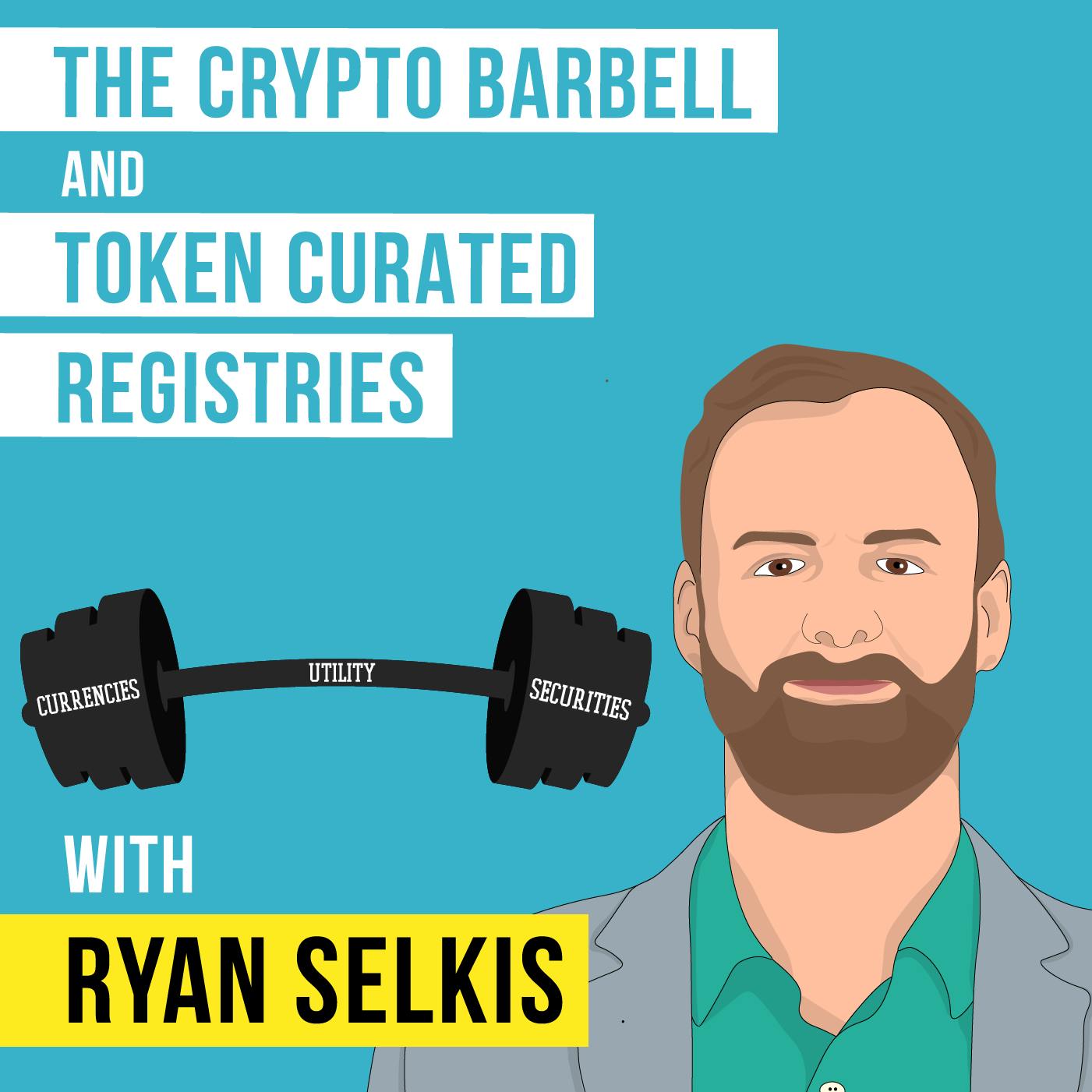
Ryan Selkis - The Crypto Barbell and Token Curated Registries - [Invest Like the Best, EP.98] This week’s conversation is for those interested in the nitty gritty of cryptocurrencies and for those who, like me, are fascinated by that world but more than a bit skeptical of the investing prospects for the many cryptocurrencies now in existence. My guest is Ryan Selkis, who I met at an event hosted by Union Square Ventures and Blocktower Capital. At that event, in a crowd of many brilliant people, Ryan was consistently asking hard questions and raising counterpoints. I love his perspective because he is both passionate, but realistic, excited about crypto, but worried about many aspects of the ecosystem. We discuss many new topics like his barbell analogy for thinking about different kinds of coins, token curated registries, and the need to better transparency around decentralized projects. Hash Power is presented by Fidelity Investments Please enjoy our conversation. March for the Fallen Want to meet other curious investors, get in good shape, and support a fantastic cause? Consider joining a great group to hike 28 miles in honor of those who have fallen in defense of our nation. Learn more and sign up at alphaarchitect.com/mftf. For more episodes go to InvestorFieldGuide.com/podcast. Sign up for the book club, where you’ll get a full investor curriculum and then 3-4 suggestions every month at InvestorFieldGuide.com/bookclub. Follow Patrick on Twitter at @patrick_oshag Show Notes 2:55 - (First Question) – how he best explains blockchain technology 4:12 – How does he categorize each cryptocurrency 9:11 – How Numeraii is valued 10:04 – Explaining token curated registries (TCR) 12:58 – How Token Curated Registries are being applied 15:05 – Innovations that will protect against nefarious actors in the crypto space 16:37 – How do you convince investors to commit to TCR’s 18:40 – Biggest headwinds to this industry 22:12 – What are the quality filters to root out the bad actors 25:42 – Thoughts on the ICO market as an alternative to capital raising 29:23 – Litmus test for who should use an ICO to raise capital 34:28 – What is unique about creation of a token vs the normal exchange of cash to determine if a company needs a token 36:21 – How many ICO projects are really necessary 38:28 – How should people form an investment opinion about this space 41:35 – Core mission of his company 44:28 – What are some of the reasons his goals won’t happen 49:30 – Lessons learned while working at Coindesk 49:58 – What is he most excited about for the future of this space 52:56 – Kindest thing anyone has done for Ryan Learn More For more episodes go to InvestorFieldGuide.com/podcast. Sign up for the book club, where you’ll get a full investor curriculum and then 3-4 suggestions every month at InvestorFieldGuide.com/bookclub Follow Patrick on twitter at @patrick_oshag